SOLDES
Jusqu'à -70% sur une sélection d'articles*

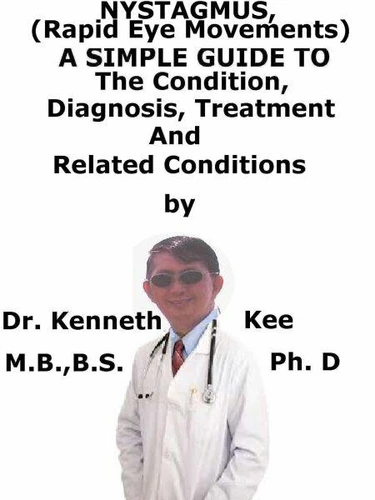
Nystagmus, (Rapid Eye Movements) A Simple Guide To The Condition, Diagnosis, Treatment And Related Conditions
Par :Formats :
Disponible dans votre compte client Decitre ou Furet du Nord dès validation de votre commande. Le format ePub est :
- Compatible avec une lecture sur My Vivlio (smartphone, tablette, ordinateur)
- Compatible avec une lecture sur liseuses Vivlio
- Pour les liseuses autres que Vivlio, vous devez utiliser le logiciel Adobe Digital Edition. Non compatible avec la lecture sur les liseuses Kindle, Remarkable et Sony
 , qui est-ce ?
Notre partenaire de plateforme de lecture numérique où vous retrouverez l'ensemble de vos ebooks gratuitement
Pour en savoir plus sur nos ebooks, consultez notre aide en ligne ici
C'est si simple ! Lisez votre ebook avec l'app Vivlio sur votre tablette, mobile ou ordinateur :

- FormatePub
- ISBN978-1-370-28891-5
- EAN9781370288915
- Date de parution30/10/2017
- Protection num.pas de protection
- Infos supplémentairesepub
- ÉditeurEditeurs divers USA
Résumé
Nystagmus is a symptom seen as a repetitive, involuntary, to and fro oscillation of the eyes. It may be congenital or acquired. It is a symptom, not a diagnosis. It is normally involuntary. It may be physiological or pathological:Physiological nystagmus happens:1. During rotation of the body in space (vestibular nystagmus) or2. During ocular following of moving scenes and acts to preserve clear vision (optokinetic nystagmus).
Pathological nystagmus induces the eyes to drift away from the visual target, hence degrading the visionNystagmus is a form of fast, uncontrollable movements of the eyes that may be:1. Side to side (horizontal nystagmus)2. Up and down (vertical nystagmus)3. Rotary (rotary or torsional nystagmus)Dependent on the cause, these movements may be in both eyes or in just one eye. The involuntary eye movements of nystagmus are produced by abnormal function in the areas of the brain that control eye movements.
The part of the inner ear that senses movement and position (the labyrinth) helps regulate eye movements. Causes of NystagmusNystagmus may occur from lesions or malfunctions in many parts of the optic (optokinetic nystagmus) and vestibular (vestibular nystagmus) systems. Most congenital nystagmus is neurological in origin, even though other important causes are:1. Albinism, 2. Congenital cataracts, 3.
Eye movement disorders and4. Very high myopia or astigmatism. Acquired nystagmusThe most frequent cause of acquired nystagmus is certain drugs or medicines.1. Phenytoin (Dilantin) - an antiseizure medicine, 2. Excessive alcohol, or3. Sedating medicineAll these medicines can impair the labyrinth's function. Other causes are:1. Head injury from motor vehicle accidents2. Inner ear disorders such as labyrinthitis or Meniere disease3.
Stroke4. Thiamine or vitamin B12 deficiency5. Any brain disease, such as brain tumorsAcute nystagmus, with or without oscillopsia, may be linked with:1. Ataxia, 2. Reduced visual acuity and3. Falls. SymptomsGenerally, late-acquired nystagmus and saccadic oscillations induce:1. Oscillopsia, 2. Nausea and3. VertigoIn contrast, most nystagmus manifesting congenitally or in early childhood is not followed by oscillopsia.
Most patients with early-onset or congenital nystagmus also have decreased acuity. DiagnosisThe doctor will take a careful history and do a complete physical examination, focusing on the nervous system and inner ear. The doctor may ask the patient to wear a pair of goggles that magnify the eyes for part of the examination. The patient may have these tests:1. CT scan of the head2. Electro-oculography: An electrical method of measuring eye movements using tiny electrodes3.
MRI of the head4. Vestibular testing by recording the movements of the eyesTreatmentHome CareThe patient may wish to make changes in the home to assist with dizziness, visual problems, or nervous system disorders. There is no treatment for most patients of congenital nystagmus. Treatment for acquired nystagmus is dependent on the cause. In some patients, nystagmus cannot be reversed. In instances due to medicines or infection, the nystagmus normally goes away after the cause has become better.
It may be conservative, medical (e.g., gabapentin, baclofen) or surgical. The surgical treatment is unusual and requires changing the insertion of the relevant extra-ocular muscles. Neurosurgery may be done where there is an underlying operable lesion. Botulinum toxin injections can decrease some nystagmic movements even though results are normally temporary. Gabapentin and memantine have also some success at reducing the effects of acquired nystagmus and are useful for congenital nystagmusTABLE OF CONTENT...
Pathological nystagmus induces the eyes to drift away from the visual target, hence degrading the visionNystagmus is a form of fast, uncontrollable movements of the eyes that may be:1. Side to side (horizontal nystagmus)2. Up and down (vertical nystagmus)3. Rotary (rotary or torsional nystagmus)Dependent on the cause, these movements may be in both eyes or in just one eye. The involuntary eye movements of nystagmus are produced by abnormal function in the areas of the brain that control eye movements.
The part of the inner ear that senses movement and position (the labyrinth) helps regulate eye movements. Causes of NystagmusNystagmus may occur from lesions or malfunctions in many parts of the optic (optokinetic nystagmus) and vestibular (vestibular nystagmus) systems. Most congenital nystagmus is neurological in origin, even though other important causes are:1. Albinism, 2. Congenital cataracts, 3.
Eye movement disorders and4. Very high myopia or astigmatism. Acquired nystagmusThe most frequent cause of acquired nystagmus is certain drugs or medicines.1. Phenytoin (Dilantin) - an antiseizure medicine, 2. Excessive alcohol, or3. Sedating medicineAll these medicines can impair the labyrinth's function. Other causes are:1. Head injury from motor vehicle accidents2. Inner ear disorders such as labyrinthitis or Meniere disease3.
Stroke4. Thiamine or vitamin B12 deficiency5. Any brain disease, such as brain tumorsAcute nystagmus, with or without oscillopsia, may be linked with:1. Ataxia, 2. Reduced visual acuity and3. Falls. SymptomsGenerally, late-acquired nystagmus and saccadic oscillations induce:1. Oscillopsia, 2. Nausea and3. VertigoIn contrast, most nystagmus manifesting congenitally or in early childhood is not followed by oscillopsia.
Most patients with early-onset or congenital nystagmus also have decreased acuity. DiagnosisThe doctor will take a careful history and do a complete physical examination, focusing on the nervous system and inner ear. The doctor may ask the patient to wear a pair of goggles that magnify the eyes for part of the examination. The patient may have these tests:1. CT scan of the head2. Electro-oculography: An electrical method of measuring eye movements using tiny electrodes3.
MRI of the head4. Vestibular testing by recording the movements of the eyesTreatmentHome CareThe patient may wish to make changes in the home to assist with dizziness, visual problems, or nervous system disorders. There is no treatment for most patients of congenital nystagmus. Treatment for acquired nystagmus is dependent on the cause. In some patients, nystagmus cannot be reversed. In instances due to medicines or infection, the nystagmus normally goes away after the cause has become better.
It may be conservative, medical (e.g., gabapentin, baclofen) or surgical. The surgical treatment is unusual and requires changing the insertion of the relevant extra-ocular muscles. Neurosurgery may be done where there is an underlying operable lesion. Botulinum toxin injections can decrease some nystagmic movements even though results are normally temporary. Gabapentin and memantine have also some success at reducing the effects of acquired nystagmus and are useful for congenital nystagmusTABLE OF CONTENT...
A propos de Kenneth Kee

4,49 €