SOLDES
Jusqu'à -70% sur une sélection d'articles*

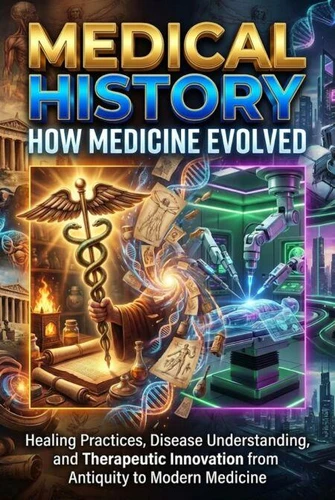
Medical History: How Medicine Evolved. Healing Practices, Disease Understanding, and Therapeutic Innovation from Antiquity to Modern Medicine
Par :Formats :
Disponible dans votre compte client Decitre ou Furet du Nord dès validation de votre commande. Le format ePub est :
- Compatible avec une lecture sur My Vivlio (smartphone, tablette, ordinateur)
- Compatible avec une lecture sur liseuses Vivlio
- Pour les liseuses autres que Vivlio, vous devez utiliser le logiciel Adobe Digital Edition. Non compatible avec la lecture sur les liseuses Kindle, Remarkable et Sony
 , qui est-ce ?
Notre partenaire de plateforme de lecture numérique où vous retrouverez l'ensemble de vos ebooks gratuitement
Pour en savoir plus sur nos ebooks, consultez notre aide en ligne ici
C'est si simple ! Lisez votre ebook avec l'app Vivlio sur votre tablette, mobile ou ordinateur :

- Nombre de pages212
- FormatePub
- ISBN978-3-565-25104-9
- EAN9783565251049
- Date de parution16/02/2026
- Protection num.pas de protection
- Taille2 Mo
- Infos supplémentairesepub
- ÉditeurEmphaloz Publishing House
Résumé
Disease mechanisms and evidence-based treatment. This history examines how practitioners developed anatomical knowledge, identified pathogens, created surgical techniques, and discovered pharmaceuticals through observation, experimentation, and institutional development that revolutionized human health.
Drawing on medical texts, hospital records, anatomical illustrations, and clinical case studies, the narrative traces medicine's evolution through distinct phases.
Ancient civilizations developed pharmacopeias from botanical knowledge while attributing illness to spiritual or humoral imbalances. Hippocratic physicians emphasized natural causation and systematic observation. Galen's anatomical theories dominated European medicine for over a millennium despite reliance on animal dissection rather than human cadavers. The book explores Renaissance transformations.
Vesalius corrected Galenic errors through systematic human dissection, establishing anatomy as observational science. Circulation of blood, microscopic examination of tissues, and identification of specific organs' functions replaced speculative theories with empirical evidence. Yet therapeutic interventions remained limited-bloodletting, purging, and ineffective compounds persisted into the nineteenth century. Modern medicine emerged through multiple breakthroughs.
Anesthesia enabled complex surgery previously impossible due to pain. Antiseptic techniques and sterilization dramatically reduced surgical mortality. Germ theory identified microorganisms causing infectious diseases, transforming public health through sanitation and vaccination. X-rays revealed internal structures without surgery. Antibiotics conquered bacterial infections that had killed millions.
Immunology, virology, and molecular biology revealed disease mechanisms at cellular and genetic levels, enabling targeted therapies.
Ancient civilizations developed pharmacopeias from botanical knowledge while attributing illness to spiritual or humoral imbalances. Hippocratic physicians emphasized natural causation and systematic observation. Galen's anatomical theories dominated European medicine for over a millennium despite reliance on animal dissection rather than human cadavers. The book explores Renaissance transformations.
Vesalius corrected Galenic errors through systematic human dissection, establishing anatomy as observational science. Circulation of blood, microscopic examination of tissues, and identification of specific organs' functions replaced speculative theories with empirical evidence. Yet therapeutic interventions remained limited-bloodletting, purging, and ineffective compounds persisted into the nineteenth century. Modern medicine emerged through multiple breakthroughs.
Anesthesia enabled complex surgery previously impossible due to pain. Antiseptic techniques and sterilization dramatically reduced surgical mortality. Germ theory identified microorganisms causing infectious diseases, transforming public health through sanitation and vaccination. X-rays revealed internal structures without surgery. Antibiotics conquered bacterial infections that had killed millions.
Immunology, virology, and molecular biology revealed disease mechanisms at cellular and genetic levels, enabling targeted therapies.
A propos de Celeste Rowan











8,99 €