Celeste Rowan is a nonfiction author known for writing reflective books on mindfulness, emotional resilience, and intentional living. Her calm and thoughtful approach blends psychology, philosophy, and everyday wisdom to help readers cultivate greater balance, clarity, and inner peace.
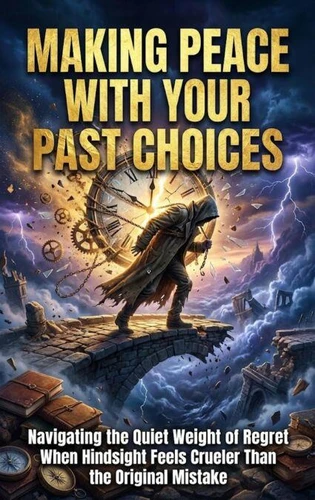
Making Peace With Your Past Choices. Navigating the Quiet Weight of Regret When Hindsight Feels Crueler Than the Original Mistake
Par :Formats :
Disponible dans votre compte client Decitre ou Furet du Nord dès validation de votre commande. Le format ePub est :
- Compatible avec une lecture sur My Vivlio (smartphone, tablette, ordinateur)
- Compatible avec une lecture sur liseuses Vivlio
- Pour les liseuses autres que Vivlio, vous devez utiliser le logiciel Adobe Digital Edition. Non compatible avec la lecture sur les liseuses Kindle, Remarkable et Sony
 , qui est-ce ?
Notre partenaire de plateforme de lecture numérique où vous retrouverez l'ensemble de vos ebooks gratuitement
Pour en savoir plus sur nos ebooks, consultez notre aide en ligne ici
C'est si simple ! Lisez votre ebook avec l'app Vivlio sur votre tablette, mobile ou ordinateur :

- Nombre de pages196
- FormatePub
- ISBN978-3-565-26558-9
- EAN9783565265589
- Date de parution23/02/2026
- Protection num.pas de protection
- Taille2 Mo
- Infos supplémentairesepub
- ÉditeurEmphaloz Publishing House
Résumé
There is a particular kind of self-cruelty that lives in retrospect. You knew better. You should have seen it. You had the information, the warnings, the instincts - and still you chose the way you chose. The mind returns to these moments not to understand them, but to prosecute them, again and again, with the ruthless advantage of knowing how everything turned out.
Making Peace With Your Past Choices explores the inner experience of living with decisions you wish you had made differently.
It examines how the habit of retrospective self-judgment is rarely about learning from the past - it is about punishing a version of yourself who made the best choice they could with the awareness, the resources, and the emotional capacity they had at the time. It gently reframes regret not as evidence of fundamental inadequacy, but as the painful gap between who you were then and who you have since become. This book offers insight into what it genuinely means to make peace with your history: the difference between honest accountability and corrosive self-blame, how unresolved regret quietly shapes present choices from the background, and what it looks like to extend to your past self the same compassion you would instinctively offer someone else in the same circumstances.
It does not ask you to pretend the choices didn't matter or that the consequences weren't real. What it offers is something more truthful and more freeing - a compassionate understanding of the person who made those choices, and why they deserved more grace than you have so far allowed them. For anyone who replays old decisions on a loop, who holds themselves to a standard of hindsight no human being could ever reasonably meet, or who simply needs permission to stop treating their past as evidence against themselves.
It examines how the habit of retrospective self-judgment is rarely about learning from the past - it is about punishing a version of yourself who made the best choice they could with the awareness, the resources, and the emotional capacity they had at the time. It gently reframes regret not as evidence of fundamental inadequacy, but as the painful gap between who you were then and who you have since become. This book offers insight into what it genuinely means to make peace with your history: the difference between honest accountability and corrosive self-blame, how unresolved regret quietly shapes present choices from the background, and what it looks like to extend to your past self the same compassion you would instinctively offer someone else in the same circumstances.
It does not ask you to pretend the choices didn't matter or that the consequences weren't real. What it offers is something more truthful and more freeing - a compassionate understanding of the person who made those choices, and why they deserved more grace than you have so far allowed them. For anyone who replays old decisions on a loop, who holds themselves to a standard of hindsight no human being could ever reasonably meet, or who simply needs permission to stop treating their past as evidence against themselves.