SOLDES
Jusqu'à -70% sur une sélection d'articles*

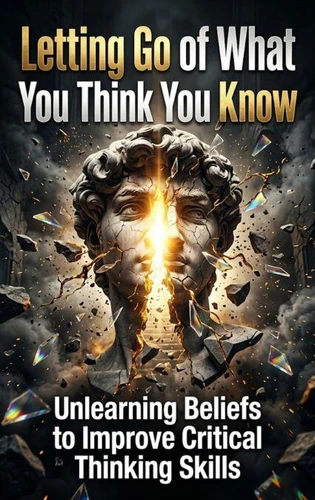
Letting Go of What You Think You Know. Unlearning Beliefs to Improve Critical Thinking Skills
Par :Formats :
Disponible dans votre compte client Decitre ou Furet du Nord dès validation de votre commande. Le format ePub est :
- Compatible avec une lecture sur My Vivlio (smartphone, tablette, ordinateur)
- Compatible avec une lecture sur liseuses Vivlio
- Pour les liseuses autres que Vivlio, vous devez utiliser le logiciel Adobe Digital Edition. Non compatible avec la lecture sur les liseuses Kindle, Remarkable et Sony
 , qui est-ce ?
Notre partenaire de plateforme de lecture numérique où vous retrouverez l'ensemble de vos ebooks gratuitement
Pour en savoir plus sur nos ebooks, consultez notre aide en ligne ici
C'est si simple ! Lisez votre ebook avec l'app Vivlio sur votre tablette, mobile ou ordinateur :

- Nombre de pages194
- FormatePub
- ISBN978-3-565-39637-5
- EAN9783565396375
- Date de parution09/04/2026
- Protection num.pas de protection
- Taille1 Mo
- Infos supplémentairesepub
- ÉditeurEmphaloz Publishing House
Résumé
Some of the most limiting walls we live within are made not of circumstance, but of certainty - things we learned so early and so often that we stopped questioning whether they were ever truly ours.
This book explores the quiet, necessary work of unlearning: the willingness to pause before a long-held belief and ask, with genuine openness, whether it still holds true. It invites readers to examine how deeply absorbed ideas shape the way they think, reason, and respond - and how releasing these inherited patterns can create space for sharper, more honest thinking.
Unlearning is not forgetting, and it is not self-erasure.
It is the act of turning toward what you believe with curiosity rather than defense - tracing a thought back to its origin, sitting with its discomfort, and choosing, consciously, what to carry forward. This book explores the subtle archaeology of ingrained belief: how certainty can harden into rigidity, how assumptions can quietly close the mind, and how the act of questioning - done with steadiness and self-compassion - becomes one of the most clarifying things a person can do.
It does not offer a formula for better thinking. It offers something rarer: permission to not already know.
It is the act of turning toward what you believe with curiosity rather than defense - tracing a thought back to its origin, sitting with its discomfort, and choosing, consciously, what to carry forward. This book explores the subtle archaeology of ingrained belief: how certainty can harden into rigidity, how assumptions can quietly close the mind, and how the act of questioning - done with steadiness and self-compassion - becomes one of the most clarifying things a person can do.
It does not offer a formula for better thinking. It offers something rarer: permission to not already know.