SOLDES
Jusqu'à -70% sur une sélection d'articles*

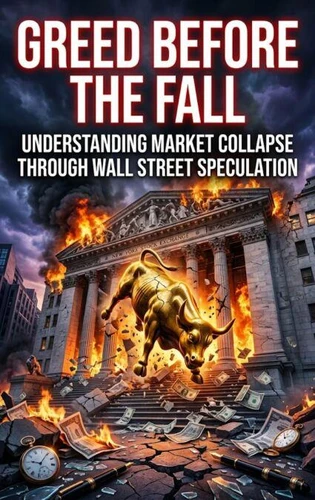
Greed Before the Fall. Understanding Market Collapse through Wall Street Speculation
Par :Formats :
Disponible dans votre compte client Decitre ou Furet du Nord dès validation de votre commande. Le format ePub est :
- Compatible avec une lecture sur My Vivlio (smartphone, tablette, ordinateur)
- Compatible avec une lecture sur liseuses Vivlio
- Pour les liseuses autres que Vivlio, vous devez utiliser le logiciel Adobe Digital Edition. Non compatible avec la lecture sur les liseuses Kindle, Remarkable et Sony
 , qui est-ce ?
Notre partenaire de plateforme de lecture numérique où vous retrouverez l'ensemble de vos ebooks gratuitement
Pour en savoir plus sur nos ebooks, consultez notre aide en ligne ici
C'est si simple ! Lisez votre ebook avec l'app Vivlio sur votre tablette, mobile ou ordinateur :

- Nombre de pages205
- FormatePub
- ISBN978-3-565-40375-2
- EAN9783565403752
- Date de parution11/04/2026
- Protection num.pas de protection
- Taille2 Mo
- Infos supplémentairesepub
- ÉditeurEmphaloz Publishing House
Résumé
Every major financial collapse in modern history has shared a common precondition: a period of sustained speculative excess in which rising asset prices became self-reinforcing, disconnected from underlying value, and ultimately unsustainable. No event illustrates this dynamic more starkly than the Wall Street speculation of the 1920s, when stock prices tripled between 1924 and 1929 as ordinary Americans - convinced of permanent prosperity - poured savings and borrowed capital into a market that had ceased to reflect economic reality.
This book examines market collapse through the analytical lens of speculation - tracing how the psychological and structural mechanics of financial bubbles operate across different historical contexts, with the Wall Street crash of 1929 as its defining case study.
It explores the specific instruments and behaviors that amplified speculative excess in the 1920s: buying on margin with as little as 10% down, the proliferation of leveraged investment trusts and holding companies, the concentration of wealth that created fragile consumer demand, and the role of easy credit in sustaining prices that fundamental analysis could no longer justify. When experienced investors began quietly exiting positions in September 1929, the trickle became a flood - and on Black Thursday, October 24, 1929, 13 million shares were sold in a single session, triggering the cascade that would erase 89% of market value by the summer of 1932.
It explores the specific instruments and behaviors that amplified speculative excess in the 1920s: buying on margin with as little as 10% down, the proliferation of leveraged investment trusts and holding companies, the concentration of wealth that created fragile consumer demand, and the role of easy credit in sustaining prices that fundamental analysis could no longer justify. When experienced investors began quietly exiting positions in September 1929, the trickle became a flood - and on Black Thursday, October 24, 1929, 13 million shares were sold in a single session, triggering the cascade that would erase 89% of market value by the summer of 1932.