SOLDES
Jusqu'à -70% sur une sélection d'articles*

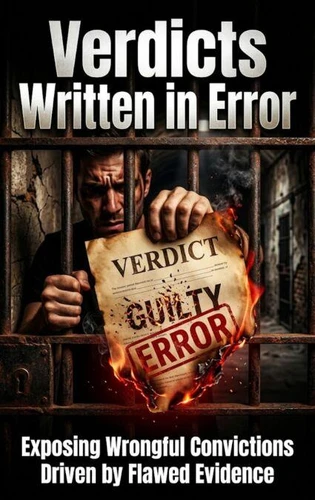
Verdicts Written in Error. Exposing Wrongful Convictions Driven by Flawed Evidence
Par :Formats :
Disponible dans votre compte client Decitre ou Furet du Nord dès validation de votre commande. Le format ePub est :
- Compatible avec une lecture sur My Vivlio (smartphone, tablette, ordinateur)
- Compatible avec une lecture sur liseuses Vivlio
- Pour les liseuses autres que Vivlio, vous devez utiliser le logiciel Adobe Digital Edition. Non compatible avec la lecture sur les liseuses Kindle, Remarkable et Sony
 , qui est-ce ?
Notre partenaire de plateforme de lecture numérique où vous retrouverez l'ensemble de vos ebooks gratuitement
Pour en savoir plus sur nos ebooks, consultez notre aide en ligne ici
C'est si simple ! Lisez votre ebook avec l'app Vivlio sur votre tablette, mobile ou ordinateur :

- Nombre de pages226
- FormatePub
- ISBN978-3-565-40714-9
- EAN9783565407149
- Date de parution13/04/2026
- Protection num.pas de protection
- Taille1 Mo
- Infos supplémentairesepub
- ÉditeurEmphaloz Publishing House
Résumé
The courtroom is built on the presumption of certainty - the weight of evidence, the authority of expert testimony, the finality of a jury's verdict. Yet the history of criminal justice is quietly riddled with moments when that certainty was constructed on sand. Bite mark analysis, hair microscopy, arson forensics, eyewitness identification - techniques once presented to juries as ironclad science have, decade by decade, been dismantled by the very disciplines that produced them.
The men and women convicted on their basis did not lose years of their lives to malice alone. They lost them to confidence - the unexamined confidence of systems that rarely looked back. Since the founding of the Innocence Project in 1992, over 375 people in the United States alone have been exonerated through post-conviction DNA testing. Behind each number is a biography of loss: lost decades, lost families, lost identities reshaped entirely by the machinery of incarceration.
Many had confessed - not because they were guilty, but because interrogation techniques designed to extract truth were equally capable of producing false admissions from the exhausted, the frightened, and the cognitively vulnerable. The evidence that convicted them was not always fabricated. Often, it was simply wrong - and no one in the system was structurally required to notice.
The men and women convicted on their basis did not lose years of their lives to malice alone. They lost them to confidence - the unexamined confidence of systems that rarely looked back. Since the founding of the Innocence Project in 1992, over 375 people in the United States alone have been exonerated through post-conviction DNA testing. Behind each number is a biography of loss: lost decades, lost families, lost identities reshaped entirely by the machinery of incarceration.
Many had confessed - not because they were guilty, but because interrogation techniques designed to extract truth were equally capable of producing false admissions from the exhausted, the frightened, and the cognitively vulnerable. The evidence that convicted them was not always fabricated. Often, it was simply wrong - and no one in the system was structurally required to notice.