SOLDES
Jusqu'à -70% sur une sélection d'articles*

Nouveauté
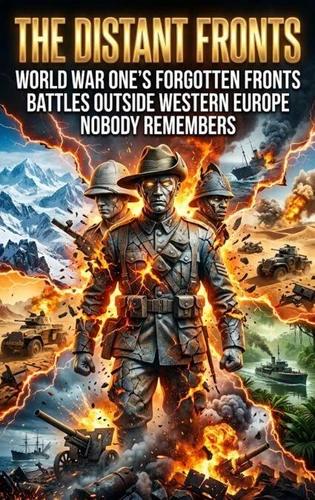
The Distant Fronts. World War One's Forgotten Fronts Battles Outside Western Europe Nobody Remembers
Par :Formats :
Disponible dans votre compte client Decitre ou Furet du Nord dès validation de votre commande. Le format ePub est :
- Compatible avec une lecture sur My Vivlio (smartphone, tablette, ordinateur)
- Compatible avec une lecture sur liseuses Vivlio
- Pour les liseuses autres que Vivlio, vous devez utiliser le logiciel Adobe Digital Edition. Non compatible avec la lecture sur les liseuses Kindle, Remarkable et Sony
 , qui est-ce ?
Notre partenaire de plateforme de lecture numérique où vous retrouverez l'ensemble de vos ebooks gratuitement
Pour en savoir plus sur nos ebooks, consultez notre aide en ligne ici
C'est si simple ! Lisez votre ebook avec l'app Vivlio sur votre tablette, mobile ou ordinateur :

- Nombre de pages191
- FormatePub
- ISBN978-3-565-46059-5
- EAN9783565460595
- Date de parution26/05/2026
- Protection num.pas de protection
- Taille2 Mo
- Infos supplémentairesepub
- ÉditeurEmphaloz Publishing House
Résumé
This book investigates how a war remembered through one continental lens became a network of connected crises across Africa, the Middle East, Asia, and the Balkans. It asks what changes when the map of conflict expands beyond familiar trench narratives and the war must be read as an imperial system rather than a single front. It examines three mechanisms: colonial logistics that moved troops, information, and coercion across long distances; strategic communication networks that made radio stations, ports, railways, and waterways military targets; and occupation regimes that turned food supply, labor, and local authority into instruments of control.
Togo, Gallipoli, German South West Africa, the Caucasus, and the Eastern Front reveal different forms of warfare, each shaped by empire, terrain, and uneven industrial capacity. The result is a clearer view of how memory selects certain battlefields while obscuring others, and how those omissions still shape public history in German and European markets.
Togo, Gallipoli, German South West Africa, the Caucasus, and the Eastern Front reveal different forms of warfare, each shaped by empire, terrain, and uneven industrial capacity. The result is a clearer view of how memory selects certain battlefields while obscuring others, and how those omissions still shape public history in German and European markets.