A setback survivor who forged grit in repeated crises, providing self-help recovery plans, business rebound playbooks, and historical studies of resilience in economic depressions.
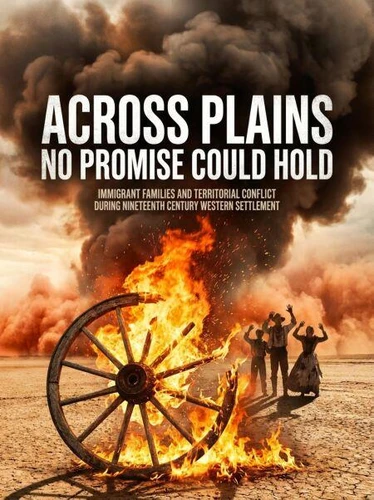
Across Plains No Promise Could Hold. Immigrant families and territorial conflict during nineteenth century western settlement
Par :Formats :
Disponible dans votre compte client Decitre ou Furet du Nord dès validation de votre commande. Le format ePub est :
- Compatible avec une lecture sur My Vivlio (smartphone, tablette, ordinateur)
- Compatible avec une lecture sur liseuses Vivlio
- Pour les liseuses autres que Vivlio, vous devez utiliser le logiciel Adobe Digital Edition. Non compatible avec la lecture sur les liseuses Kindle, Remarkable et Sony
 , qui est-ce ?
Notre partenaire de plateforme de lecture numérique où vous retrouverez l'ensemble de vos ebooks gratuitement
Pour en savoir plus sur nos ebooks, consultez notre aide en ligne ici
C'est si simple ! Lisez votre ebook avec l'app Vivlio sur votre tablette, mobile ou ordinateur :

- Nombre de pages214
- FormatePub
- ISBN978-3-565-48559-8
- EAN9783565485598
- Date de parution08/06/2026
- Protection num.pas de protection
- Taille1 Mo
- Infos supplémentairesepub
- ÉditeurEmphaloz Publishing House
Résumé
For many migrants, the West was not freedom but negotiation. Land policies advertised opportunity while quietly creating new hierarchies of ownership, labor, and exclusion across the expanding United States. Behind the language of settlement stood a continent already inhabited, contested, and unevenly governed.
Centered on the historical consequences of the Homestead Act, this account follows immigrant communities, Black workers, and Indigenous nations navigating the unstable realities of western expansion.
Federal land regulation encouraged mass migration from Europe and Asia while accelerating conflicts over territory, water access, and political authority. The book traces how railroads, mining economies, and agricultural speculation altered social life across frontier settlements that were often more fragile than later mythology suggested. At the same time, twentieth-century popular culture recast these tensions into simplified stories of cowboys and outlaws.
Films and pulp fiction transformed collective memory by reducing complex racial and economic struggles into symbols of national destiny. The distance between historical experience and cultural representation became one of the defining features of the American frontier itself. The West that emerged was not merely geographic. It became a permanent argument about citizenship, ownership, and the meaning of belonging in modern America.
Federal land regulation encouraged mass migration from Europe and Asia while accelerating conflicts over territory, water access, and political authority. The book traces how railroads, mining economies, and agricultural speculation altered social life across frontier settlements that were often more fragile than later mythology suggested. At the same time, twentieth-century popular culture recast these tensions into simplified stories of cowboys and outlaws.
Films and pulp fiction transformed collective memory by reducing complex racial and economic struggles into symbols of national destiny. The distance between historical experience and cultural representation became one of the defining features of the American frontier itself. The West that emerged was not merely geographic. It became a permanent argument about citizenship, ownership, and the meaning of belonging in modern America.
A propos de Juniper Sloane









9,99 €