Nouveauté
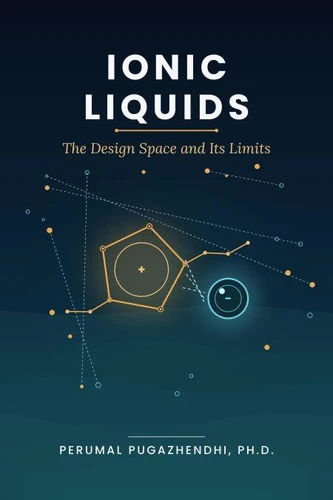
IONIC LIQUIDS The Design Space and Its Limits
Par :Formats :
Disponible dans votre compte client Decitre ou Furet du Nord dès validation de votre commande. Le format ePub est :
- Compatible avec une lecture sur My Vivlio (smartphone, tablette, ordinateur)
- Compatible avec une lecture sur liseuses Vivlio
- Pour les liseuses autres que Vivlio, vous devez utiliser le logiciel Adobe Digital Edition. Non compatible avec la lecture sur les liseuses Kindle, Remarkable et Sony
 , qui est-ce ?
Notre partenaire de plateforme de lecture numérique où vous retrouverez l'ensemble de vos ebooks gratuitement
Pour en savoir plus sur nos ebooks, consultez notre aide en ligne ici
C'est si simple ! Lisez votre ebook avec l'app Vivlio sur votre tablette, mobile ou ordinateur :

- FormatePub
- ISBN8235313392
- EAN9798235313392
- Date de parution30/07/2026
- Protection num.pas de protection
- Infos supplémentairesepub
- ÉditeurIoakim Ioakim
Résumé
I began working with ionic liquids because a battery would not hold its capacity. That practical failure proved more instructive than the familiar promise that ionic liquids are endlessly tunable designer materials. After three decades of intensive research, only a limited number of ionic-liquid processes have reached sustained industrial use. The reasons are neither mysterious nor merely commercial.
They arise from chemistry, transport, interfaces, purification, safety, durability, and cost. This book examines those constraints directly. Ionic Liquids: The Design Space and Its Limits is organized around one argument: important properties cannot usually be adjusted independently. Lowering melting temperature may increase molecular size, association, or viscosity, thereby reducing mobility. An anion that widens the electrochemical window may also increase persistence or cost.
A composition that dissolves cellulose may introduce corrosion or difficult recovery. These are not universal rules, and their exceptions matter, but they are recurring couplings that determine whether an attractive laboratory result can become useful technology. This is a critical synthesis rather than a catalogue of applications. It first asks what counts as an ionic liquid and why published property values often disagree.
Measurement and impurity control appear early because no sound decision can rest on viscosity, conductivity, stability, or water-content data whose methods are unknown. The discussion then moves through synthesis, purification, manufacturing, nanostructure, transport, interfaces, energy, chemical processing, environmental behavior, databases, and machine learning. The final chapters examine successful commercial processes and propose a focused research agenda.
My perspective is informed by four decades of work in electrochemical energy systems. This book is intended for researchers entering the field, graduate students, and engineers deciding whether an ionic liquid is suitable for a particular duty. It assumes undergraduate physical chemistry and introduces the necessary ideas from electrochemistry, transport, and interfacial science as they arise. Readers should understand the coupling problem and the measurement chapter before treating any claimed advantage as a reliable design fact.
The purpose is not to argue against ionic liquids. BASIL, ISOALKY, and demanding electrolyte demonstrations show that these materials can solve important problems when applications reward their strengths and tolerate their liabilities. The goal is to replace generalized promise with disciplined judgment. Ionic liquids deserve neither automatic celebration nor dismissal. They should be evaluated as engineered chemical systems: by what they do, what they cost, what they displace, how they fail, and whether the complete process closes.
If this book helps a reader ask those questions before choosing a salt, running a model, or funding a program, it will have done its work.
They arise from chemistry, transport, interfaces, purification, safety, durability, and cost. This book examines those constraints directly. Ionic Liquids: The Design Space and Its Limits is organized around one argument: important properties cannot usually be adjusted independently. Lowering melting temperature may increase molecular size, association, or viscosity, thereby reducing mobility. An anion that widens the electrochemical window may also increase persistence or cost.
A composition that dissolves cellulose may introduce corrosion or difficult recovery. These are not universal rules, and their exceptions matter, but they are recurring couplings that determine whether an attractive laboratory result can become useful technology. This is a critical synthesis rather than a catalogue of applications. It first asks what counts as an ionic liquid and why published property values often disagree.
Measurement and impurity control appear early because no sound decision can rest on viscosity, conductivity, stability, or water-content data whose methods are unknown. The discussion then moves through synthesis, purification, manufacturing, nanostructure, transport, interfaces, energy, chemical processing, environmental behavior, databases, and machine learning. The final chapters examine successful commercial processes and propose a focused research agenda.
My perspective is informed by four decades of work in electrochemical energy systems. This book is intended for researchers entering the field, graduate students, and engineers deciding whether an ionic liquid is suitable for a particular duty. It assumes undergraduate physical chemistry and introduces the necessary ideas from electrochemistry, transport, and interfacial science as they arise. Readers should understand the coupling problem and the measurement chapter before treating any claimed advantage as a reliable design fact.
The purpose is not to argue against ionic liquids. BASIL, ISOALKY, and demanding electrolyte demonstrations show that these materials can solve important problems when applications reward their strengths and tolerate their liabilities. The goal is to replace generalized promise with disciplined judgment. Ionic liquids deserve neither automatic celebration nor dismissal. They should be evaluated as engineered chemical systems: by what they do, what they cost, what they displace, how they fail, and whether the complete process closes.
If this book helps a reader ask those questions before choosing a salt, running a model, or funding a program, it will have done its work.