
Nouveauté
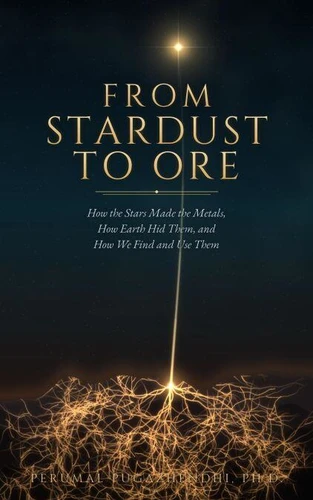
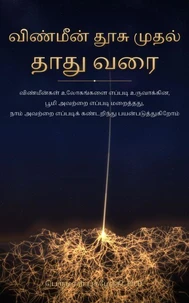
From Stardust to Ore
Par :Formats :
Disponible dans votre compte client Decitre ou Furet du Nord dès validation de votre commande. Le format ePub est :
- Compatible avec une lecture sur My Vivlio (smartphone, tablette, ordinateur)
- Compatible avec une lecture sur liseuses Vivlio
- Pour les liseuses autres que Vivlio, vous devez utiliser le logiciel Adobe Digital Edition. Non compatible avec la lecture sur les liseuses Kindle, Remarkable et Sony
 , qui est-ce ?
Notre partenaire de plateforme de lecture numérique où vous retrouverez l'ensemble de vos ebooks gratuitement
Pour en savoir plus sur nos ebooks, consultez notre aide en ligne ici
C'est si simple ! Lisez votre ebook avec l'app Vivlio sur votre tablette, mobile ou ordinateur :

- FormatePub
- ISBN8233356353
- EAN9798233356353
- Date de parution29/07/2026
- Protection num.pas de protection
- Infos supplémentairesepub
- ÉditeurLinda Balsamo
Résumé
PrefaceEvery piece of metal has a history. The copper in a mobile phone, the iron in a bridge, the nickel in a battery, and the gold in a wedding ring may seem to be ordinary materials taken from the Earth. Yet their atoms were not created here. They formed long before our planet existed, inside stars and during some of the most powerful events in the universe. This book follows that remarkable journey-from the early universe and the birth and death of stars to the formation of the Solar System; from the young Earth's core, mantle, and crust to the processes that concentrated scattered atoms into ore deposits; and from mines and refineries to the technologies on which modern life depends.
Nuclear physics explains how atomic nuclei form. Astronomy reveals where the elements were created. Chemistry explains their behavior. Geology shows how the Earth separated and concentrated them, and engineering turns them into useful materials. These are not separate subjects here, but chapters in one continuous story. Creating a metal atom is not the same as making it available. When the young Earth was partly molten, many dense, metal-loving elements moved toward its core.
Others remained dispersed through the mantle and crust. Magma, hot water, weathering, and erosion concentrated a small portion into mineral deposits. A deposit becomes an ore only when it can be extracted under practical, economic, environmental, legal, and social conditions. Modern civilization depends deeply on metals. Steel supports buildings and transport. Copper carries electricity. Other metals strengthen alloys, store energy, resist corrosion, and enable catalysts.
Batteries, medical devices, communication systems, renewable-energy technologies, and aircraft all rely on carefully selected elements. Mining supplies essential materials, but it can disturb land, consume water and energy, generate waste, and affect communities. Responsible use requires better mining, durable products, efficient design, transparent supply chains, and improved recycling. Recycling is essential, but it cannot immediately replace primary production.
No advanced scientific background is required. Technical ideas are explained in plain language, numerical values are treated with caution, and uncertainties are acknowledged. The journey of a representative metal atom is illustrative: its exact history cannot be reconstructed, but every stage described is grounded in established science. A metal is not merely a substance; it is the result of a sequence.
Its nucleus had to be created, its atoms had to reach the forming Earth, geology had to concentrate them, and people had to discover, extract, refine, and shape them. Their cosmic history is ancient, but our responsibility for how we use them is immediate. Every metal atom has travelled farther than we can easily imagine. This book is an invitation to follow that journey-from stardust to ore, and from ore into the human world.
Perumal Pugazhendhi, Ph. D.2026
Nuclear physics explains how atomic nuclei form. Astronomy reveals where the elements were created. Chemistry explains their behavior. Geology shows how the Earth separated and concentrated them, and engineering turns them into useful materials. These are not separate subjects here, but chapters in one continuous story. Creating a metal atom is not the same as making it available. When the young Earth was partly molten, many dense, metal-loving elements moved toward its core.
Others remained dispersed through the mantle and crust. Magma, hot water, weathering, and erosion concentrated a small portion into mineral deposits. A deposit becomes an ore only when it can be extracted under practical, economic, environmental, legal, and social conditions. Modern civilization depends deeply on metals. Steel supports buildings and transport. Copper carries electricity. Other metals strengthen alloys, store energy, resist corrosion, and enable catalysts.
Batteries, medical devices, communication systems, renewable-energy technologies, and aircraft all rely on carefully selected elements. Mining supplies essential materials, but it can disturb land, consume water and energy, generate waste, and affect communities. Responsible use requires better mining, durable products, efficient design, transparent supply chains, and improved recycling. Recycling is essential, but it cannot immediately replace primary production.
No advanced scientific background is required. Technical ideas are explained in plain language, numerical values are treated with caution, and uncertainties are acknowledged. The journey of a representative metal atom is illustrative: its exact history cannot be reconstructed, but every stage described is grounded in established science. A metal is not merely a substance; it is the result of a sequence.
Its nucleus had to be created, its atoms had to reach the forming Earth, geology had to concentrate them, and people had to discover, extract, refine, and shape them. Their cosmic history is ancient, but our responsibility for how we use them is immediate. Every metal atom has travelled farther than we can easily imagine. This book is an invitation to follow that journey-from stardust to ore, and from ore into the human world.
Perumal Pugazhendhi, Ph. D.2026
A propos de Perumal Pugazhendhi
13,49 €
11,99 €
13,49 €
8,99 €
13,99 €
13,49 €