Nouveauté
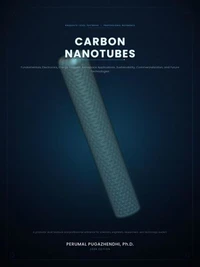
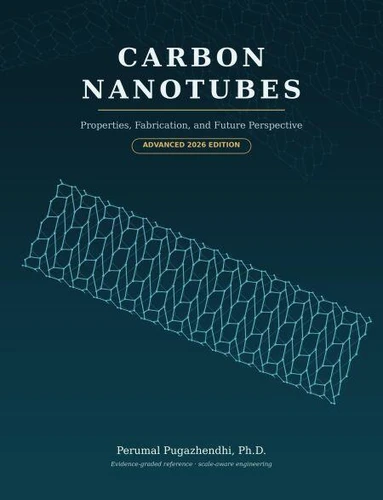
CARBON NANOTUBES Properties, Fabrication, and Future Perspective
Par :Formats :
Disponible dans votre compte client Decitre ou Furet du Nord dès validation de votre commande. Le format ePub est :
- Compatible avec une lecture sur My Vivlio (smartphone, tablette, ordinateur)
- Compatible avec une lecture sur liseuses Vivlio
- Pour les liseuses autres que Vivlio, vous devez utiliser le logiciel Adobe Digital Edition. Non compatible avec la lecture sur les liseuses Kindle, Remarkable et Sony
 , qui est-ce ?
Notre partenaire de plateforme de lecture numérique où vous retrouverez l'ensemble de vos ebooks gratuitement
Pour en savoir plus sur nos ebooks, consultez notre aide en ligne ici
C'est si simple ! Lisez votre ebook avec l'app Vivlio sur votre tablette, mobile ou ordinateur :

- FormatePub
- ISBN8235295957
- EAN9798235295957
- Date de parution03/08/2026
- Protection num.pas de protection
- Infos supplémentairesepub
- ÉditeurIoakim Ioakim
Résumé
Carbon nanotubes occupy an unusual position in modern materials science. Their intrinsic properties, measured on individual, nearly defect-free specimens, rank among the most remarkable ever recorded; their performance in films, fibers, composites, electrodes, and devices depends on an unusually long chain of choices, from chirality and defect population to dispersion, contacts, interfaces, manufacturing, and system design.
A book about this material must therefore do two things at once: convey why the science is genuinely extraordinary, and give the reader the tools to judge which claims survive the journey from a single nanotube to a manufactured product. This IngramSpark edition carries the complete text of the Advanced 2026 Edition to bookstores, libraries, and academic institutions worldwide. Nothing has been abridged.
All forty-nine chapters are present, each opening with a 2026 engineering lens that identifies the governing variable, the evidence basis, the most common interpretation failure, and a defensible decision rule, and each closing with key takeaways and review questions. The scholarly apparatus - the Six-Question Claim Audit, the evidence-scale framework, the worked engineering examples, the standards and reporting checklist, and the subject index - is likewise complete.
Technical information is current through 31 July 2026. The organizing principle of this book remains scale awareness. A record value measured on one pristine nanotube is an intrinsic limit, not a guaranteed value at any other scale. Throughout the text, property claims are tied to the specimen scale, the measurement method, the denominator, and the uncertainty behind them, and contested or unresolved questions are reported as such.
Where the literature disagrees, the disagreement is stated; where a promising result has been demonstrated only at laboratory scale, that boundary is drawn explicitly. Readers deserve a reference that neither inflates the field's prospects nor diminishes its genuine achievements, and this edition has been prepared with that standard in mind. I hope this book serves students encountering nanomaterials for the first time, engineers evaluating carbon nanotubes for real applications, researchers seeking a disciplined synthesis of the field, and general readers who want to understand one of the defining materials of our era on honest terms.
Perumal Pugazhendhi, Ph. D. United States, 2026
A book about this material must therefore do two things at once: convey why the science is genuinely extraordinary, and give the reader the tools to judge which claims survive the journey from a single nanotube to a manufactured product. This IngramSpark edition carries the complete text of the Advanced 2026 Edition to bookstores, libraries, and academic institutions worldwide. Nothing has been abridged.
All forty-nine chapters are present, each opening with a 2026 engineering lens that identifies the governing variable, the evidence basis, the most common interpretation failure, and a defensible decision rule, and each closing with key takeaways and review questions. The scholarly apparatus - the Six-Question Claim Audit, the evidence-scale framework, the worked engineering examples, the standards and reporting checklist, and the subject index - is likewise complete.
Technical information is current through 31 July 2026. The organizing principle of this book remains scale awareness. A record value measured on one pristine nanotube is an intrinsic limit, not a guaranteed value at any other scale. Throughout the text, property claims are tied to the specimen scale, the measurement method, the denominator, and the uncertainty behind them, and contested or unresolved questions are reported as such.
Where the literature disagrees, the disagreement is stated; where a promising result has been demonstrated only at laboratory scale, that boundary is drawn explicitly. Readers deserve a reference that neither inflates the field's prospects nor diminishes its genuine achievements, and this edition has been prepared with that standard in mind. I hope this book serves students encountering nanomaterials for the first time, engineers evaluating carbon nanotubes for real applications, researchers seeking a disciplined synthesis of the field, and general readers who want to understand one of the defining materials of our era on honest terms.
Perumal Pugazhendhi, Ph. D. United States, 2026