SOLDES
Jusqu'à -70% sur une sélection d'articles*

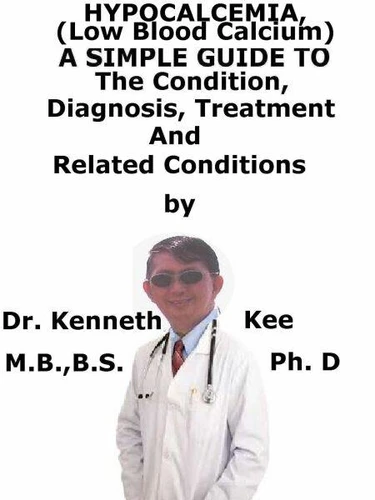
Hypocalcemia, (Low Blood Calcium) A Simple Guide To The Condition, Diagnosis, Treatment And Related Conditions
Par :Formats :
Disponible dans votre compte client Decitre ou Furet du Nord dès validation de votre commande. Le format ePub est :
- Compatible avec une lecture sur My Vivlio (smartphone, tablette, ordinateur)
- Compatible avec une lecture sur liseuses Vivlio
- Pour les liseuses autres que Vivlio, vous devez utiliser le logiciel Adobe Digital Edition. Non compatible avec la lecture sur les liseuses Kindle, Remarkable et Sony
 , qui est-ce ?
Notre partenaire de plateforme de lecture numérique où vous retrouverez l'ensemble de vos ebooks gratuitement
Pour en savoir plus sur nos ebooks, consultez notre aide en ligne ici
C'est si simple ! Lisez votre ebook avec l'app Vivlio sur votre tablette, mobile ou ordinateur :

- FormatePub
- ISBN978-1-370-06861-6
- EAN9781370068616
- Date de parution01/08/2017
- Protection num.pas de protection
- Infos supplémentairesepub
- ÉditeurEditeurs divers USA
Résumé
Hypocalcemia is a frequent biochemical disorder that can vary in severity from being asymptomatic in mild cases to presenting as an acute life-threatening crisis. Hypocalcemia is too low calcium (below 8.4 mg/dL or 2.25 mmol/L) in the blood. Normal blood Calcium varies from 8.4 to 10.4 mg/dL (2.25-2.6 mmol/L) controlled by 3 main calcium-regulating hormones (parathyroid hormone -PTH, vitamin D, and calcitonin) through their specific effects on the bowel, kidneys, and skeleton.
Calcium and phosphate are interrelated both controlled by the parathyroid hormones and Vitamin D which control the calcium and phosphate exchange between the blood and 3 systems in the body:1. Skeletal2. Gastrointestinal3. RenalParathyroid hormones work mainly on the bones and kidney to raise the blood calcium and increase the phosphate excretion. Vitamin D raises the intestinal absorption of calcium and phosphate.
About 50% of the total serum calcium is attached to protein, and the remaining free ionized calcium is physiologically active. Serum calcium levels must be corrected for the blood albumin value before confirming the diagnosis of hypercalcemia or hypocalcemia. Hypocalcemia (corrected serum total calcium level < 2.12 mmol/L) is most often a result of vitamin D inadequacy or hypoparathyroidism, or a resistance to these hormonesLow calcium levels have also been linked with many drugs such as cisplatin, antiepileptics, aminoglycosides, diuretics, bisphosphonates and proton pump inhibitors; there are other causes.
Calcium is a vital mineral, used by the body to build strong bones and teeth. Calcium is also needed for the heart and other muscles to function properly. When a person does not get enough calcium, he or she raises the risk of forming disorders like osteoporosis, osteopenia, and calcium deficiency disease (hypocalcemia). Children who do not get enough calcium may not develop to their full potential adult height.
This low calcium may be due to a variety of factors, such as:1. Poor calcium intake over a long period of time, especially in childhood2. Medicines that may decrease calcium absorption3. Dietary intolerance to foods rich in calcium4. Hormonal changes, particularly in women5. Certain genetic factorsSymptoms:1. Confusion or memory loss2. Muscle spasms3. Numbness and tingling in the hands, feet, and face4.
Depression5. Hallucinations6. Muscle cramps7. Weak and brittle nails8. Easy fracturing of the bonesSigns:1. Chvostek's sign2. Trousseau's sign3. Seizures.4. Prolonged QT intervalDiagnosis is by:Blood for the corrected calcium level or ionized calcium levelTreatment:The patient is treated where symptoms (seizures, tetany) are present or there is a high risk of complications with a serum calcium
Calcium and phosphate are interrelated both controlled by the parathyroid hormones and Vitamin D which control the calcium and phosphate exchange between the blood and 3 systems in the body:1. Skeletal2. Gastrointestinal3. RenalParathyroid hormones work mainly on the bones and kidney to raise the blood calcium and increase the phosphate excretion. Vitamin D raises the intestinal absorption of calcium and phosphate.
About 50% of the total serum calcium is attached to protein, and the remaining free ionized calcium is physiologically active. Serum calcium levels must be corrected for the blood albumin value before confirming the diagnosis of hypercalcemia or hypocalcemia. Hypocalcemia (corrected serum total calcium level < 2.12 mmol/L) is most often a result of vitamin D inadequacy or hypoparathyroidism, or a resistance to these hormonesLow calcium levels have also been linked with many drugs such as cisplatin, antiepileptics, aminoglycosides, diuretics, bisphosphonates and proton pump inhibitors; there are other causes.
Calcium is a vital mineral, used by the body to build strong bones and teeth. Calcium is also needed for the heart and other muscles to function properly. When a person does not get enough calcium, he or she raises the risk of forming disorders like osteoporosis, osteopenia, and calcium deficiency disease (hypocalcemia). Children who do not get enough calcium may not develop to their full potential adult height.
This low calcium may be due to a variety of factors, such as:1. Poor calcium intake over a long period of time, especially in childhood2. Medicines that may decrease calcium absorption3. Dietary intolerance to foods rich in calcium4. Hormonal changes, particularly in women5. Certain genetic factorsSymptoms:1. Confusion or memory loss2. Muscle spasms3. Numbness and tingling in the hands, feet, and face4.
Depression5. Hallucinations6. Muscle cramps7. Weak and brittle nails8. Easy fracturing of the bonesSigns:1. Chvostek's sign2. Trousseau's sign3. Seizures.4. Prolonged QT intervalDiagnosis is by:Blood for the corrected calcium level or ionized calcium levelTreatment:The patient is treated where symptoms (seizures, tetany) are present or there is a high risk of complications with a serum calcium
A propos de Kenneth Kee

4,49 €