SOLDES
Jusqu'à -70% sur une sélection d'articles*

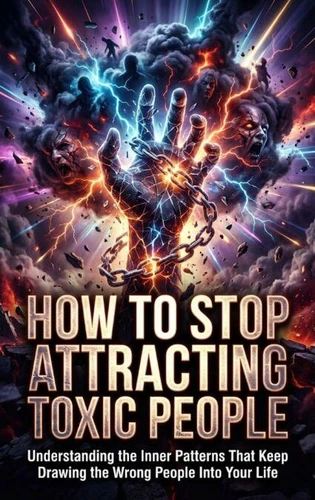
How to Stop Attracting Toxic People. Understanding the Inner Patterns That Keep Drawing the Wrong People Into Your Life
Par :Formats :
Disponible dans votre compte client Decitre ou Furet du Nord dès validation de votre commande. Le format ePub est :
- Compatible avec une lecture sur My Vivlio (smartphone, tablette, ordinateur)
- Compatible avec une lecture sur liseuses Vivlio
- Pour les liseuses autres que Vivlio, vous devez utiliser le logiciel Adobe Digital Edition. Non compatible avec la lecture sur les liseuses Kindle, Remarkable et Sony
 , qui est-ce ?
Notre partenaire de plateforme de lecture numérique où vous retrouverez l'ensemble de vos ebooks gratuitement
Pour en savoir plus sur nos ebooks, consultez notre aide en ligne ici
C'est si simple ! Lisez votre ebook avec l'app Vivlio sur votre tablette, mobile ou ordinateur :

- Nombre de pages191
- FormatePub
- ISBN978-3-565-26518-3
- EAN9783565265183
- Date de parution23/02/2026
- Protection num.pas de protection
- Taille2 Mo
- Infos supplémentairesepub
- ÉditeurEmphaloz Publishing House
Résumé
It rarely feels like a choice. You meet someone who seems different - attentive, magnetic, certain - and yet somehow, the story ends the same way it always has. Over time, a quiet, unsettling question begins to form: why does this keep happening to me?
How to Stop Attracting Toxic People explores the invisible dynamics beneath that question. It examines how early experiences shape the relational templates we carry into adulthood - the unspoken beliefs about what love looks like, what we deserve, and how much discomfort feels normal.
It reframes the pattern not as a personal flaw or a curse, but as a deeply logical response to what was once familiar and, in its own way, safe. This book offers insight into the subtle signals we send and receive: why certain people feel immediately comfortable in ways that later prove harmful, how the desire to be needed can quietly override discernment, and what it means to build a different kind of inner foundation - not by fixing yourself, but by understanding yourself more honestly. It does not promise that recognition alone will change everything overnight.
What it offers is something more enduring - a compassionate, clear-eyed look at the relational patterns that quietly shape who we let close, and why genuine change begins with curiosity rather than self-blame. For anyone who has ever looked back at a pattern and thought: I didn't see it coming - but part of me already knew.
It reframes the pattern not as a personal flaw or a curse, but as a deeply logical response to what was once familiar and, in its own way, safe. This book offers insight into the subtle signals we send and receive: why certain people feel immediately comfortable in ways that later prove harmful, how the desire to be needed can quietly override discernment, and what it means to build a different kind of inner foundation - not by fixing yourself, but by understanding yourself more honestly. It does not promise that recognition alone will change everything overnight.
What it offers is something more enduring - a compassionate, clear-eyed look at the relational patterns that quietly shape who we let close, and why genuine change begins with curiosity rather than self-blame. For anyone who has ever looked back at a pattern and thought: I didn't see it coming - but part of me already knew.
A propos de Sarah Whitfield














8,99 €