Sarah Whitfield is a nonfiction author who writes about history, culture, and the hidden stories behind social change. Her work combines accessible research with engaging storytelling, exploring how everyday lives are shaped by politics, tradition, and shifting historical events across different eras.
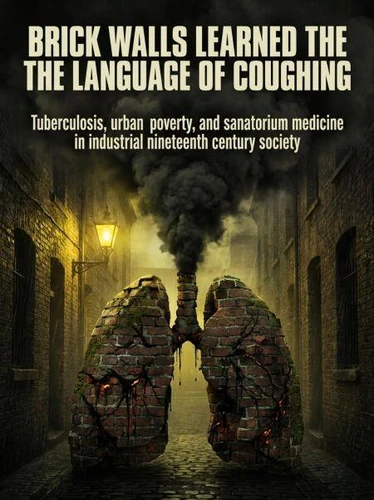
Brick Walls Learned the Language of Coughing. Tuberculosis, urban poverty, and sanatorium medicine in industrial nineteenth century society
Par :Formats :
Disponible dans votre compte client Decitre ou Furet du Nord dès validation de votre commande. Le format ePub est :
- Compatible avec une lecture sur My Vivlio (smartphone, tablette, ordinateur)
- Compatible avec une lecture sur liseuses Vivlio
- Pour les liseuses autres que Vivlio, vous devez utiliser le logiciel Adobe Digital Edition. Non compatible avec la lecture sur les liseuses Kindle, Remarkable et Sony
 , qui est-ce ?
Notre partenaire de plateforme de lecture numérique où vous retrouverez l'ensemble de vos ebooks gratuitement
Pour en savoir plus sur nos ebooks, consultez notre aide en ligne ici
C'est si simple ! Lisez votre ebook avec l'app Vivlio sur votre tablette, mobile ou ordinateur :

- Nombre de pages206
- FormatePub
- ISBN978-3-565-48570-3
- EAN9783565485703
- Date de parution08/06/2026
- Protection num.pas de protection
- Taille986 Ko
- Infos supplémentairesepub
- ÉditeurEmphaloz Publishing House
Résumé
Tuberculosis changed cities long before antibiotics changed tuberculosis. Entire neighborhoods, hospitals, and public health systems emerged in response to a disease that spread through crowded housing, factory labor, and chronic poverty. The architecture of modern urban life still carries traces of that fear.
This book examines how tuberculosis reshaped social and medical history from the nineteenth century onward.
Industrial cities confronted rising death rates by redesigning housing regulations, ventilation systems, and public sanitation. Sanatoriums became symbols of medical hope while also reinforcing class divisions, isolating working populations judged both contagious and morally suspect. Illness increasingly carried social stigma alongside physical suffering. The narrative also follows the scientific transformation of tuberculosis research after Robert Koch identified the tubercle bacillus.
Advances in bacteriology promised eventual control of the disease, yet modern medicine later faced new crises through Multi-Drug Resistant Tuberculosis and uneven healthcare infrastructure. Scientific progress repeatedly collided with political inequality. By linking medicine, urban planning, and labor conditions, the book reveals tuberculosis not simply as a disease, but as a force that reorganized how modern societies understood health, risk, and social worth.
Industrial cities confronted rising death rates by redesigning housing regulations, ventilation systems, and public sanitation. Sanatoriums became symbols of medical hope while also reinforcing class divisions, isolating working populations judged both contagious and morally suspect. Illness increasingly carried social stigma alongside physical suffering. The narrative also follows the scientific transformation of tuberculosis research after Robert Koch identified the tubercle bacillus.
Advances in bacteriology promised eventual control of the disease, yet modern medicine later faced new crises through Multi-Drug Resistant Tuberculosis and uneven healthcare infrastructure. Scientific progress repeatedly collided with political inequality. By linking medicine, urban planning, and labor conditions, the book reveals tuberculosis not simply as a disease, but as a force that reorganized how modern societies understood health, risk, and social worth.