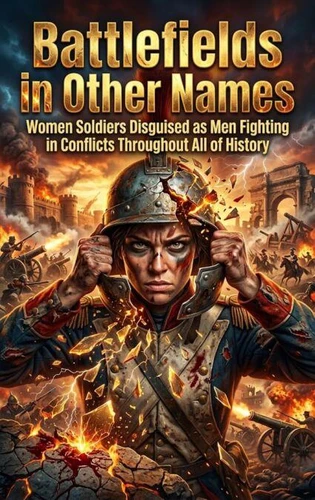
Battlefields in Other Names. Women Soldiers Disguised as Men Fighting in Conflicts Throughout All of History
Par :Formats :
Disponible dans votre compte client Decitre ou Furet du Nord dès validation de votre commande. Le format ePub est :
- Compatible avec une lecture sur My Vivlio (smartphone, tablette, ordinateur)
- Compatible avec une lecture sur liseuses Vivlio
- Pour les liseuses autres que Vivlio, vous devez utiliser le logiciel Adobe Digital Edition. Non compatible avec la lecture sur les liseuses Kindle, Remarkable et Sony
 , qui est-ce ?
Notre partenaire de plateforme de lecture numérique où vous retrouverez l'ensemble de vos ebooks gratuitement
Pour en savoir plus sur nos ebooks, consultez notre aide en ligne ici
C'est si simple ! Lisez votre ebook avec l'app Vivlio sur votre tablette, mobile ou ordinateur :

- Nombre de pages162
- FormatePub
- ISBN978-3-565-46151-6
- EAN9783565461516
- Date de parution26/05/2026
- Protection num.pas de protection
- Taille2 Mo
- Infos supplémentairesepub
- ÉditeurEmphaloz Publishing House
Résumé
This book investigates how women slipped into male-coded violence across centuries, tracing the lives of those who shaved their hair, bound their bodies, and took up arms under false names in wars from ancient campaigns to the modern front. It follows individuals who crossed the gendered line of the battlefield not only to serve their nations or causes but also to escape poverty, coercion, or the narrow roles assigned to them, revealing how disguise became both a survival strategy and a quiet act of self-reinvention.
Drawing on military rolls, court records, and personal testimonies, the book reconstructs the practical mechanisms of their deception: how women passed physical inspections, managed camp life, and concealed differences in stature and voice; how they navigated the overlapping risks of discovery, punishment, and sexual violence; and how, when discovered, their stories were often treated as curiosities rather than as proof of broader female capacity for combat.
It also examines the tension between official narratives that stubbornly insisted on male-only valor and the material traces-pension files, medical examinations, and battlefield witnesses-that repeatedly exposed women's presence in the ranks.
It also examines the tension between official narratives that stubbornly insisted on male-only valor and the material traces-pension files, medical examinations, and battlefield witnesses-that repeatedly exposed women's presence in the ranks.