SOLDES
Jusqu'à -70% sur une sélection d'articles*

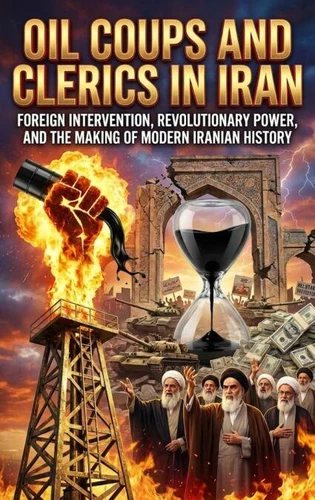
Oil Coups and Clerics in Iran. Foreign Intervention, Revolutionary Power, and the Making of Modern Iranian History
Par :Formats :
Disponible dans votre compte client Decitre ou Furet du Nord dès validation de votre commande. Le format ePub est :
- Compatible avec une lecture sur My Vivlio (smartphone, tablette, ordinateur)
- Compatible avec une lecture sur liseuses Vivlio
- Pour les liseuses autres que Vivlio, vous devez utiliser le logiciel Adobe Digital Edition. Non compatible avec la lecture sur les liseuses Kindle, Remarkable et Sony
 , qui est-ce ?
Notre partenaire de plateforme de lecture numérique où vous retrouverez l'ensemble de vos ebooks gratuitement
Pour en savoir plus sur nos ebooks, consultez notre aide en ligne ici
C'est si simple ! Lisez votre ebook avec l'app Vivlio sur votre tablette, mobile ou ordinateur :

- Nombre de pages193
- FormatePub
- ISBN978-3-565-27238-9
- EAN9783565272389
- Date de parution25/02/2026
- Protection num.pas de protection
- Taille2 Mo
- Infos supplémentairesepub
- ÉditeurEmphaloz Publishing House
Résumé
Iran's modern history cannot be understood without tracing three interlocking forces: the vast oil wealth that made the country a target for foreign intervention, the coups and political manipulations that repeatedly disrupted its sovereign development, and the clerical establishment that ultimately channeled decades of accumulated grievance into revolutionary transformation.
This book follows the arc from the 1901 D'Arcy oil concession through the 1953 CIA and MI6-backed coup that removed Prime Minister Mohammad Mosaddegh, the consolidation of Pahlavi autocracy, and the 1979 Islamic Revolution that reshaped the geopolitical order of the entire Middle East.
Drawing on declassified intelligence files, diplomatic correspondence, and Iranian primary sources, it examines how external powers shaped internal politics, how nationalist movements were suppressed and redirected, and how religious institutions filled the vacuum left by destroyed secular opposition. The result is a rigorously documented account of a country whose trajectory was altered repeatedly by forces operating far beyond its borders - and of the domestic actors who adapted, resisted, and ultimately prevailed on their own terms.
For readers seeking to understand why Iran relates to the West as it does today, this book traces the historical foundations with clarity, balance, and unflinching attention to documented evidence.
Drawing on declassified intelligence files, diplomatic correspondence, and Iranian primary sources, it examines how external powers shaped internal politics, how nationalist movements were suppressed and redirected, and how religious institutions filled the vacuum left by destroyed secular opposition. The result is a rigorously documented account of a country whose trajectory was altered repeatedly by forces operating far beyond its borders - and of the domestic actors who adapted, resisted, and ultimately prevailed on their own terms.
For readers seeking to understand why Iran relates to the West as it does today, this book traces the historical foundations with clarity, balance, and unflinching attention to documented evidence.
A propos de Sarah Whitfield








8,99 €