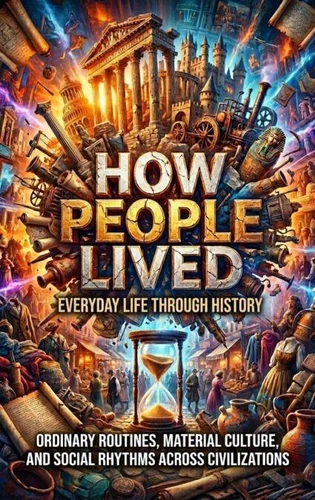
How People Lived: Everyday Life Through History. Ordinary Routines, Material Culture, and Social Rhythms Across Civilizations
Par :Formats :
Disponible dans votre compte client Decitre ou Furet du Nord dès validation de votre commande. Le format ePub est :
- Compatible avec une lecture sur My Vivlio (smartphone, tablette, ordinateur)
- Compatible avec une lecture sur liseuses Vivlio
- Pour les liseuses autres que Vivlio, vous devez utiliser le logiciel Adobe Digital Edition. Non compatible avec la lecture sur les liseuses Kindle, Remarkable et Sony
 , qui est-ce ?
Notre partenaire de plateforme de lecture numérique où vous retrouverez l'ensemble de vos ebooks gratuitement
Pour en savoir plus sur nos ebooks, consultez notre aide en ligne ici
C'est si simple ! Lisez votre ebook avec l'app Vivlio sur votre tablette, mobile ou ordinateur :

- Nombre de pages205
- FormatePub
- ISBN978-3-565-25223-7
- EAN9783565252237
- Date de parution16/02/2026
- Protection num.pas de protection
- Taille2 Mo
- Infos supplémentairesepub
- ÉditeurEmphaloz Publishing House
Résumé
History is not only made by kings and battles-it unfolds in kitchens, workshops, and marketplaces where ordinary people shaped their worlds through daily choices and routines. This exploration reconstructs everyday existence across different societies and epochs, using archaeological findings and documentary sources to reveal how people truly lived.
From Roman tenement dwellers to medieval peasants, from Ottoman artisans to Victorian factory workers, discover the material realities that defined human experience.
Examine what people ate, wore, and valued. Understand how they organized their homes, raised children, and navigated social hierarchies. Witness how technological changes-from the plow to the printing press-transformed domestic rhythms and community life. Archaeological evidence brings texture to these stories: cooking vessels reveal dietary patterns, building foundations show housing inequality, discarded objects illuminate consumption habits.
Documentary records-letters, account books, legal complaints-capture voices usually absent from grand narratives. Each chapter focuses on specific periods and regions, demonstrating that understanding daily life requires examining both continuity and change. The familiar and the foreign coexist in these reconstructions, showing how universal human needs met vastly different material conditions across time and geography.
Examine what people ate, wore, and valued. Understand how they organized their homes, raised children, and navigated social hierarchies. Witness how technological changes-from the plow to the printing press-transformed domestic rhythms and community life. Archaeological evidence brings texture to these stories: cooking vessels reveal dietary patterns, building foundations show housing inequality, discarded objects illuminate consumption habits.
Documentary records-letters, account books, legal complaints-capture voices usually absent from grand narratives. Each chapter focuses on specific periods and regions, demonstrating that understanding daily life requires examining both continuity and change. The familiar and the foreign coexist in these reconstructions, showing how universal human needs met vastly different material conditions across time and geography.