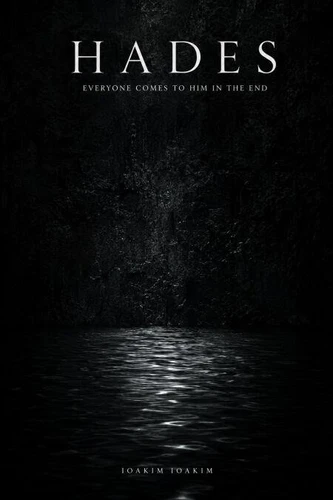
The poets got him wrong. They made him grey. Sorrowful. A figure at the edge of things, defined by what he lacks - light, warmth, the noise of the living world. They made him into a symbol of the thing they feared and could not look at directly, and like everything made into a symbol, he was made smaller than he was. Hades is the correction. Speaking in his own voice - precise, patient, without self-pity and without performance - Hades tells the truth of his kingdom and his life.
He was the first swallowed and the last released. He drew the underworld not because it was given to him but because, of the three brothers who divided the world, he was the one built to hold it. He has administered the most serious place in the universe with the attention of a god who understands that receiving is its own form of power, and that power exercised in silence is still power. Into his kingdom come the famous and the forgotten equally.
Heracles - who once descended living, took Cerberus on a chain, and left without asking permission - arrives at last to reckon with the man he humiliated. Orpheus comes twice: once alive, with his impossible music and his grief that hasn't given up yet, and once dead, carrying empty hands. The dead of Troy come in thousands - heroes whose names the poets preserved and fletchers whose names no one did.
And Persephone comes back, every year, stepping off Charon's boat with her hair loose and her expression of someone who has been very busy and is now, finally, somewhere she can think. This is a novel about what it means to keep the record. About the loneliness of the work that cannot be shared. About a marriage built on a door opened and a choice made with full knowledge. About what a hero becomes when there are no more labors.
About music, and grief, and the difference between looking back and letting go. And it is, finally, a novel addressed to you - to the reader, who is also going to die, and who will also arrive on that shore, and for whom someone is already waiting. Hades is the second novel in the mythological trilogy that began with Achilles. It can be read alone.
The poets got him wrong. They made him grey. Sorrowful. A figure at the edge of things, defined by what he lacks - light, warmth, the noise of the living world. They made him into a symbol of the thing they feared and could not look at directly, and like everything made into a symbol, he was made smaller than he was. Hades is the correction. Speaking in his own voice - precise, patient, without self-pity and without performance - Hades tells the truth of his kingdom and his life.
He was the first swallowed and the last released. He drew the underworld not because it was given to him but because, of the three brothers who divided the world, he was the one built to hold it. He has administered the most serious place in the universe with the attention of a god who understands that receiving is its own form of power, and that power exercised in silence is still power. Into his kingdom come the famous and the forgotten equally.
Heracles - who once descended living, took Cerberus on a chain, and left without asking permission - arrives at last to reckon with the man he humiliated. Orpheus comes twice: once alive, with his impossible music and his grief that hasn't given up yet, and once dead, carrying empty hands. The dead of Troy come in thousands - heroes whose names the poets preserved and fletchers whose names no one did.
And Persephone comes back, every year, stepping off Charon's boat with her hair loose and her expression of someone who has been very busy and is now, finally, somewhere she can think. This is a novel about what it means to keep the record. About the loneliness of the work that cannot be shared. About a marriage built on a door opened and a choice made with full knowledge. About what a hero becomes when there are no more labors.
About music, and grief, and the difference between looking back and letting go. And it is, finally, a novel addressed to you - to the reader, who is also going to die, and who will also arrive on that shore, and for whom someone is already waiting. Hades is the second novel in the mythological trilogy that began with Achilles. It can be read alone.

 , qui est-ce ?