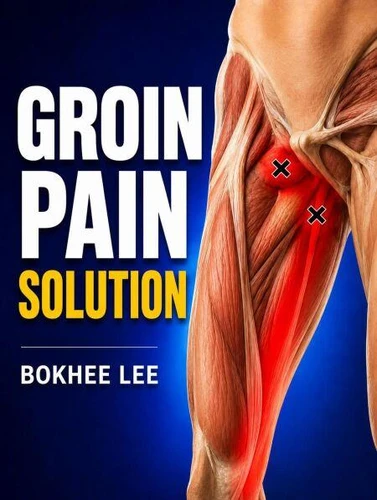
Groin pain can appear when you walk, stand up from a chair, climb stairs, squat, cross your legs, or spread your legs. For some people, it begins after exercise or prolonged sitting. For others, it seems to appear without an obvious reason and keeps returning. The pain may be felt deep inside the groin, around the front of the hip, near the pubic area, or along the inner thigh. It may also occur together with discomfort in the lower abdomen, pelvis, or lower back.
Why does groin pain appear in so many different ways?The groin is where the trunk, pelvis, and legs meet. Muscles, nerves, blood vessels, and the hip joint are closely connected in this small area. A problem that begins in one area can therefore be felt somewhere else. This book explains groin pain by looking beyond the painful spot itself. It explores how prolonged sitting, posture, repetitive movement, exercise, sexual activity, pregnancy and childbirth, and changes in the hip and pelvis can contribute to groin pain.
It also explains why pain may occur on only one side, why it may spread to nearby areas, and why it can keep returning. Groin pain can also resemble pain caused by hip joint problems, nerve irritation, or an inguinal hernia. Understanding these differences is an important part of knowing what your pain may be telling you. The final part of the book introduces practical self-care for the areas most closely related to groin pain, including muscle release, stretching, and strengthening.
If your groin pain keeps returning, the painful spot may be only one part of the problem. This book will help you understand the connections between the groin, hip, pelvis, abdomen, and lower back-and take a broader approach to caring for recurring groin pain.
Groin pain can appear when you walk, stand up from a chair, climb stairs, squat, cross your legs, or spread your legs. For some people, it begins after exercise or prolonged sitting. For others, it seems to appear without an obvious reason and keeps returning. The pain may be felt deep inside the groin, around the front of the hip, near the pubic area, or along the inner thigh. It may also occur together with discomfort in the lower abdomen, pelvis, or lower back.
Why does groin pain appear in so many different ways?The groin is where the trunk, pelvis, and legs meet. Muscles, nerves, blood vessels, and the hip joint are closely connected in this small area. A problem that begins in one area can therefore be felt somewhere else. This book explains groin pain by looking beyond the painful spot itself. It explores how prolonged sitting, posture, repetitive movement, exercise, sexual activity, pregnancy and childbirth, and changes in the hip and pelvis can contribute to groin pain.
It also explains why pain may occur on only one side, why it may spread to nearby areas, and why it can keep returning. Groin pain can also resemble pain caused by hip joint problems, nerve irritation, or an inguinal hernia. Understanding these differences is an important part of knowing what your pain may be telling you. The final part of the book introduces practical self-care for the areas most closely related to groin pain, including muscle release, stretching, and strengthening.
If your groin pain keeps returning, the painful spot may be only one part of the problem. This book will help you understand the connections between the groin, hip, pelvis, abdomen, and lower back-and take a broader approach to caring for recurring groin pain.


 , qui est-ce ?