Most people meet frozen shoulder on an ordinary morning-reaching for the shampoo, sliding an arm into a sleeve-when the arm simply stalls halfway and won't go further. It feels sudden. It almost never is. By the time the joint locks, the shoulder has been losing its movement quietly for years, and that is the part most treatment overlooks. This book takes a different starting point. Frozen shoulder is treated here not as a stiff joint to wait out, but as a disorder of movement with a traceable cause.
Drawing on years of clinical work with musculoskeletal pain, Bokhee Lee explains how rounded shoulders, a stiff upper back, a shoulder blade that no longer glides, and a rotator cuff that has slipped out of balance combine to lock the arm in place-and why the capsule is only one thread of the whole story. You will learn to read your own shoulder: which stage it is in, which muscles are holding it back, and why aggressive stretching at the wrong moment can set recovery back rather than speed it.
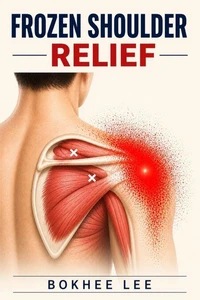
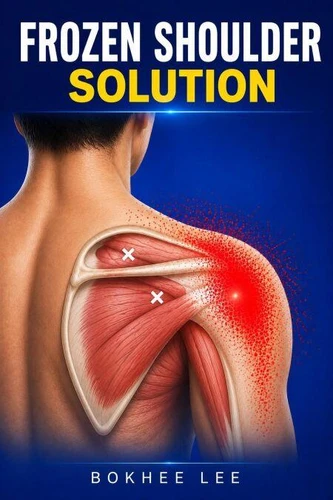
Each muscle most often involved in frozen shoulder-the infraspinatus, subscapularis, supraspinatus, serratus anterior, and the chest muscles that pull the shoulder forward-is explained in plain language, paired with self-care you can do at home with nothing more than a wall, a towel, or a massage ball. The approach is built in steps, because the shoulder recovers in steps. Calm the painful stage, win back movement through the frozen stage, and restore the full arc as the shoulder thaws.
The aim throughout is not simply to switch off the pain. Pain fading is not the same as healing. Real recovery is the return of movement-the moment your arm rises freely again, and you stop bracing every time you reach. Written for anyone living with a shoulder that won't lift, and for the family members, trainers, and therapists trying to help them understand why.
Most people meet frozen shoulder on an ordinary morning-reaching for the shampoo, sliding an arm into a sleeve-when the arm simply stalls halfway and won't go further. It feels sudden. It almost never is. By the time the joint locks, the shoulder has been losing its movement quietly for years, and that is the part most treatment overlooks. This book takes a different starting point. Frozen shoulder is treated here not as a stiff joint to wait out, but as a disorder of movement with a traceable cause.
Drawing on years of clinical work with musculoskeletal pain, Bokhee Lee explains how rounded shoulders, a stiff upper back, a shoulder blade that no longer glides, and a rotator cuff that has slipped out of balance combine to lock the arm in place-and why the capsule is only one thread of the whole story. You will learn to read your own shoulder: which stage it is in, which muscles are holding it back, and why aggressive stretching at the wrong moment can set recovery back rather than speed it.
Each muscle most often involved in frozen shoulder-the infraspinatus, subscapularis, supraspinatus, serratus anterior, and the chest muscles that pull the shoulder forward-is explained in plain language, paired with self-care you can do at home with nothing more than a wall, a towel, or a massage ball. The approach is built in steps, because the shoulder recovers in steps. Calm the painful stage, win back movement through the frozen stage, and restore the full arc as the shoulder thaws.
The aim throughout is not simply to switch off the pain. Pain fading is not the same as healing. Real recovery is the return of movement-the moment your arm rises freely again, and you stop bracing every time you reach. Written for anyone living with a shoulder that won't lift, and for the family members, trainers, and therapists trying to help them understand why.

 , qui est-ce ?