A routine disruptor who overcame chaos in his consulting days, crafting self-help habit systems, business guides for flexible operations, and historical accounts of productivity shifts in wartime economies.
Nouveauté
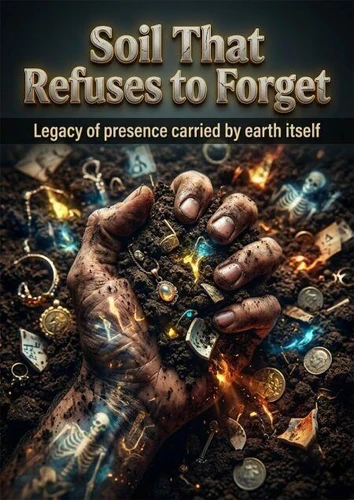
Soil That Refuses to Forget. Legacy of presence carried by earth itself
Par :Formats :
Disponible dans votre compte client Decitre ou Furet du Nord dès validation de votre commande. Le format ePub est :
- Compatible avec une lecture sur My Vivlio (smartphone, tablette, ordinateur)
- Compatible avec une lecture sur liseuses Vivlio
- Pour les liseuses autres que Vivlio, vous devez utiliser le logiciel Adobe Digital Edition. Non compatible avec la lecture sur les liseuses Kindle, Remarkable et Sony
 , qui est-ce ?
Notre partenaire de plateforme de lecture numérique où vous retrouverez l'ensemble de vos ebooks gratuitement
Pour en savoir plus sur nos ebooks, consultez notre aide en ligne ici
C'est si simple ! Lisez votre ebook avec l'app Vivlio sur votre tablette, mobile ou ordinateur :

- Nombre de pages155
- FormatePub
- ISBN978-3-565-58876-3
- EAN9783565588763
- Date de parution26/07/2026
- Protection num.pas de protection
- Taille1016 Ko
- Infos supplémentairesepub
- ÉditeurEmphaloz Publishing House
Résumé
They did not only survive. On plantations stretching from Virginia to Bahia, enslaved Africans and their descendants built courts, conspired in markets, and planned insurrections under the eyes of overseers. This book traces how enslaved people understood their own political power-not as victims waiting for emancipation, but as strategic actors who negotiated, rebelled, and forged autonomous communities within a system designed to erase them.
It examines the internal governance of maroon settlements, the intelligence networks that preceded revolts like the Haitian Revolution, and the legal arguments enslaved people made in colonial courts to claim freedom. Rather than a narrative of abolition from above, this is a history of resistance as statecraft: how people without formal authority created laws, alliances, and military strategies that forced empires to negotiate.
The book concludes by showing how these early forms of Black political organization shaped post-emancipation societies across the Americas and remain embedded in contemporary struggles for justice.
It examines the internal governance of maroon settlements, the intelligence networks that preceded revolts like the Haitian Revolution, and the legal arguments enslaved people made in colonial courts to claim freedom. Rather than a narrative of abolition from above, this is a history of resistance as statecraft: how people without formal authority created laws, alliances, and military strategies that forced empires to negotiate.
The book concludes by showing how these early forms of Black political organization shaped post-emancipation societies across the Americas and remain embedded in contemporary struggles for justice.
A propos de Elton Quill




24,99 €


9,99 €