SOLDES
Jusqu'à -70% sur une sélection d'articles*

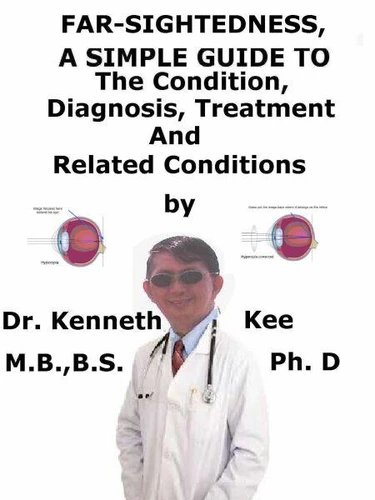
Far-Sightedness, A Simple Guide To The Condition, Diagnosis, Treatment And Related Conditions
Par :Formats :
Disponible dans votre compte client Decitre ou Furet du Nord dès validation de votre commande. Le format ePub est :
- Compatible avec une lecture sur My Vivlio (smartphone, tablette, ordinateur)
- Compatible avec une lecture sur liseuses Vivlio
- Pour les liseuses autres que Vivlio, vous devez utiliser le logiciel Adobe Digital Edition. Non compatible avec la lecture sur les liseuses Kindle, Remarkable et Sony
 , qui est-ce ?
Notre partenaire de plateforme de lecture numérique où vous retrouverez l'ensemble de vos ebooks gratuitement
Pour en savoir plus sur nos ebooks, consultez notre aide en ligne ici
C'est si simple ! Lisez votre ebook avec l'app Vivlio sur votre tablette, mobile ou ordinateur :

- FormatePub
- ISBN978-1-005-15866-8
- EAN9781005158668
- Date de parution10/10/2020
- Protection num.pas de protection
- Infos supplémentairesepub
- ÉditeurC. C. Chamberlane
Résumé
This book describes Far-Sightedness, Diagnosis and Treatment and Related DiseasesFarsightedness means the person can clearly see things that are far away, but things that are close-up are blurred. The medical term for farsightedness is hyperopia. This is an important condition because many of us have to make use of reading or magnifying glasses to see words or objects that are close to the eyes. There are differing degrees of farsightedness, depending on the eyes' capability to focus on close-up objects.
If the person can only clearly see objects that are very far away, the person is seriously farsighted. Risk factors of Farsightedness1. Genetic - children of farsighted parents normally have farsightednessFarsightedness normally is present at birth and tends to run in families.2. Environmental such as:a. Long periods of reading small charactersb. Childhood illness may aggravate the farsightednessc.
Poor lighting and eye strainThe causes are:1. The globe of the eye is too short so the focus of the light coming into the eye falls further than the retina ( the pigmented cells which pick up the focus of the light and transmit to the brain as pictures) resulting in poor vision2. Too flat curvature of the cornea or lens induces the focus of light coming into the again fall further than the retina.3.
Displacement of the lens backward can also induce the focus of the light coming into the eye to fall further than the retina. Symptoms are:1. Blurred vision for words or objects up closeNearby objects may appear blurred2. Squinting to see betterThe person needs to squint to see clearly3. An aching or burning sensation around the eyesThe person has eyestrain, such as burning eyes, and aching in or around the eyes4.
A headache after reading or other tasks that need the person to focus on something up closeThe person has the general eye discomfort or headache after performing close tasks, such as reading, writing, computer work or drawing, for a timeIn children, strabismus (crossed eyes) can form when significant farsightedness has not been diagnosed and corrected. Farsightedness is diagnosed by a basic health exam including a refraction assessment.
A refraction assessment determines vision disorders such as nearsightedness or farsightedness, astigmatism, or presbyopia. First the eye doctor will test the vision at different distances with an eye chart.1. Testing eyesight from Snellen chart2. Computerized eyesight testing.3. Proper examination by an eye specialist to rule out other causes of blurring of vision and astigmatismDepending on the results, the doctor may advise a dilated eye exam.
Dilated eyes allow the doctor to see the back of the eye more clearly. The doctor utilizes a magnifying lens or retinoscope to look more closely at the eyes. They will also have the person look through a range of lenses in order to correct the vision, making close objects appear clearly. The purpose of treating farsightedness is to help focus light on the retina through the use of corrective lenses or refractive surgery.
Treatment comprises correction of refractive error through:1. Correction of refractive errors of farsightedness with spectacles2. Contact lenses3. Lasik4. KeratomyThough refractive surgery rarely produces severe complications, it is possible that it may injure the vision. Actually, farsightedness in children often does not need to be treated. An eye doctor may prescribe eyeglasses for a child only if:1.
There is a big difference in vision between eyes2. They are developing strabismus (crossed eyes)3. Their vision is greatly involvedSurgery in children is not advocated....
If the person can only clearly see objects that are very far away, the person is seriously farsighted. Risk factors of Farsightedness1. Genetic - children of farsighted parents normally have farsightednessFarsightedness normally is present at birth and tends to run in families.2. Environmental such as:a. Long periods of reading small charactersb. Childhood illness may aggravate the farsightednessc.
Poor lighting and eye strainThe causes are:1. The globe of the eye is too short so the focus of the light coming into the eye falls further than the retina ( the pigmented cells which pick up the focus of the light and transmit to the brain as pictures) resulting in poor vision2. Too flat curvature of the cornea or lens induces the focus of light coming into the again fall further than the retina.3.
Displacement of the lens backward can also induce the focus of the light coming into the eye to fall further than the retina. Symptoms are:1. Blurred vision for words or objects up closeNearby objects may appear blurred2. Squinting to see betterThe person needs to squint to see clearly3. An aching or burning sensation around the eyesThe person has eyestrain, such as burning eyes, and aching in or around the eyes4.
A headache after reading or other tasks that need the person to focus on something up closeThe person has the general eye discomfort or headache after performing close tasks, such as reading, writing, computer work or drawing, for a timeIn children, strabismus (crossed eyes) can form when significant farsightedness has not been diagnosed and corrected. Farsightedness is diagnosed by a basic health exam including a refraction assessment.
A refraction assessment determines vision disorders such as nearsightedness or farsightedness, astigmatism, or presbyopia. First the eye doctor will test the vision at different distances with an eye chart.1. Testing eyesight from Snellen chart2. Computerized eyesight testing.3. Proper examination by an eye specialist to rule out other causes of blurring of vision and astigmatismDepending on the results, the doctor may advise a dilated eye exam.
Dilated eyes allow the doctor to see the back of the eye more clearly. The doctor utilizes a magnifying lens or retinoscope to look more closely at the eyes. They will also have the person look through a range of lenses in order to correct the vision, making close objects appear clearly. The purpose of treating farsightedness is to help focus light on the retina through the use of corrective lenses or refractive surgery.
Treatment comprises correction of refractive error through:1. Correction of refractive errors of farsightedness with spectacles2. Contact lenses3. Lasik4. KeratomyThough refractive surgery rarely produces severe complications, it is possible that it may injure the vision. Actually, farsightedness in children often does not need to be treated. An eye doctor may prescribe eyeglasses for a child only if:1.
There is a big difference in vision between eyes2. They are developing strabismus (crossed eyes)3. Their vision is greatly involvedSurgery in children is not advocated....
A propos de Kenneth Kee
4,49 €