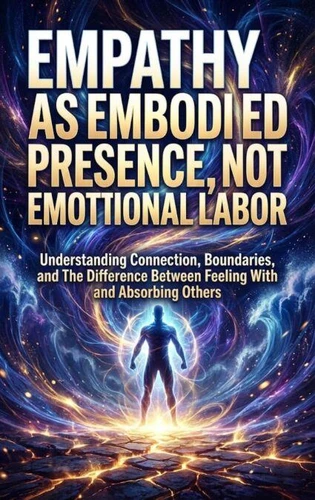
Empathy as Embodied Presence, Not Emotional Labor. Understanding Connection, Boundaries, and The Difference Between Feeling With and Absorbing Others
Par :Formats :
Disponible dans votre compte client Decitre ou Furet du Nord dès validation de votre commande. Le format ePub est :
- Compatible avec une lecture sur My Vivlio (smartphone, tablette, ordinateur)
- Compatible avec une lecture sur liseuses Vivlio
- Pour les liseuses autres que Vivlio, vous devez utiliser le logiciel Adobe Digital Edition. Non compatible avec la lecture sur les liseuses Kindle, Remarkable et Sony
 , qui est-ce ?
Notre partenaire de plateforme de lecture numérique où vous retrouverez l'ensemble de vos ebooks gratuitement
Pour en savoir plus sur nos ebooks, consultez notre aide en ligne ici
C'est si simple ! Lisez votre ebook avec l'app Vivlio sur votre tablette, mobile ou ordinateur :

- Nombre de pages189
- FormatePub
- ISBN978-3-565-20494-6
- EAN9783565204946
- Date de parution28/01/2026
- Protection num.pas de protection
- Taille2 Mo
- Infos supplémentairesepub
- ÉditeurEmphaloz Publishing House
Résumé
Empathy isn't about taking on someone else's pain or fixing their problems. It's not about being endlessly available or sacrificing your wellbeing to prove you care. Real empathy is the capacity to feel with someone without losing yourself in their experience-to witness their emotions without needing to change, solve, or carry them.
This book explores what empathy actually requires, examining the difference between genuine connection and emotional enmeshment, between compassion and codependency.
It draws on attachment research and nervous system science to show why some people feel too much while others struggle to feel at all, and how both patterns often stem from the same wound: unclear boundaries around emotional experience. Rather than treating empathy as an innate trait you either have or don't, it examines empathy as a skill that depends on self-regulation, emotional literacy, and the ability to hold space without collapsing into rescue or avoidance.
It explores why feeling deeply doesn't mean you're responsible for fixing, why presence matters more than solutions, and why your own emotional clarity is what makes connection possible. For those who feel drained by others' emotions, who confuse empathy with self-sacrifice, or who want deeper connection without losing themselves, this book offers insight into what empathy looks like when it's grounded in both openness and boundaries.
It draws on attachment research and nervous system science to show why some people feel too much while others struggle to feel at all, and how both patterns often stem from the same wound: unclear boundaries around emotional experience. Rather than treating empathy as an innate trait you either have or don't, it examines empathy as a skill that depends on self-regulation, emotional literacy, and the ability to hold space without collapsing into rescue or avoidance.
It explores why feeling deeply doesn't mean you're responsible for fixing, why presence matters more than solutions, and why your own emotional clarity is what makes connection possible. For those who feel drained by others' emotions, who confuse empathy with self-sacrifice, or who want deeper connection without losing themselves, this book offers insight into what empathy looks like when it's grounded in both openness and boundaries.