SOLDES
Jusqu'à -70% sur une sélection d'articles*

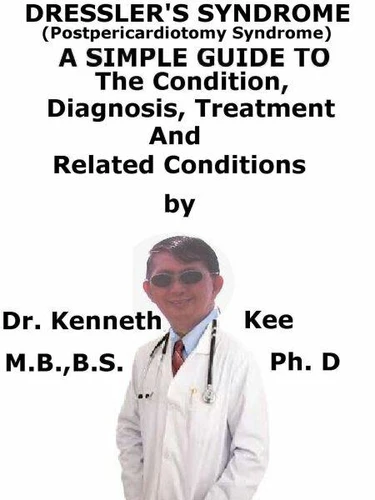
Dressler’s Syndrome, (Postpericardiotomy Syndrome) A Simple Guide To The Condition, Diagnosis, Treatment And Related Conditions
Par :Formats :
Disponible dans votre compte client Decitre ou Furet du Nord dès validation de votre commande. Le format ePub est :
- Compatible avec une lecture sur My Vivlio (smartphone, tablette, ordinateur)
- Compatible avec une lecture sur liseuses Vivlio
- Pour les liseuses autres que Vivlio, vous devez utiliser le logiciel Adobe Digital Edition. Non compatible avec la lecture sur les liseuses Kindle, Remarkable et Sony
 , qui est-ce ?
Notre partenaire de plateforme de lecture numérique où vous retrouverez l'ensemble de vos ebooks gratuitement
Pour en savoir plus sur nos ebooks, consultez notre aide en ligne ici
C'est si simple ! Lisez votre ebook avec l'app Vivlio sur votre tablette, mobile ou ordinateur :

- FormatePub
- ISBN978-1-370-10342-3
- EAN9781370103423
- Date de parution24/10/2017
- Protection num.pas de protection
- Infos supplémentairesepub
- ÉditeurEditeurs divers USA
Résumé
Dressler's syndrome (or postpericardiotomy syndrome) is classified as a form of pericarditis, inflammation of the sac surrounding the heart. The inflammation is thought to be a response of the immune system after a traumatic injury or damage to the heart tissue such as from a heart attack or open heart surgery. Dressler's syndrome is less frequent that it used to beTwo forms of pericarditis can happen after a heart attack:Early pericarditis:This is a disorder that normally happens within 1 to 3 days after a heart attack.
When the body attempts to clean and heal the diseased heart tissue, swelling and inflammation happen. Late pericarditis (Dressler's syndrome)This is a disorder that normally happens several weeks or months after a heart attack, open heart surgery, or other chest traumaDressler's syndrome is thought to be caused by the immune system wrongly attacking healthy heart tissue. This is customary a post-myocardial infarction syndrome, normally happening two to five weeks after the early event but it can be delayed for as long as three months.
Dressler's syndrome has typical features such as:1. Pleuritic chest pain, 2. Low-grade fever and3. Pericarditis (autopsy shows localized fibrinous pericarditis), together with pericardial effusion. It is likely to follow a benign medical course. Dressler's syndrome has been observed after heart surgery, percutaneous intervention, pacemaker implantation, radiofrequency ablation and pulmonary vein isolationCausesWhen the heart tissue is injured, the body responses to damaged tissue by sending immune cells and proteins called antibodies to clean and heal the injured areaOccasionally the reaction from the immune system produces excessive inflammation in the sac surrounding the heart, producing Dressler's syndrome.
Risk factorsIf a person has had a prior episode of Dressler's syndrome, it is more likely to occur again. It appears more likely to happen after a large infarct. SymptomsSymptoms of Dressler's syndrome tend to occur 2-5 weeks or three months after a heart attack, open heart surgery or other chest trauma. It normally manifests two to five weeks after the early episode, with pain and fever that may indicate further infarction.
The pain is the primary symptom, often in the left shoulder, often pleuritic, and worse on lying down. There may be fatigue, fever and shortness of breath. Infrequently, it may induce cardiac tamponade or acute pneumonitis. The sound of pericardial friction rub may be heard with the stethoscope. The normal sound of pericarditis is expressed as like the sound of boots walking over fresh snow. DiagnosisDressler's syndrome is diagnosed by the presence of:Postcardiotomy pleuritic chest pain, Low-grade fever and pericarditisSerology may show heart autoantibodies.
ECG may show ST elevation in most leads without reciprocal ST depression, typical of pericardial effusion. Echocardiography shows pericardial effusion. MRI scan may show an effusion and, recently, has been shown to reveal pericardial involvementCXR shows pleural effusions in 83%, parenchymal opacities in 74%, and an enlarged cardiac silhouette in 49%. Treatment1. Aspirin may be given in large doses.2.
Other non-steroidal anti-inflammatory drugs (NSAIDs) or corticosteroids may be given, particularly if there are severe and recurrent symptoms.3. Steroids are especially valuable where severe symptoms require pericardiocentesis, and when infection has been ruled out. In resistant or repeat occurrences, colchicine may be helpful. If there is considerable pericardial effusion, then pericardiocentesis, requiring aspiration of the fluid, may be needed to alleviate the constriction on the heart.
TABLE OF CONTENTIntroductionChapter 1 Dressler's SyndromeChapter 2 CausesChapter 3 Sy...
When the body attempts to clean and heal the diseased heart tissue, swelling and inflammation happen. Late pericarditis (Dressler's syndrome)This is a disorder that normally happens several weeks or months after a heart attack, open heart surgery, or other chest traumaDressler's syndrome is thought to be caused by the immune system wrongly attacking healthy heart tissue. This is customary a post-myocardial infarction syndrome, normally happening two to five weeks after the early event but it can be delayed for as long as three months.
Dressler's syndrome has typical features such as:1. Pleuritic chest pain, 2. Low-grade fever and3. Pericarditis (autopsy shows localized fibrinous pericarditis), together with pericardial effusion. It is likely to follow a benign medical course. Dressler's syndrome has been observed after heart surgery, percutaneous intervention, pacemaker implantation, radiofrequency ablation and pulmonary vein isolationCausesWhen the heart tissue is injured, the body responses to damaged tissue by sending immune cells and proteins called antibodies to clean and heal the injured areaOccasionally the reaction from the immune system produces excessive inflammation in the sac surrounding the heart, producing Dressler's syndrome.
Risk factorsIf a person has had a prior episode of Dressler's syndrome, it is more likely to occur again. It appears more likely to happen after a large infarct. SymptomsSymptoms of Dressler's syndrome tend to occur 2-5 weeks or three months after a heart attack, open heart surgery or other chest trauma. It normally manifests two to five weeks after the early episode, with pain and fever that may indicate further infarction.
The pain is the primary symptom, often in the left shoulder, often pleuritic, and worse on lying down. There may be fatigue, fever and shortness of breath. Infrequently, it may induce cardiac tamponade or acute pneumonitis. The sound of pericardial friction rub may be heard with the stethoscope. The normal sound of pericarditis is expressed as like the sound of boots walking over fresh snow. DiagnosisDressler's syndrome is diagnosed by the presence of:Postcardiotomy pleuritic chest pain, Low-grade fever and pericarditisSerology may show heart autoantibodies.
ECG may show ST elevation in most leads without reciprocal ST depression, typical of pericardial effusion. Echocardiography shows pericardial effusion. MRI scan may show an effusion and, recently, has been shown to reveal pericardial involvementCXR shows pleural effusions in 83%, parenchymal opacities in 74%, and an enlarged cardiac silhouette in 49%. Treatment1. Aspirin may be given in large doses.2.
Other non-steroidal anti-inflammatory drugs (NSAIDs) or corticosteroids may be given, particularly if there are severe and recurrent symptoms.3. Steroids are especially valuable where severe symptoms require pericardiocentesis, and when infection has been ruled out. In resistant or repeat occurrences, colchicine may be helpful. If there is considerable pericardial effusion, then pericardiocentesis, requiring aspiration of the fluid, may be needed to alleviate the constriction on the heart.
TABLE OF CONTENTIntroductionChapter 1 Dressler's SyndromeChapter 2 CausesChapter 3 Sy...
A propos de Kenneth Kee
4,49 €