Nouveauté
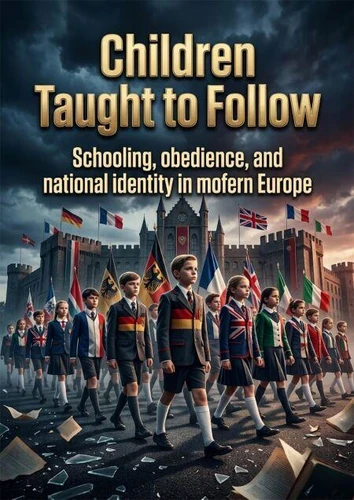
Children Taught to Follow. Schooling, obedience, and national identity in modern Europe
Par :Formats :
Disponible dans votre compte client Decitre ou Furet du Nord dès validation de votre commande. Le format ePub est :
- Compatible avec une lecture sur My Vivlio (smartphone, tablette, ordinateur)
- Compatible avec une lecture sur liseuses Vivlio
- Pour les liseuses autres que Vivlio, vous devez utiliser le logiciel Adobe Digital Edition. Non compatible avec la lecture sur les liseuses Kindle, Remarkable et Sony
 , qui est-ce ?
Notre partenaire de plateforme de lecture numérique où vous retrouverez l'ensemble de vos ebooks gratuitement
Pour en savoir plus sur nos ebooks, consultez notre aide en ligne ici
C'est si simple ! Lisez votre ebook avec l'app Vivlio sur votre tablette, mobile ou ordinateur :

- Nombre de pages165
- FormatePub
- ISBN978-3-565-59489-4
- EAN9783565594894
- Date de parution28/07/2026
- Protection num.pas de protection
- Taille992 Ko
- Infos supplémentairesepub
- ÉditeurEmphaloz Publishing House
Résumé
Behind every modern European nation-state stood a classroom. This book uncovers how governments from the Napoleonic era through the Cold War used compulsory education not primarily to enlighten, but to forge loyal subjects, obedient soldiers, and productive workers. It traces the curriculum wars over history textbooks in France, the Prussian drills designed to instill punctuality and deference, the role of boarding schools in cementing imperial rule across British colonies, and the systematic purging of teachers under fascist regimes.
Drawing on school records, parliamentary debates, and the writings of educators who resisted or enforced these policies, the narrative reveals education as a quiet battlefield where the soul of each generation was contested. The book argues that the modern European classroom was never neutral-it was the primary instrument through which states taught their citizens who to obey, what to remember, and how to belong.
Its legacy persists in every debate about patriotism in schools today.
Drawing on school records, parliamentary debates, and the writings of educators who resisted or enforced these policies, the narrative reveals education as a quiet battlefield where the soul of each generation was contested. The book argues that the modern European classroom was never neutral-it was the primary instrument through which states taught their citizens who to obey, what to remember, and how to belong.
Its legacy persists in every debate about patriotism in schools today.