A two-time career changer who navigated industry crashes, developing self-help confidence builders, business frameworks for transitions, and historical narratives of labor migrations.
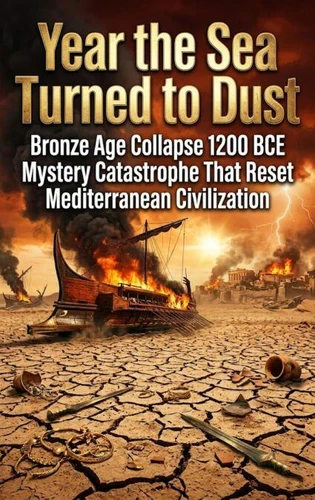
Year the Sea Turned to Dust. Bronze Age Collapse 1200 BCE Mystery Catastrophe That Reset Mediterranean Civilization
Par :Formats :
Disponible dans votre compte client Decitre ou Furet du Nord dès validation de votre commande. Le format ePub est :
- Compatible avec une lecture sur My Vivlio (smartphone, tablette, ordinateur)
- Compatible avec une lecture sur liseuses Vivlio
- Pour les liseuses autres que Vivlio, vous devez utiliser le logiciel Adobe Digital Edition. Non compatible avec la lecture sur les liseuses Kindle, Remarkable et Sony
 , qui est-ce ?
Notre partenaire de plateforme de lecture numérique où vous retrouverez l'ensemble de vos ebooks gratuitement
Pour en savoir plus sur nos ebooks, consultez notre aide en ligne ici
C'est si simple ! Lisez votre ebook avec l'app Vivlio sur votre tablette, mobile ou ordinateur :

- Nombre de pages169
- FormatePub
- ISBN978-3-565-46202-5
- EAN9783565462025
- Date de parution27/05/2026
- Protection num.pas de protection
- Taille2 Mo
- Infos supplémentairesepub
- ÉditeurEmphaloz Publishing House
Résumé
This book follows a narrow window around 1200 BCE when palaces, empires, and trade routes from Greece to Egypt fractured almost at once, turning the Mediterranean into a landscape of burning coastlines and broken archives. It reads the so-called "Bronze Age Collapse" not as a single event but as a cascade-where climate stress, mass migration, and systemic fragility converge to reset how humanity organizes power, memory, and exchange.
The first mechanism is climatic and environmental strain: paleoclimatic data and textual records show prolonged drought, failing harvests, and disrupted river flows that undermined palace economies built on predictable surplus and tightly controlled resources.
The second is systemic interdependence and trade rupture: the collapse of small but critical networks-especially for copper and tin-crippled the military and symbolic infrastructure of rulers who relied on imported bronze and long-distance diplomacy. The third is displacement and conflict, often bundled under the "Sea Peoples" label, in which migrating groups, pushed by their own crises, collided with already stressed states, triggering waves of destruction, resettlement, and cultural fragmentation that reshaped the eastern Mediterranean for centuries.
The second is systemic interdependence and trade rupture: the collapse of small but critical networks-especially for copper and tin-crippled the military and symbolic infrastructure of rulers who relied on imported bronze and long-distance diplomacy. The third is displacement and conflict, often bundled under the "Sea Peoples" label, in which migrating groups, pushed by their own crises, collided with already stressed states, triggering waves of destruction, resettlement, and cultural fragmentation that reshaped the eastern Mediterranean for centuries.