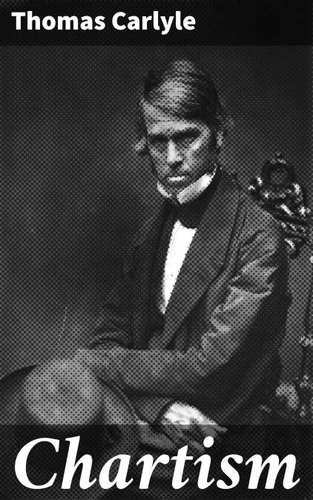
Chartism. Unveiling the Struggles: A Deep Dive into the Working Class Movement for Social Justice in 19th-Century Britain
Par :Formats :
Disponible dans votre compte client Decitre ou Furet du Nord dès validation de votre commande. Le format ePub est :
- Compatible avec une lecture sur My Vivlio (smartphone, tablette, ordinateur)
- Compatible avec une lecture sur liseuses Vivlio
- Pour les liseuses autres que Vivlio, vous devez utiliser le logiciel Adobe Digital Edition. Non compatible avec la lecture sur les liseuses Kindle, Remarkable et Sony
 , qui est-ce ?
Notre partenaire de plateforme de lecture numérique où vous retrouverez l'ensemble de vos ebooks gratuitement
Pour en savoir plus sur nos ebooks, consultez notre aide en ligne ici
C'est si simple ! Lisez votre ebook avec l'app Vivlio sur votre tablette, mobile ou ordinateur :

- Nombre de pages78
- FormatePub
- ISBN406-4-06-606293-4
- EAN4064066062934
- Date de parution08/12/2020
- Protection num.Digital Watermarking
- Taille573 Ko
- Infos supplémentairesepub
- ÉditeurGOOD PRESS
Résumé
In "Chartism, " Thomas Carlyle presents a passionate and incisive critique of the social and political upheaval that marked 19th-century England. This powerful essay intertwines vivid rhetoric with a deep historical analysis, exploring the plight of the working class in the wake of the Industrial Revolution. Carlyle employs a dynamic prose style that blends narrative, polemic, and philosophical discourse, situating the Chartist movement within a broader critique of materialism and moral decay, while advocating for a more humane society grounded in ethical responsibility.
Thomas Carlyle (1795-1881) was a Scottish philosopher, historian, and essayist whose intellectual pursuits were often informed by his experiences in a rapidly industrializing world. His disdain for superficial material success and his fervent belief in the dignity of human labor propelled him toward engaging with the Chartist movement'Äîa working-class campaign for political reform. Carlyle'Äôs own struggles with societal change profoundly influenced his thinking, prompting him to champion the cause of social justice and individual integrity.
"Chartism" is an essential read for anyone interested in the intersection of literature and social thought, as it not only elucidates the historical context of the movement but also resonates with contemporary issues of inequality and justice. Carlyle's eloquent advocacy for the marginalized makes this work a timeless reflection on the human condition and a call to consider the moral implications of societal structures.
Thomas Carlyle (1795-1881) was a Scottish philosopher, historian, and essayist whose intellectual pursuits were often informed by his experiences in a rapidly industrializing world. His disdain for superficial material success and his fervent belief in the dignity of human labor propelled him toward engaging with the Chartist movement'Äîa working-class campaign for political reform. Carlyle'Äôs own struggles with societal change profoundly influenced his thinking, prompting him to champion the cause of social justice and individual integrity.
"Chartism" is an essential read for anyone interested in the intersection of literature and social thought, as it not only elucidates the historical context of the movement but also resonates with contemporary issues of inequality and justice. Carlyle's eloquent advocacy for the marginalized makes this work a timeless reflection on the human condition and a call to consider the moral implications of societal structures.
A propos de Thomas Carlyle



1,99 €

0,99 €