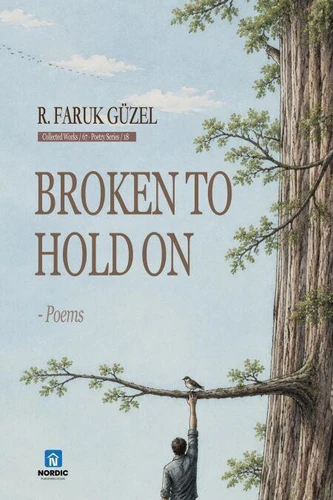
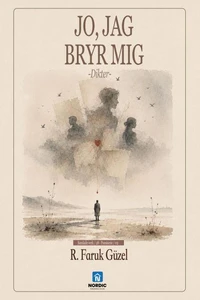
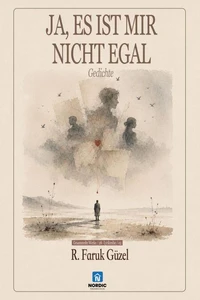
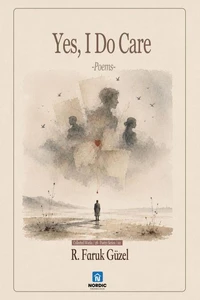
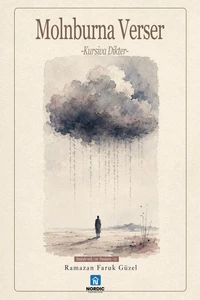
Some books are born of an argument, some of a memory, some of a hurt carried for a long time. Broken to Hold On meets the human effort to stay upright not merely as a story of endurance, but as an experience of breaking, confrontation, and reshaping... The title reads, at first, like an admission of injury. But the phrase carries more than pain: it carries the ethics, the frailty, the stubbornness and the depth of the person who passes through that pain.
To break, here, is no simple defeat. It is, rather, a test that takes place inside every branch reached for so as not to fall, every wall leaned on, every name called out to, every belief taken shelter in, and every meaning carried forward from the past into the present. Sometimes a person holds on in order not to come apart: to a friend, a word, a prayer, a memory, a cause, a song, the silence of a stone, the chance that a door might open...
But holding on is never entirely innocent. In trying to save ourselves, we can hurt, without meaning to, the very thing we hold on to. Sometimes we lay our own weight on someone else's shoulder. The poet, too, ties his hope not to the branch, but to his own fear that the branch will not break. This book asks that hard question through poetry: what did we break while holding on, and what did we protect while breaking?...
Broken to Hold On is not only a book of private pain. In it lives the shamelessness of an age, the loneliness of a humanity scattered across the universe, the wearing down of the sense of justice, the void that indifference opens in the conscience, the grief of being unable to explain oneself, and the effort to remain human in a time when every way out is closed. The book carries a personal wound into a social testimony, and that social testimony further into a metaphysical inquiry..
There is no easy comfort in these poems. No wound is turned to light too quickly. No fracture is closed with a sentence of wisdom. The poet does not hide the weak, contradictory, flawed side of a person, the side that is at times a stranger even to itself. This is why the book carries a genuine harshness. But that harshness is not despair. Because even in the darkest place there is a wall to breathe behind for one more moment, the chance of a path, a door drawn by a child, the mute memory of a stone, an old voice leaking out of a song, and a person's courage to still say: I am here.
As Nordic Publishing House, we see this book as testimony that asks to be read more slowly, inside an age of words consumed, polished and forgotten with such speed. Broken to Hold On offers its reader no ready answers; it invites them to look at their own way of breaking, their own ethics of holding on, the static-ridden frequencies of their own past, and the untamed face of their own fate. In this book, the one who breaks is not only a victim.
The one who holds on is not only a hero. The person here is one who, while falling, learns not to pull another down; who, while breaking, tries not to lose themselves entirely; who wants to leave behind, in the end, not some great victory, but perhaps only a small and honest trace, enough for someone to say: a human being passed through here. Broken to Hold On is, in this sense, as much a book of pain as it is a book of responsibility.
As much a book without a way out as it is the poetic record of remaining human inside that very absence of a way out. As Nordic Publishing House, in offering this work to the reader, we hope-not only that it will be read, but heard;-not only that it will be understood, but that it will resonate by touching the broken places within the reader themselves.
Some books are born of an argument, some of a memory, some of a hurt carried for a long time. Broken to Hold On meets the human effort to stay upright not merely as a story of endurance, but as an experience of breaking, confrontation, and reshaping... The title reads, at first, like an admission of injury. But the phrase carries more than pain: it carries the ethics, the frailty, the stubbornness and the depth of the person who passes through that pain.
To break, here, is no simple defeat. It is, rather, a test that takes place inside every branch reached for so as not to fall, every wall leaned on, every name called out to, every belief taken shelter in, and every meaning carried forward from the past into the present. Sometimes a person holds on in order not to come apart: to a friend, a word, a prayer, a memory, a cause, a song, the silence of a stone, the chance that a door might open...
But holding on is never entirely innocent. In trying to save ourselves, we can hurt, without meaning to, the very thing we hold on to. Sometimes we lay our own weight on someone else's shoulder. The poet, too, ties his hope not to the branch, but to his own fear that the branch will not break. This book asks that hard question through poetry: what did we break while holding on, and what did we protect while breaking?...
Broken to Hold On is not only a book of private pain. In it lives the shamelessness of an age, the loneliness of a humanity scattered across the universe, the wearing down of the sense of justice, the void that indifference opens in the conscience, the grief of being unable to explain oneself, and the effort to remain human in a time when every way out is closed. The book carries a personal wound into a social testimony, and that social testimony further into a metaphysical inquiry..
There is no easy comfort in these poems. No wound is turned to light too quickly. No fracture is closed with a sentence of wisdom. The poet does not hide the weak, contradictory, flawed side of a person, the side that is at times a stranger even to itself. This is why the book carries a genuine harshness. But that harshness is not despair. Because even in the darkest place there is a wall to breathe behind for one more moment, the chance of a path, a door drawn by a child, the mute memory of a stone, an old voice leaking out of a song, and a person's courage to still say: I am here.
As Nordic Publishing House, we see this book as testimony that asks to be read more slowly, inside an age of words consumed, polished and forgotten with such speed. Broken to Hold On offers its reader no ready answers; it invites them to look at their own way of breaking, their own ethics of holding on, the static-ridden frequencies of their own past, and the untamed face of their own fate. In this book, the one who breaks is not only a victim.
The one who holds on is not only a hero. The person here is one who, while falling, learns not to pull another down; who, while breaking, tries not to lose themselves entirely; who wants to leave behind, in the end, not some great victory, but perhaps only a small and honest trace, enough for someone to say: a human being passed through here. Broken to Hold On is, in this sense, as much a book of pain as it is a book of responsibility.
As much a book without a way out as it is the poetic record of remaining human inside that very absence of a way out. As Nordic Publishing House, in offering this work to the reader, we hope-not only that it will be read, but heard;-not only that it will be understood, but that it will resonate by touching the broken places within the reader themselves.