Mae Collinsworth is a nonfiction author known for writing thoughtful books on relationships, emotional healing, and personal transformation. Her warm and approachable style blends psychological insight with everyday reflection, helping readers navigate change with greater confidence and self-understanding.
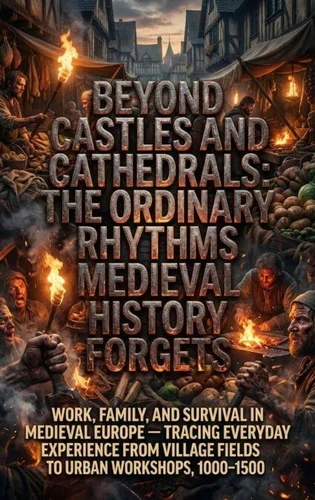
Beyond Castles and Cathedrals: The Ordinary Rhythms Medieval History Forgets. Work, Family, and Survival in Medieval Europe — Tracing Everyday Experience From Village Fields to Urban Workshops, 1000–1500
Par :Formats :
Disponible dans votre compte client Decitre ou Furet du Nord dès validation de votre commande. Le format ePub est :
- Compatible avec une lecture sur My Vivlio (smartphone, tablette, ordinateur)
- Compatible avec une lecture sur liseuses Vivlio
- Pour les liseuses autres que Vivlio, vous devez utiliser le logiciel Adobe Digital Edition. Non compatible avec la lecture sur les liseuses Kindle, Remarkable et Sony
 , qui est-ce ?
Notre partenaire de plateforme de lecture numérique où vous retrouverez l'ensemble de vos ebooks gratuitement
Pour en savoir plus sur nos ebooks, consultez notre aide en ligne ici
C'est si simple ! Lisez votre ebook avec l'app Vivlio sur votre tablette, mobile ou ordinateur :

- Nombre de pages200
- FormatePub
- ISBN978-3-565-20316-1
- EAN9783565203161
- Date de parution28/01/2026
- Protection num.pas de protection
- Taille2 Mo
- Infos supplémentairesepub
- ÉditeurEmphaloz Publishing House
Résumé
Medieval Europe is remembered through its monuments-stone castles, soaring cathedrals, illuminated manuscripts. Yet most people never entered a castle, never commissioned a manuscript, and saw cathedrals only from a distance. Their lives unfolded in thatched cottages, muddy village lanes, cramped workshops, and markets smelling of fish and leather. Understanding medieval society requires looking past the exceptional to find the typical.
This book reconstructs daily existence through material evidence and documentary fragments.
It follows the agricultural calendar governing peasant life-plowing, planting, harvesting under manorial obligations and communal cooperation. It enters urban households managing apprentices, maintaining ovens, negotiating guild regulations and marriage contracts. It examines food preparation, clothing production, childcare arrangements, and medical practices combining herbal knowledge with religious ritual. Drawing on archaeological finds, manorial court rolls, account books, and guild records, this narrative reveals the textures of ordinary experience.
It traces the gendered division of labor in fields and workshops, the precariousness of harvest-dependent survival, the violence of childbirth and infant mortality, and the constant negotiation between individual needs and communal norms. It examines market days as social exchange, alehouses as village politics, and religious festivals as breaks from relentless labor. From sunrise prayers to evening curfew bells, from seasonal migration to urban epidemics, this is the story of how most medieval people actually lived-not in chronicle drama but in repetitive work, small pleasures, communal dependencies, and the struggle to feed families through winter.
Medieval daily life reveals the resilience of communities facing scarcity, the creativity of material culture under constraint, and the human dimensions hidden beneath grand historical narratives.
It follows the agricultural calendar governing peasant life-plowing, planting, harvesting under manorial obligations and communal cooperation. It enters urban households managing apprentices, maintaining ovens, negotiating guild regulations and marriage contracts. It examines food preparation, clothing production, childcare arrangements, and medical practices combining herbal knowledge with religious ritual. Drawing on archaeological finds, manorial court rolls, account books, and guild records, this narrative reveals the textures of ordinary experience.
It traces the gendered division of labor in fields and workshops, the precariousness of harvest-dependent survival, the violence of childbirth and infant mortality, and the constant negotiation between individual needs and communal norms. It examines market days as social exchange, alehouses as village politics, and religious festivals as breaks from relentless labor. From sunrise prayers to evening curfew bells, from seasonal migration to urban epidemics, this is the story of how most medieval people actually lived-not in chronicle drama but in repetitive work, small pleasures, communal dependencies, and the struggle to feed families through winter.
Medieval daily life reveals the resilience of communities facing scarcity, the creativity of material culture under constraint, and the human dimensions hidden beneath grand historical narratives.