SOLDES
Jusqu'à -70% sur une sélection d'articles*

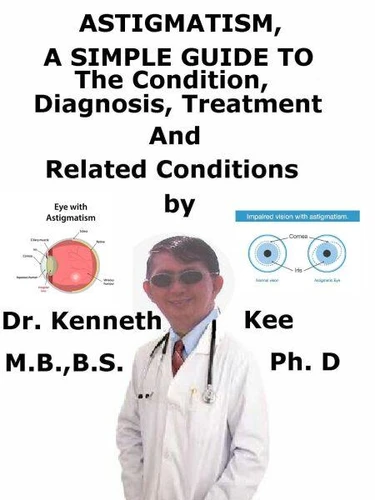
Astigmatism, A Simple Guide To The Condition, Diagnosis, Treatment And Related Conditions
Par :Formats :
Disponible dans votre compte client Decitre ou Furet du Nord dès validation de votre commande. Le format ePub est :
- Compatible avec une lecture sur My Vivlio (smartphone, tablette, ordinateur)
- Compatible avec une lecture sur liseuses Vivlio
- Pour les liseuses autres que Vivlio, vous devez utiliser le logiciel Adobe Digital Edition. Non compatible avec la lecture sur les liseuses Kindle, Remarkable et Sony
 , qui est-ce ?
Notre partenaire de plateforme de lecture numérique où vous retrouverez l'ensemble de vos ebooks gratuitement
Pour en savoir plus sur nos ebooks, consultez notre aide en ligne ici
C'est si simple ! Lisez votre ebook avec l'app Vivlio sur votre tablette, mobile ou ordinateur :

- FormatePub
- ISBN978-1-005-54968-8
- EAN9781005549688
- Date de parution13/10/2020
- Protection num.pas de protection
- Infos supplémentairesepub
- ÉditeurC. C. Chamberlane
Résumé
This book describes Astigmatism, Diagnosis and Treatment and Related DiseasesWhy is Astigmatism so important?It is to me because I develop astigmatism after my cataract operation. It affects my night vision to the extent that I have wear eye glasses when driving at night. Astigmatism is a disorder in which the cornea of the eye is curved differently leading to blurred and distorted vision at all distances.
The eyeball is flattened normally from above downwards or occasionally sideways or along an oblique axis. It is different from near or far sightedness. It is therefore important to recognize Astigmatism and seek the correct treatment for it. Astigmatism is a frequent form of refractive error that produces blurred visionIt appears when the cornea (the clear front cover of the eye) is irregularly shaped (more oval than round) or occasionally due to the curvature of the lens inside the eye.
Astigmatism is induced by an irregularly shaped cornea or lens that stops light from focusing properly to a single point on the retina, the light-sensitive surface at the back of the eye. In this instance, the vision becomes out of focus at any distance. Also, the curvature of the lens inside the eye can alter, resulting in a rise or reduction of the degree in astigmatism. This change often happens in adulthood and can happen before the development of naturally happening cataracts.
Astigmatism often happens with other vision disorders like myopia (nearsightedness) and hyperopia (farsightedness). Together these vision disorders are regarded as refractive error disorders since they influence how the eyes bend or "refract" light. Astigmatism is normally an inherited disorder where the curvature of the cornea of the eye is different from a normal person. Due to the curvature the eye is seeing the objects in front of it at a different angle.
The light is entering the eye at a different angle which cast shadows and induces blurred vision. Other causes of Astigmatism are from:1. Eye surgery or2. Sport injuriesAstigmatism appears when the light is bent differently depending on where it reaches the cornea and passes through the eyeball. It can happen due to a relatively rare disorder called keratoconus in which the cornea becomes progressively thinner and cone-shapedThe astigmatism can decrease or increase over time.
Astigmatism can involve both children and adults. Some patients with slight astigmatism will not observe much change in their vision. It is essential to have eye examinations at regular intervals in order to detect any astigmatism early on for children. The most important symptom is blurred vision at any distance, unlike near or far sightedness. Other symptoms are:1. Blurred and distorted vision of near and distant objects2.
Blurring of vertical, horizontal and diagonal lines3. Eye strain and fatigue4. Sensitivity to light5. Tired and dry eyes6. Headaches7. Squinting8. Difficulty seeing and driving at nightAn eye examination is accompanied by vision tests and computerized testing of the curvature of eye, nearsightness, farsightness and any other abnormality of eye vision. A keratometer measures the curvature of the cornea.
The treatment of astigmatism can be done with eyeglasses, contact lenses, or surgery. The person's lifestyle affects the way the astigmatism is treated. Orthokeratology requires the fitting of a series of rigid contact lenses to reshape the cornea. Refractive Surgery aims to alter the shape of the cornea permanently. Astigmatism can also be treated by reshaping the cornea through LASIK (laser in situ keratomileusis) or PRK (photorefractive keratectomy).
T...
The eyeball is flattened normally from above downwards or occasionally sideways or along an oblique axis. It is different from near or far sightedness. It is therefore important to recognize Astigmatism and seek the correct treatment for it. Astigmatism is a frequent form of refractive error that produces blurred visionIt appears when the cornea (the clear front cover of the eye) is irregularly shaped (more oval than round) or occasionally due to the curvature of the lens inside the eye.
Astigmatism is induced by an irregularly shaped cornea or lens that stops light from focusing properly to a single point on the retina, the light-sensitive surface at the back of the eye. In this instance, the vision becomes out of focus at any distance. Also, the curvature of the lens inside the eye can alter, resulting in a rise or reduction of the degree in astigmatism. This change often happens in adulthood and can happen before the development of naturally happening cataracts.
Astigmatism often happens with other vision disorders like myopia (nearsightedness) and hyperopia (farsightedness). Together these vision disorders are regarded as refractive error disorders since they influence how the eyes bend or "refract" light. Astigmatism is normally an inherited disorder where the curvature of the cornea of the eye is different from a normal person. Due to the curvature the eye is seeing the objects in front of it at a different angle.
The light is entering the eye at a different angle which cast shadows and induces blurred vision. Other causes of Astigmatism are from:1. Eye surgery or2. Sport injuriesAstigmatism appears when the light is bent differently depending on where it reaches the cornea and passes through the eyeball. It can happen due to a relatively rare disorder called keratoconus in which the cornea becomes progressively thinner and cone-shapedThe astigmatism can decrease or increase over time.
Astigmatism can involve both children and adults. Some patients with slight astigmatism will not observe much change in their vision. It is essential to have eye examinations at regular intervals in order to detect any astigmatism early on for children. The most important symptom is blurred vision at any distance, unlike near or far sightedness. Other symptoms are:1. Blurred and distorted vision of near and distant objects2.
Blurring of vertical, horizontal and diagonal lines3. Eye strain and fatigue4. Sensitivity to light5. Tired and dry eyes6. Headaches7. Squinting8. Difficulty seeing and driving at nightAn eye examination is accompanied by vision tests and computerized testing of the curvature of eye, nearsightness, farsightness and any other abnormality of eye vision. A keratometer measures the curvature of the cornea.
The treatment of astigmatism can be done with eyeglasses, contact lenses, or surgery. The person's lifestyle affects the way the astigmatism is treated. Orthokeratology requires the fitting of a series of rigid contact lenses to reshape the cornea. Refractive Surgery aims to alter the shape of the cornea permanently. Astigmatism can also be treated by reshaping the cornea through LASIK (laser in situ keratomileusis) or PRK (photorefractive keratectomy).
T...
A propos de Kenneth Kee

4,49 €