SOLDES
Jusqu'à -70% sur une sélection d'articles*

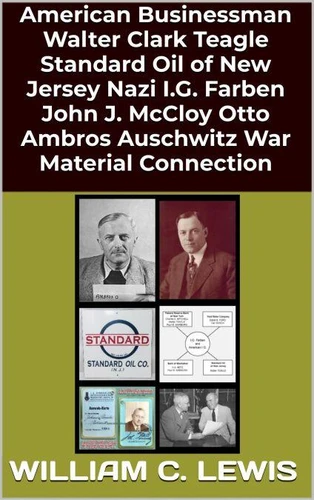
American Businessman Walter Clark Teagle Standard Oil of New Jersey Nazi I.G. Farben John J. McCloy Otto Ambros Auschwitz War Material Connection. Corruption, #24
Par :Formats :
Disponible dans votre compte client Decitre ou Furet du Nord dès validation de votre commande. Le format ePub est :
- Compatible avec une lecture sur My Vivlio (smartphone, tablette, ordinateur)
- Compatible avec une lecture sur liseuses Vivlio
- Pour les liseuses autres que Vivlio, vous devez utiliser le logiciel Adobe Digital Edition. Non compatible avec la lecture sur les liseuses Kindle, Remarkable et Sony
 , qui est-ce ?
Notre partenaire de plateforme de lecture numérique où vous retrouverez l'ensemble de vos ebooks gratuitement
Pour en savoir plus sur nos ebooks, consultez notre aide en ligne ici
C'est si simple ! Lisez votre ebook avec l'app Vivlio sur votre tablette, mobile ou ordinateur :

- FormatePub
- ISBN8235760905
- EAN9798235760905
- Date de parution24/04/2026
- Protection num.pas de protection
- Infos supplémentairesepub
- ÉditeurIoakim Ioakim
Résumé
Read in this informative report about the secret business relationships between Standard Oil Company of New Jersey and the Nazi Germany dictator Adolph Hitler connected German I. G. Farben chemical conglomerate that gave Nazi Germany a secret advantage over America during WWII. Also read about how I. G. Farben was using the slave labor of concentration camp inmates provided by the Nazi S. S. in Nazi occupied Poland to produce synthetic rubber based upon a manufacturing patent that Standard Oil of New Jersey shared with I.
G. Farben. Read about how, in 1951, Assistant Secretary of War during WWII, John J. McCloy, called for the release from prison of Nazi Germany I. G. Farben chemist Otto Ambros, who was running a synthetic rubber production plant slave camp in German occupied Poland called Monowitz concentration camp during WWII, so that Otto Ambros could work for Dow Chemical Company in the United States. Finally, learn about how John J.
McCloy, a member of the Council on Foreign Relations, member of the Warren Commission and President of the World Bank, rejected a plan to bomb the railroads transporting Jews to Auschwitz concentration camp when he was Assistant Secretary of War during WWII.
G. Farben. Read about how, in 1951, Assistant Secretary of War during WWII, John J. McCloy, called for the release from prison of Nazi Germany I. G. Farben chemist Otto Ambros, who was running a synthetic rubber production plant slave camp in German occupied Poland called Monowitz concentration camp during WWII, so that Otto Ambros could work for Dow Chemical Company in the United States. Finally, learn about how John J.
McCloy, a member of the Council on Foreign Relations, member of the Warren Commission and President of the World Bank, rejected a plan to bomb the railroads transporting Jews to Auschwitz concentration camp when he was Assistant Secretary of War during WWII.