SOLDES
Jusqu'à -70% sur une sélection d'articles*

Nouveauté
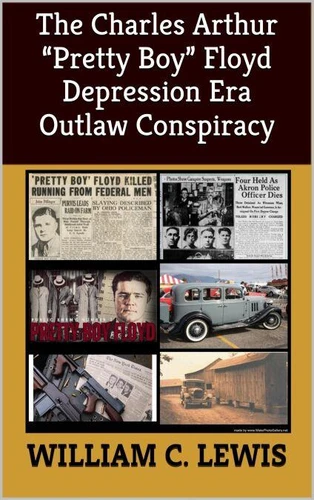
The Charles Arthur “Pretty Boy” Floyd Depression Era Outlaw Conspiracy. Corruption, #90
Par :Formats :
Disponible dans votre compte client Decitre ou Furet du Nord dès validation de votre commande. Le format ePub est :
- Compatible avec une lecture sur My Vivlio (smartphone, tablette, ordinateur)
- Compatible avec une lecture sur liseuses Vivlio
- Pour les liseuses autres que Vivlio, vous devez utiliser le logiciel Adobe Digital Edition. Non compatible avec la lecture sur les liseuses Kindle, Remarkable et Sony
 , qui est-ce ?
Notre partenaire de plateforme de lecture numérique où vous retrouverez l'ensemble de vos ebooks gratuitement
Pour en savoir plus sur nos ebooks, consultez notre aide en ligne ici
C'est si simple ! Lisez votre ebook avec l'app Vivlio sur votre tablette, mobile ou ordinateur :

- FormatePub
- ISBN8235759930
- EAN9798235759930
- Date de parution04/07/2026
- Protection num.pas de protection
- Infos supplémentairesepub
- ÉditeurIoakim Ioakim
Résumé
Read, in this informative, action-packed and thrilling book about the life, crime spree and death of Great Depression-era outlaw bank robber Charles Arthur "Pretty Boy" Floyd, who began his armed robberies in the 1920s with the Sept. 11, 1925, St. Louis, Missouri, payroll robbery of a Kroger Grocery and Baking Company building with two other men, after several years of working as a farm laborer with his family in the cotton and corn fields of Akins, Oklahoma.
For this first robbery, Charles Arthur Pretty Boy Floyd received a five-year prison sentence at Missouri State Penitentiary in Jefferson City, Missouri. Charles Arthur Pretty Boy Floyd grew tired of arduous farm labor, and, after being poorly influenced by other workers on the wheat harvest circuit during the Great Depression that told the young Floyd fascinating tales of easy money through armed robbery, Floyd then decided he would trade his bib overalls for a three-pieced suit, and five gallons of corn whiskey for a pearl-handed pistol so that he could gain social status in the criminal underworld as a "Pretty Boy" gangster during the Great Depression.
The decision to trade hard honest work for fast easy money through a life of crime cost this so-called Robin Hood of the depression era outlaws, who allegedly burned mortgage documents at the banks he robbed to clear the financial debt of farmers, his life. Learn, in this book, how, on Feb. 5, 1930, the head cashier of the Farmers and Merchants' Bank in Sylvania, Ohio, John Iffland, outsmarted the bank robbery crew of Charles Arthur Pretty Boy Floyd, Frank Mitchell and Jack Arnold by bravely locking the vault as he saw Pretty Boy Floyd approaching the bank safe with his revolver.
Due to the fact that the vault had a timed lock that would not open again until 5 p.m. on Feb.5, 1930, it was impossible for Pretty Boy Floyd to access the vault, which contained tens of thousands of dollars. This heroic act of John Iffland caused Charles Arthur Pretty Boy Floyd, Frank Mitchell and Jack Arnold's robbery of Farmers and Merchants' Bank to only yield $1, 720 rather than tens of thousands of dollars.
Pretty Boy Floyd, Frank Mitchell and Jack Arnold escaped the scene of this Sylvania, Ohio, bank robbery, but not before Howard's Filling Station gas station owner Ed Howard, who was also vice president of Farmers and Merchants' bank, ran across the street from his gas station with his shotgun and took a shot at Pretty Boy Floyd's car as the robbers left the scene of the crime. Also, in this book, find out how Charles Arthur Pretty Boy Floyd, after jumping out of a moving train into the freezing cold weather in Kenton, Ohio, on Dec.
10, 1930, to escape a second prison sentence at Columbus, Ohio's Ohio State Penitentiary, for his Feb. 5, 1930 bank robbery in Sylvania, Ohio, carried out the murder of two police informants involved in the narcotics trade in March 1931 that were the sons of a Kansas City Missouri safe house operator for criminals, named Sadie Ash because these two police informants were married to two prostitutes at the safe house and Pretty Boy Floyd, along with his criminal associate William Miller wanted to steal these women from Sadie Ash's sons, Wallace and William Ash.
Finally, read about Charles Arthur Pretty Boy Floyd's bank robberies with various criminal associates that included William Miller, George Birdwell and Adam Richetti from 1932 until his death in October 1934, when Floyd was gunned down by Bureau of Investigation (BOI) federal agents in a cornfield on the East Liverpool, Ohio, farm property of Mrs. Ellen Conkle on Oct.22, 1934. The Bureau of Investigation (BOI) was the predecessor to the Federal Bureau of Investigation (FBI).
The ruthless criminal Pretty Boy Floyd ate a final meal of potatoes, spare ribs, coffee, rice and pumpkin pie and paid Mrs. Ellen Conkle $1 before being shot to death in the cornfield.
For this first robbery, Charles Arthur Pretty Boy Floyd received a five-year prison sentence at Missouri State Penitentiary in Jefferson City, Missouri. Charles Arthur Pretty Boy Floyd grew tired of arduous farm labor, and, after being poorly influenced by other workers on the wheat harvest circuit during the Great Depression that told the young Floyd fascinating tales of easy money through armed robbery, Floyd then decided he would trade his bib overalls for a three-pieced suit, and five gallons of corn whiskey for a pearl-handed pistol so that he could gain social status in the criminal underworld as a "Pretty Boy" gangster during the Great Depression.
The decision to trade hard honest work for fast easy money through a life of crime cost this so-called Robin Hood of the depression era outlaws, who allegedly burned mortgage documents at the banks he robbed to clear the financial debt of farmers, his life. Learn, in this book, how, on Feb. 5, 1930, the head cashier of the Farmers and Merchants' Bank in Sylvania, Ohio, John Iffland, outsmarted the bank robbery crew of Charles Arthur Pretty Boy Floyd, Frank Mitchell and Jack Arnold by bravely locking the vault as he saw Pretty Boy Floyd approaching the bank safe with his revolver.
Due to the fact that the vault had a timed lock that would not open again until 5 p.m. on Feb.5, 1930, it was impossible for Pretty Boy Floyd to access the vault, which contained tens of thousands of dollars. This heroic act of John Iffland caused Charles Arthur Pretty Boy Floyd, Frank Mitchell and Jack Arnold's robbery of Farmers and Merchants' Bank to only yield $1, 720 rather than tens of thousands of dollars.
Pretty Boy Floyd, Frank Mitchell and Jack Arnold escaped the scene of this Sylvania, Ohio, bank robbery, but not before Howard's Filling Station gas station owner Ed Howard, who was also vice president of Farmers and Merchants' bank, ran across the street from his gas station with his shotgun and took a shot at Pretty Boy Floyd's car as the robbers left the scene of the crime. Also, in this book, find out how Charles Arthur Pretty Boy Floyd, after jumping out of a moving train into the freezing cold weather in Kenton, Ohio, on Dec.
10, 1930, to escape a second prison sentence at Columbus, Ohio's Ohio State Penitentiary, for his Feb. 5, 1930 bank robbery in Sylvania, Ohio, carried out the murder of two police informants involved in the narcotics trade in March 1931 that were the sons of a Kansas City Missouri safe house operator for criminals, named Sadie Ash because these two police informants were married to two prostitutes at the safe house and Pretty Boy Floyd, along with his criminal associate William Miller wanted to steal these women from Sadie Ash's sons, Wallace and William Ash.
Finally, read about Charles Arthur Pretty Boy Floyd's bank robberies with various criminal associates that included William Miller, George Birdwell and Adam Richetti from 1932 until his death in October 1934, when Floyd was gunned down by Bureau of Investigation (BOI) federal agents in a cornfield on the East Liverpool, Ohio, farm property of Mrs. Ellen Conkle on Oct.22, 1934. The Bureau of Investigation (BOI) was the predecessor to the Federal Bureau of Investigation (FBI).
The ruthless criminal Pretty Boy Floyd ate a final meal of potatoes, spare ribs, coffee, rice and pumpkin pie and paid Mrs. Ellen Conkle $1 before being shot to death in the cornfield.