SOLDES
Jusqu'à -70% sur une sélection d'articles*

A Simple Guide to Sternum Disorders, Diagnosis, Treatment and Related Conditions
Par :Formats :
Disponible dans votre compte client Decitre ou Furet du Nord dès validation de votre commande. Le format ePub est :
- Compatible avec une lecture sur My Vivlio (smartphone, tablette, ordinateur)
- Compatible avec une lecture sur liseuses Vivlio
- Pour les liseuses autres que Vivlio, vous devez utiliser le logiciel Adobe Digital Edition. Non compatible avec la lecture sur les liseuses Kindle, Remarkable et Sony
 , qui est-ce ?
Notre partenaire de plateforme de lecture numérique où vous retrouverez l'ensemble de vos ebooks gratuitement
Pour en savoir plus sur nos ebooks, consultez notre aide en ligne ici
C'est si simple ! Lisez votre ebook avec l'app Vivlio sur votre tablette, mobile ou ordinateur :

- FormatePub
- ISBN978-1-005-48202-2
- EAN9781005482022
- Date de parution24/03/2022
- Protection num.pas de protection
- Infos supplémentairesepub
- ÉditeurC. C. Chamberlane
Résumé
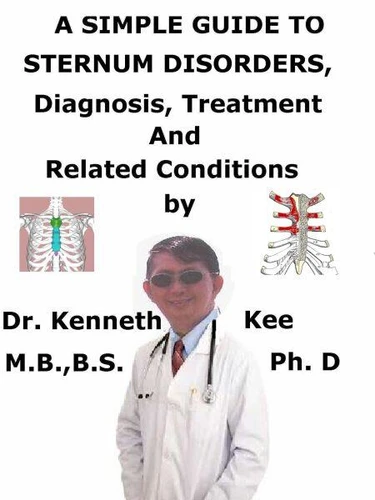
This book describes Sternum Disorders, Diagnosis and Treatment and Related DiseasesThe sternum is a flat bone that is sited in the center of the anterior thoracic wall. It consists of three segments;1. Manubrium (uppermost part)2. Body (middle part) and3. Xiphoid process (lowest part). The manubrium attaches to the clavicles, the first ribs and the superior part of the second costal cartilages. The manubrium is quadrangular in shape and lies at the level of the 3rd and 4th thoracic vertebrae.
The jugular (suprasternal) notch is the thickest piece of the manubrium and is convex when views anteriorly and concave posteriorly. The body of the sternum is elongated and is thinner than the manubrium. Its margins attach with the inferior part of the 2nd costal cartilages, the 3rd to 6th costal cartilages and the superior part of the 7th costal cartilage. The xiphoid process is the lowest and tiniest part of the sternum.
It attaches with the inferior part of the 7th costal cartilage and supplies attachment for rectus abdominis, transversus abdominis aponeurosis, transversus thoracis and the abdominal diaphragm. Sternum Disorders are a group of congenital diseases that span a broad spectrum of disorders. These can manifest as isolated disorders or can relate with extra-thoracic anomalies and genetic syndromes. Detrimental effects can happen from birth to adolescence, varying from life-threatening disorders to psychosocial cosmetic concerns.
Some of the most frequent causes of sternum disorders are:CostochondritisTietze SyndromePectus ExcavatumPectus CarinatumCollarbone injuriesSternoclavicular joint injurySternum fractureMuscular strain or bruiseMusculoskeletal CausesStress fractures of the sternumClavicle fracturesStress fractures of the ribJoint Sub-luxationsSternoclavicular joint disordersCostochondritisTietze syndromeInflammatory joint diseaseFibromyalgiaGeneral myalgiaXiphodynia (or painful/hypersensitive xiphoid syndrome)Pectoral muscle ruptureInjuries to muscles other than pectorisSlipping rib syndromePost-surgery injuriesOsteomyelitisCauses of Sternum Pain:Cardiovascular CausesHeart valve diseaseHyper-trophic cardiomyopathyCoronary artery diseaseMyocarditisPericarditisAortic dissectionRespiratory CausesAsthmaExercise-induced Asthma/BronchoconstrictionBronchitisBronchiectasisChronic Obstructive Pulmonary Disease (COPD)TracheitisTuberculosisPulmonary embolismPleurisyPneumothoraxPulmonary hypertensionPulmonary sarcoidosisAbdominal and Gastrointestinal CausesGastroesophageal reflux disease (GERD)PancreatitisReferred pain from the esophagusBoerhaave's SyndromeReferred PainShouldersCervical spineThoracic spineCancerBreast cancerLung cancerLymphomaBone cancerDiagnosisX-rays are also conducted to rule in/out fracturesCT scans and MRIs may be indicated for suspected bony injury and neoplasmsNuclear scintigraphy (organ scanning) may be positive with costochondritisTreatmentThe main treatment is with medical treatment, surgical repair, and genetic counselingReassurance, pain control (e.g.
analgesics, heat) and avoidance of aggravating activitiesConservative treatment involving joint manipulationSurgical debridement may be indicatedTABLE OF CONTENTIntroductionChapter 1 Sternal DisordersChapter 2 CostochondritisChapter 3 Tietze SyndromeChapter 4 Pectus CarinatumChapter 5 Pectus ExcavatumChapter 6 Pectus ArcuateChapter 7 Poland SyndromeChapter 8 ...
The jugular (suprasternal) notch is the thickest piece of the manubrium and is convex when views anteriorly and concave posteriorly. The body of the sternum is elongated and is thinner than the manubrium. Its margins attach with the inferior part of the 2nd costal cartilages, the 3rd to 6th costal cartilages and the superior part of the 7th costal cartilage. The xiphoid process is the lowest and tiniest part of the sternum.
It attaches with the inferior part of the 7th costal cartilage and supplies attachment for rectus abdominis, transversus abdominis aponeurosis, transversus thoracis and the abdominal diaphragm. Sternum Disorders are a group of congenital diseases that span a broad spectrum of disorders. These can manifest as isolated disorders or can relate with extra-thoracic anomalies and genetic syndromes. Detrimental effects can happen from birth to adolescence, varying from life-threatening disorders to psychosocial cosmetic concerns.
Some of the most frequent causes of sternum disorders are:CostochondritisTietze SyndromePectus ExcavatumPectus CarinatumCollarbone injuriesSternoclavicular joint injurySternum fractureMuscular strain or bruiseMusculoskeletal CausesStress fractures of the sternumClavicle fracturesStress fractures of the ribJoint Sub-luxationsSternoclavicular joint disordersCostochondritisTietze syndromeInflammatory joint diseaseFibromyalgiaGeneral myalgiaXiphodynia (or painful/hypersensitive xiphoid syndrome)Pectoral muscle ruptureInjuries to muscles other than pectorisSlipping rib syndromePost-surgery injuriesOsteomyelitisCauses of Sternum Pain:Cardiovascular CausesHeart valve diseaseHyper-trophic cardiomyopathyCoronary artery diseaseMyocarditisPericarditisAortic dissectionRespiratory CausesAsthmaExercise-induced Asthma/BronchoconstrictionBronchitisBronchiectasisChronic Obstructive Pulmonary Disease (COPD)TracheitisTuberculosisPulmonary embolismPleurisyPneumothoraxPulmonary hypertensionPulmonary sarcoidosisAbdominal and Gastrointestinal CausesGastroesophageal reflux disease (GERD)PancreatitisReferred pain from the esophagusBoerhaave's SyndromeReferred PainShouldersCervical spineThoracic spineCancerBreast cancerLung cancerLymphomaBone cancerDiagnosisX-rays are also conducted to rule in/out fracturesCT scans and MRIs may be indicated for suspected bony injury and neoplasmsNuclear scintigraphy (organ scanning) may be positive with costochondritisTreatmentThe main treatment is with medical treatment, surgical repair, and genetic counselingReassurance, pain control (e.g.
analgesics, heat) and avoidance of aggravating activitiesConservative treatment involving joint manipulationSurgical debridement may be indicatedTABLE OF CONTENTIntroductionChapter 1 Sternal DisordersChapter 2 CostochondritisChapter 3 Tietze SyndromeChapter 4 Pectus CarinatumChapter 5 Pectus ExcavatumChapter 6 Pectus ArcuateChapter 7 Poland SyndromeChapter 8 ...
A propos de Kenneth Kee

4,49 €