SOLDES
Jusqu'à -70% sur une sélection d'articles*

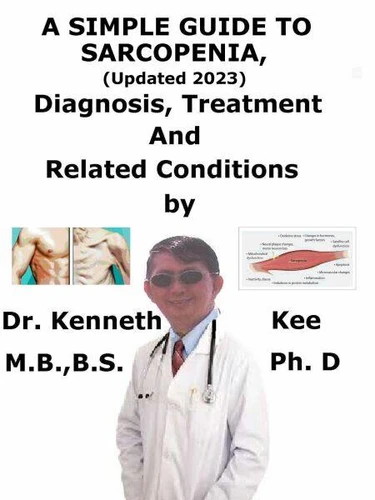
A Simple Guide to Sarcopenia, (Updated 2023) Diagnosis, Treatment and Related Conditions
Par :Formats :
Disponible dans votre compte client Decitre ou Furet du Nord dès validation de votre commande. Le format ePub est :
- Compatible avec une lecture sur My Vivlio (smartphone, tablette, ordinateur)
- Compatible avec une lecture sur liseuses Vivlio
- Pour les liseuses autres que Vivlio, vous devez utiliser le logiciel Adobe Digital Edition. Non compatible avec la lecture sur les liseuses Kindle, Remarkable et Sony
 , qui est-ce ?
Notre partenaire de plateforme de lecture numérique où vous retrouverez l'ensemble de vos ebooks gratuitement
Pour en savoir plus sur nos ebooks, consultez notre aide en ligne ici
C'est si simple ! Lisez votre ebook avec l'app Vivlio sur votre tablette, mobile ou ordinateur :

- FormatePub
- ISBN978-1-370-56668-6
- EAN9781370566686
- Date de parution17/10/2016
- Protection num.pas de protection
- Infos supplémentairesepub
- ÉditeurEditeurs divers USA
Résumé
Sarcopenia is a medical disorder known as age-related sarcopenia or sarcopenia with aging which starts in the 30s when a person starts to lose muscle mass and function. Sarcopenia (from Greek sarx, "flesh" and penia, "poverty") is the degenerative loss of the skeletal muscle mass (0.5-1% decrease per year after the age of 50), quality, and strength linked with aging. Sarcopenia is a part of the frailty syndrome.
Sarcopenia may occur in healthy people and does not necessarily involve malaise. People who are physically not active can lose as much as 3% to 5% of the muscle mass every decade after age 30. Even if the person is active, he or she will still experience some muscle reduction. Any reduction of muscle mass requires reduction of strength and mobility. Sarcopenia typically becomes worse at the age of 75 although it may occur in people age 65 or 80It is a factor in the production of frailty and affect the tendency of falls and fractures in older adults.
Sarcopenia is believed to be caused by a failure in activation of satellite cell around muscle cells. Extreme muscle loss is frequently a result of both decreasing anabolic signals, including growth hormone and testosterone, and promotion of catabolic signals, such as pro-inflammatory cytokinesSarcopenia is characterized by:1. A muscle atrophy (a decrease in the size of the muscle), 2. A reduction in muscle tissue qualitySymptoms of muscle loss are:1.
Musculoskeletal weakness2. Loss of stamina, 3. Reduced physical activityThe primary treatment for sarcopenia is exercise. In particular, the exercise resistance training or strength training (exercise that increases muscle strength and endurance with the use of resistance bands or weights) has been observed to be helpful for both the prevention and treatment of sarcopenia. Testosterone or other forms of anabolic steroids seem to have some positive effects on muscle strength and mass.
TABLE OF CONTENTIntroductionChapter 1 SarcopeniaChapter 2 CausesChapter 3 SymptomsChapter 4 DiagnosisChapter 5 TreatmentChapter 6 PrognosisChapter 7 Muscle DystrophyChapter 8 Cerebral PalsyEpilogue
Sarcopenia may occur in healthy people and does not necessarily involve malaise. People who are physically not active can lose as much as 3% to 5% of the muscle mass every decade after age 30. Even if the person is active, he or she will still experience some muscle reduction. Any reduction of muscle mass requires reduction of strength and mobility. Sarcopenia typically becomes worse at the age of 75 although it may occur in people age 65 or 80It is a factor in the production of frailty and affect the tendency of falls and fractures in older adults.
Sarcopenia is believed to be caused by a failure in activation of satellite cell around muscle cells. Extreme muscle loss is frequently a result of both decreasing anabolic signals, including growth hormone and testosterone, and promotion of catabolic signals, such as pro-inflammatory cytokinesSarcopenia is characterized by:1. A muscle atrophy (a decrease in the size of the muscle), 2. A reduction in muscle tissue qualitySymptoms of muscle loss are:1.
Musculoskeletal weakness2. Loss of stamina, 3. Reduced physical activityThe primary treatment for sarcopenia is exercise. In particular, the exercise resistance training or strength training (exercise that increases muscle strength and endurance with the use of resistance bands or weights) has been observed to be helpful for both the prevention and treatment of sarcopenia. Testosterone or other forms of anabolic steroids seem to have some positive effects on muscle strength and mass.
TABLE OF CONTENTIntroductionChapter 1 SarcopeniaChapter 2 CausesChapter 3 SymptomsChapter 4 DiagnosisChapter 5 TreatmentChapter 6 PrognosisChapter 7 Muscle DystrophyChapter 8 Cerebral PalsyEpilogue
A propos de Kenneth Kee
4,49 €