SOLDES
Jusqu'à -70% sur une sélection d'articles*

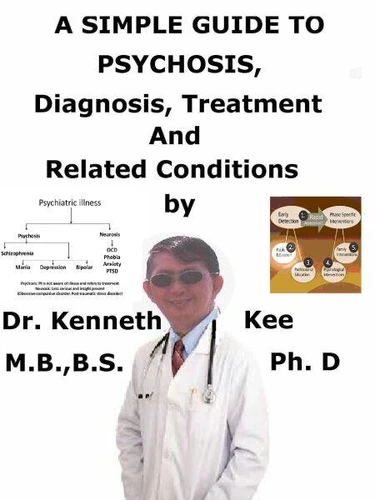
A Simple Guide to Psychosis, Diagnosis, Treatment and Related Conditions
Par :Formats :
Disponible dans votre compte client Decitre ou Furet du Nord dès validation de votre commande. Le format ePub est :
- Compatible avec une lecture sur My Vivlio (smartphone, tablette, ordinateur)
- Compatible avec une lecture sur liseuses Vivlio
- Pour les liseuses autres que Vivlio, vous devez utiliser le logiciel Adobe Digital Edition. Non compatible avec la lecture sur les liseuses Kindle, Remarkable et Sony
 , qui est-ce ?
Notre partenaire de plateforme de lecture numérique où vous retrouverez l'ensemble de vos ebooks gratuitement
Pour en savoir plus sur nos ebooks, consultez notre aide en ligne ici
C'est si simple ! Lisez votre ebook avec l'app Vivlio sur votre tablette, mobile ou ordinateur :

- FormatePub
- ISBN978-1-005-98567-7
- EAN9781005985677
- Date de parution23/08/2021
- Protection num.pas de protection
- Infos supplémentairesepub
- ÉditeurC. C. Chamberlane
Résumé
This book describes Psychosis, Diagnosis and Treatment and Related DiseasesThere was a time when the psychiatric world recognize 2 main illness: neurosis and psychosisSince 1980 Neurosis has been removed as a single disorder by the Diagnostic and Statistical Manual of Mental Disorders (DSM III) and placed together with other anxiety disorders. It is still utilized in the ICD-10 F48.9 (Non-psychotic mental disorder, unspecified)Psychosis is placed under the Disorder Class in DSMV: Schizophrenia Spectrum and Other Psychotic DisordersUnder the ICD-10 it is placed under 2021 ICD-10-CM Diagnosis Code F29(Unspecified psychosis not due to a substance or known physiological condition)Psychosis is a symptom of loss of contact with reality, normally including delusions (false ideas about what is taking place or who the person is) and hallucinations (seeing or hearing things that are not there).
It affects the way that the brain interprets information. When having psychosis, people may hear, see, feel, or believe things that are not real. Psychosis is featured by an impaired relationship with reality. People who are having psychosis may have either hallucinations or delusions. Hallucinations are sensory experiences that happen within the absence of an actual stimulus. A person having an auditory hallucination may hear their mother yelling at them when their mother is not around.
Someone having a visual hallucination may see something, like a person in front of them, who is not really there. The person having psychosis may also have thoughts that are different from actual evidence. These thoughts are termed delusions. Some people with psychosis may also develop loss of motivation and social withdrawal. These delusions and hallucinations can be frightening. They may also cause people who are having psychosis to hurt themselves or others.
It is important to consult a doctor right away if a person is having symptoms of psychosis. About 7 in every 1000 people have psychosis at some time in their lives but not everyone experiences psychosis the same way. There are many types of psychosis and several disorders and incidents that can lead to it. Psychosis is not a disorder on its own. It is really a symptom that is evident in a range of mental health disorders, or it can happen as a reaction to brain changes, traumatic events, injuries, or substance use.
These disruptive thoughts and sensory experiences cause a disconnection from reality and a struggle in differentiating what is real from what is not. The precise causes of psychosis are not totally clear and each person's experience may be different. Physical problems that can cause psychosis are:1. Alcohol and certain illicit drugs, including methamphetamine2. Brain cysts or tumors3. Certain prescription medicines, specifically steroids and stimulants4.
Certain types of epilepsy5. Dementia6. HIV7. Parkinson's disease8. StrokePsychosis can also be caused by a mental health disorder such as:1. Schizophrenia, 2. Schizoaffective disorder, 3. Bipolar disorder, 4. DepressionPeople are more likely to develop psychosis if they also have a close family member, such as a parent or sibling, who has a history of psychotic disorder. There are also triggers such as:1.
Drug use, 2. Lack of sleep, and3. Other environmental factors and settings can cause specific types of psychosis developing. The main symptoms of psychosis are delusions and hallucinations. TABLE OF CONTENTIntroductionChapter 1 PsychosisChapter 2 CausesChapter 3 SymptomsChapter 4 DiagnosisChapter 5 TreatmentChapter 6 PrognosisChapter 7 Delusional Dis...
It affects the way that the brain interprets information. When having psychosis, people may hear, see, feel, or believe things that are not real. Psychosis is featured by an impaired relationship with reality. People who are having psychosis may have either hallucinations or delusions. Hallucinations are sensory experiences that happen within the absence of an actual stimulus. A person having an auditory hallucination may hear their mother yelling at them when their mother is not around.
Someone having a visual hallucination may see something, like a person in front of them, who is not really there. The person having psychosis may also have thoughts that are different from actual evidence. These thoughts are termed delusions. Some people with psychosis may also develop loss of motivation and social withdrawal. These delusions and hallucinations can be frightening. They may also cause people who are having psychosis to hurt themselves or others.
It is important to consult a doctor right away if a person is having symptoms of psychosis. About 7 in every 1000 people have psychosis at some time in their lives but not everyone experiences psychosis the same way. There are many types of psychosis and several disorders and incidents that can lead to it. Psychosis is not a disorder on its own. It is really a symptom that is evident in a range of mental health disorders, or it can happen as a reaction to brain changes, traumatic events, injuries, or substance use.
These disruptive thoughts and sensory experiences cause a disconnection from reality and a struggle in differentiating what is real from what is not. The precise causes of psychosis are not totally clear and each person's experience may be different. Physical problems that can cause psychosis are:1. Alcohol and certain illicit drugs, including methamphetamine2. Brain cysts or tumors3. Certain prescription medicines, specifically steroids and stimulants4.
Certain types of epilepsy5. Dementia6. HIV7. Parkinson's disease8. StrokePsychosis can also be caused by a mental health disorder such as:1. Schizophrenia, 2. Schizoaffective disorder, 3. Bipolar disorder, 4. DepressionPeople are more likely to develop psychosis if they also have a close family member, such as a parent or sibling, who has a history of psychotic disorder. There are also triggers such as:1.
Drug use, 2. Lack of sleep, and3. Other environmental factors and settings can cause specific types of psychosis developing. The main symptoms of psychosis are delusions and hallucinations. TABLE OF CONTENTIntroductionChapter 1 PsychosisChapter 2 CausesChapter 3 SymptomsChapter 4 DiagnosisChapter 5 TreatmentChapter 6 PrognosisChapter 7 Delusional Dis...
A propos de Kenneth Kee


4,49 €