SOLDES
Jusqu'à -70% sur une sélection d'articles*

A Simple Guide to Pituitary Disorders, Diagnosis, Treatment and Related Conditions
Par :Formats :
Disponible dans votre compte client Decitre ou Furet du Nord dès validation de votre commande. Le format ePub est :
- Compatible avec une lecture sur My Vivlio (smartphone, tablette, ordinateur)
- Compatible avec une lecture sur liseuses Vivlio
- Pour les liseuses autres que Vivlio, vous devez utiliser le logiciel Adobe Digital Edition. Non compatible avec la lecture sur les liseuses Kindle, Remarkable et Sony
 , qui est-ce ?
Notre partenaire de plateforme de lecture numérique où vous retrouverez l'ensemble de vos ebooks gratuitement
Pour en savoir plus sur nos ebooks, consultez notre aide en ligne ici
C'est si simple ! Lisez votre ebook avec l'app Vivlio sur votre tablette, mobile ou ordinateur :

- FormatePub
- ISBN978-1-005-33798-8
- EAN9781005337988
- Date de parution04/06/2021
- Protection num.pas de protection
- Infos supplémentairesepub
- ÉditeurC. C. Chamberlane
Résumé
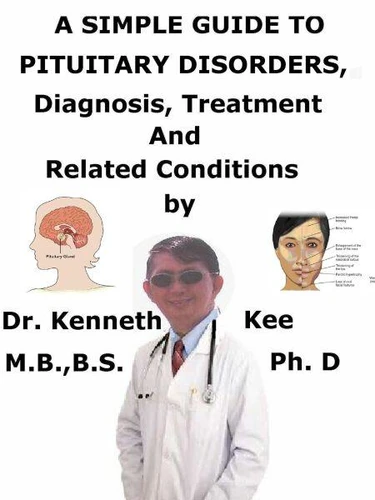
This book describes Pituitary Disorders, Diagnosis and Treatment and Related DiseasesThe pituitary gland is an endocrine gland sited in the brain. This small gland produces chemicals called hormones. Hormones are chemical messengers which assist different organs in the body correspond with each other. The pituitary gland is a part of a chemical messenger system. The pituitary gland helps to control the body's functions by secreting hormones into the bloodstream.
These hormones are carried in the blood to their target. Here they normally cause the secretion of a second hormone. The target can either be specialized endocrine glands or other forms of body tissue such as clusters of cells. The pituitary gland, sited at the base of the brain and no bigger than the size of a pea, is often termed the "master" gland since it produces the hormones that regulate the functions of the other endocrine glands and organs.
Some of the glands the pituitary gland regulates are the thyroid gland, the ovaries, the testicles (testes) and the adrenal glands. The pituitary gland is very close to another important part of the brain, termed the hypothalamus. The pituitary gland has 2 main components:1. The component of the pituitary gland at the front, called the anterior pituitary.2. The component of the pituitary gland at the back, called the posterior pituitary.
These 2 components secrete different hormones which are focused at different parts of the body. There is also a segment between the 2 main components, called the intermediate part, which secretes a single hormone. The final component of the pituitary gland is the stalk, which attaches the posterior pituitary to the hypothalamus. The hypothalamus takes information from many sources about the basic functions of the body.
It utilizes the information it takes to help control these functions. One of the ways the hypothalamus does this requires regulating the pituitary gland. The hypothalamus does this by sending its own hormones to correspond with the pituitary gland. The information assessed by the hypothalamus is the level of different hormones in the blood. The hypothalamus has special cells which obtain information from the body indicating how much of each hormone is evident in the bloodstream.
When these hormones fall below a particular level this activates the hypothalamus to secrete hormones. These hormones move to the pituitary gland, providing the signal to the pituitary gland to produce one or more of its hormones. The hormones produced by the pituitary gland are secreted into the bloodstream. The bloodstream carries the pituitary hormones to other endocrine glands, such as the thyroid gland.
The pituitary gland hormones may then activate their target endocrine glands to secrete their own hormones. These locally secreted hormones do the actual function of regulating the body. Benign pituitary tumors are the main source of pituitary disorders. Other frequent causes of pituitary disorders are:1. Head injury2. Bleeding in or near the pituitary gland3. Some medicines and cancer treatmentsThe treatment will be dependent upon the cause:1.
Hormone replacement2. Pituitary surgeryTABLE OF CONTENTIntroductionChapter 1 Pituitary DisordersChapter 2 Pituitary TumorsChapter 3 AcromegalyChapter 4 Diabetes InsipidusChapter 5 HypopituitarismChapter 6 Pituitary DwarfismChapter 7 ProlactinomaChapter 8 Cushing Syndrome (Updated)Chapter 9 Life and Death of Pituitary Gland CellEpilogue
These hormones are carried in the blood to their target. Here they normally cause the secretion of a second hormone. The target can either be specialized endocrine glands or other forms of body tissue such as clusters of cells. The pituitary gland, sited at the base of the brain and no bigger than the size of a pea, is often termed the "master" gland since it produces the hormones that regulate the functions of the other endocrine glands and organs.
Some of the glands the pituitary gland regulates are the thyroid gland, the ovaries, the testicles (testes) and the adrenal glands. The pituitary gland is very close to another important part of the brain, termed the hypothalamus. The pituitary gland has 2 main components:1. The component of the pituitary gland at the front, called the anterior pituitary.2. The component of the pituitary gland at the back, called the posterior pituitary.
These 2 components secrete different hormones which are focused at different parts of the body. There is also a segment between the 2 main components, called the intermediate part, which secretes a single hormone. The final component of the pituitary gland is the stalk, which attaches the posterior pituitary to the hypothalamus. The hypothalamus takes information from many sources about the basic functions of the body.
It utilizes the information it takes to help control these functions. One of the ways the hypothalamus does this requires regulating the pituitary gland. The hypothalamus does this by sending its own hormones to correspond with the pituitary gland. The information assessed by the hypothalamus is the level of different hormones in the blood. The hypothalamus has special cells which obtain information from the body indicating how much of each hormone is evident in the bloodstream.
When these hormones fall below a particular level this activates the hypothalamus to secrete hormones. These hormones move to the pituitary gland, providing the signal to the pituitary gland to produce one or more of its hormones. The hormones produced by the pituitary gland are secreted into the bloodstream. The bloodstream carries the pituitary hormones to other endocrine glands, such as the thyroid gland.
The pituitary gland hormones may then activate their target endocrine glands to secrete their own hormones. These locally secreted hormones do the actual function of regulating the body. Benign pituitary tumors are the main source of pituitary disorders. Other frequent causes of pituitary disorders are:1. Head injury2. Bleeding in or near the pituitary gland3. Some medicines and cancer treatmentsThe treatment will be dependent upon the cause:1.
Hormone replacement2. Pituitary surgeryTABLE OF CONTENTIntroductionChapter 1 Pituitary DisordersChapter 2 Pituitary TumorsChapter 3 AcromegalyChapter 4 Diabetes InsipidusChapter 5 HypopituitarismChapter 6 Pituitary DwarfismChapter 7 ProlactinomaChapter 8 Cushing Syndrome (Updated)Chapter 9 Life and Death of Pituitary Gland CellEpilogue
A propos de Kenneth Kee

4,49 €