SOLDES
Jusqu'à -70% sur une sélection d'articles*

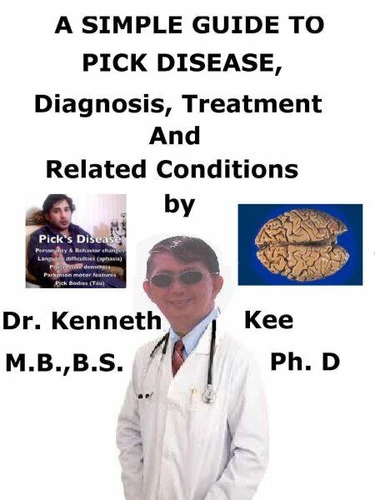
A Simple Guide to Pick Disease, Diagnosis, Treatment and Related Conditions
Par :Formats :
Disponible dans votre compte client Decitre ou Furet du Nord dès validation de votre commande. Le format ePub est :
- Compatible avec une lecture sur My Vivlio (smartphone, tablette, ordinateur)
- Compatible avec une lecture sur liseuses Vivlio
- Pour les liseuses autres que Vivlio, vous devez utiliser le logiciel Adobe Digital Edition. Non compatible avec la lecture sur les liseuses Kindle, Remarkable et Sony
 , qui est-ce ?
Notre partenaire de plateforme de lecture numérique où vous retrouverez l'ensemble de vos ebooks gratuitement
Pour en savoir plus sur nos ebooks, consultez notre aide en ligne ici
C'est si simple ! Lisez votre ebook avec l'app Vivlio sur votre tablette, mobile ou ordinateur :

- FormatePub
- ISBN978-1-005-32899-3
- EAN9781005328993
- Date de parution08/03/2022
- Protection num.pas de protection
- Infos supplémentairesepub
- ÉditeurC. C. Chamberlane
Résumé
This book describes Pick Disease, Diagnosis and Treatment and Related DiseasesPick disease (PD) is a rare brain disorder that produces progressive and irreversible dementia. This disease is featured by behavioral changes and language deficits with frontal and temporal cortical degeneration. It is a heterogeneous disorder featuring a range of overlapping medical, genetic, and pathological causes leading to a single phenotypic expression of disease.
It is often a form of frontotemporal dementia and often happens in pre-senile patients. If the person has dementia, the brain does not function normally. As a result, the person may have difficulty with behavior, language, judgment, and memory. Like patients with other types of dementia, the person may have drastic personality changes. While Alzheimer's disease can involve many different parts of the brain, Pick disease only affects the frontal and temporal lobes.
The brain's frontal lobe regulates important aspects of everyday life such as planning, judgment, emotional control, behavior, inhibition, executive function, and multitasking. The temporal lobe mainly involves language, together with emotional response and behavior. Frontotemporal dementia is divided into:Behavioral variant (bvFTD) andPrimary progressive aphasia (PPA) subtypes. PPA is further categorized as:Non-fluent/agrammatic variant (nfvPPA), Semantic variant (svPPA), andLogopenic aphasia.
Motor neuron disease (FTD-MND), Progressive supranuclear palsy (PSP-S), andCorticobasal syndrome (CBS)Pick disease (a form of Frontotemporal dementia) is produced by abnormal quantities or types of nerve cell proteins or tau. These proteins are present in all of the nerve cells. Tau, transactive response DNA binding protein 43 (TDP-43), and RNA-binding protein fused in sarcoma (FUS) have been determined as the main proteins responsible for Pick disease.
These proteins often accumulate into spherical clumps, termed Pick bodies. When they collect in nerve cells of the brain's frontal and temporal lobe, they cause the cells to die. This induces the brain tissue to atrophy (shrink), leading to the symptoms of dementia. Doctors do no know what causes these abnormal proteins to develop. Behavior and personality alterations are the most significant early symptoms in Pick's disease.
Behavioral and emotional symptoms may be felt as:Abrupt mood changesCompulsive or inappropriate behaviorDepression-like symptoms, such as no interest in daily activitiesWithdrawal from social interactionDifficulty keeping a jobPoor social skillsPoor personal hygieneRepetitive behaviorLanguage and neurological changes may be felt as:Reduced writing or reading skillsEchoing, or repeating what has been saidInability to speak, difficulty speaking, or trouble understanding speechShrinking vocabularyAccelerated memory lossPhysical weaknessPick disease can also happen at an earlier age (as young as 20 years old) than Alzheimer'sStandard, structural magnetic resonance imaging (MRI), and computed tomography (CT) scans can reveal typical atrophy of frontal and temporal lobe grey matter.
There is no known cure or treatment that can successfully reduce the progression of FTD. The doctor can provide antidepressant and antipsychotic medicines to treat emotional and behavioral changes. Physical therapy and exercise can reduce cognitive deterioration while speech therapy may relieve language deficits in patients with the primary progressive aphasia variantsTABLE OF CONTENTIntroductionChapter 1 Pick DiseaseChapter 2 CausesChapter 3 SymptomsChapter 4 DiagnosisChapter 5 Treatment...
It is often a form of frontotemporal dementia and often happens in pre-senile patients. If the person has dementia, the brain does not function normally. As a result, the person may have difficulty with behavior, language, judgment, and memory. Like patients with other types of dementia, the person may have drastic personality changes. While Alzheimer's disease can involve many different parts of the brain, Pick disease only affects the frontal and temporal lobes.
The brain's frontal lobe regulates important aspects of everyday life such as planning, judgment, emotional control, behavior, inhibition, executive function, and multitasking. The temporal lobe mainly involves language, together with emotional response and behavior. Frontotemporal dementia is divided into:Behavioral variant (bvFTD) andPrimary progressive aphasia (PPA) subtypes. PPA is further categorized as:Non-fluent/agrammatic variant (nfvPPA), Semantic variant (svPPA), andLogopenic aphasia.
Motor neuron disease (FTD-MND), Progressive supranuclear palsy (PSP-S), andCorticobasal syndrome (CBS)Pick disease (a form of Frontotemporal dementia) is produced by abnormal quantities or types of nerve cell proteins or tau. These proteins are present in all of the nerve cells. Tau, transactive response DNA binding protein 43 (TDP-43), and RNA-binding protein fused in sarcoma (FUS) have been determined as the main proteins responsible for Pick disease.
These proteins often accumulate into spherical clumps, termed Pick bodies. When they collect in nerve cells of the brain's frontal and temporal lobe, they cause the cells to die. This induces the brain tissue to atrophy (shrink), leading to the symptoms of dementia. Doctors do no know what causes these abnormal proteins to develop. Behavior and personality alterations are the most significant early symptoms in Pick's disease.
Behavioral and emotional symptoms may be felt as:Abrupt mood changesCompulsive or inappropriate behaviorDepression-like symptoms, such as no interest in daily activitiesWithdrawal from social interactionDifficulty keeping a jobPoor social skillsPoor personal hygieneRepetitive behaviorLanguage and neurological changes may be felt as:Reduced writing or reading skillsEchoing, or repeating what has been saidInability to speak, difficulty speaking, or trouble understanding speechShrinking vocabularyAccelerated memory lossPhysical weaknessPick disease can also happen at an earlier age (as young as 20 years old) than Alzheimer'sStandard, structural magnetic resonance imaging (MRI), and computed tomography (CT) scans can reveal typical atrophy of frontal and temporal lobe grey matter.
There is no known cure or treatment that can successfully reduce the progression of FTD. The doctor can provide antidepressant and antipsychotic medicines to treat emotional and behavioral changes. Physical therapy and exercise can reduce cognitive deterioration while speech therapy may relieve language deficits in patients with the primary progressive aphasia variantsTABLE OF CONTENTIntroductionChapter 1 Pick DiseaseChapter 2 CausesChapter 3 SymptomsChapter 4 DiagnosisChapter 5 Treatment...
A propos de Kenneth Kee


4,49 €