SOLDES
Jusqu'à -70% sur une sélection d'articles*

A Simple Guide to Pheochromocytoma (Updated), Diagnosis, Treatment and Related Conditions
Par :Formats :
Disponible dans votre compte client Decitre ou Furet du Nord dès validation de votre commande. Le format ePub est :
- Compatible avec une lecture sur My Vivlio (smartphone, tablette, ordinateur)
- Compatible avec une lecture sur liseuses Vivlio
- Pour les liseuses autres que Vivlio, vous devez utiliser le logiciel Adobe Digital Edition. Non compatible avec la lecture sur les liseuses Kindle, Remarkable et Sony
 , qui est-ce ?
Notre partenaire de plateforme de lecture numérique où vous retrouverez l'ensemble de vos ebooks gratuitement
Pour en savoir plus sur nos ebooks, consultez notre aide en ligne ici
C'est si simple ! Lisez votre ebook avec l'app Vivlio sur votre tablette, mobile ou ordinateur :

- FormatePub
- ISBN978-1-005-15729-6
- EAN9781005157296
- Date de parution20/05/2021
- Protection num.pas de protection
- Infos supplémentairesepub
- ÉditeurC. C. Chamberlane
Résumé
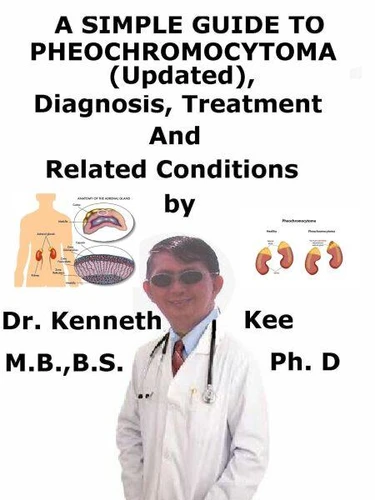
This book describes Pheochromocytoma, Diagnosis and Treatment and Related DiseasesPheochromocytoma is an uncommon tumor of adrenal glandLocation of this adrenal tumor can be found by a MRI scanPheochromocytoma tends to secrete excessive catecholaminesThis can cause a hypertensive crisis which is life threateningPheochromocytoma is usually caused by a genetic mutationThere is no sex difference or any particular racial predispositionCatecholamines have effects on the heart rate, metabolismMost patients have headache, tremors, sweating and palpitationDiagnosis is also based on the increase in blood catecholaminesOther tests showed raised blood calcium and urine metanephrinesMRI an CAT scans will be able to the adrenal tumor locationFinal diagnosis of pheochromocytoma is by biopsy examinationThe treatment of choice for pheochromocytoma is surgical resectionPreoperative blood pressure and pulse must be stabilized with medicationIf surgery is not advisable, medical treatment will control the excess hormonesRadiation treatment is not effective and therefore not performed-An original poem by Kenneth KeePheochromocytoma or "paraganglioma" is an infrequent adrenal gland medullar tumor in which there is excess production of the epinephrine (adrenaline).
Pheochromocytomas are tumors that form in the adrenal medulla, the inner part of the adrenal gland, which can induce overproduction of catecholamines. Catecholamines are stimulating hormones such as epinephrine (adrenaline) and norepinephrine (noradrenaline) that are involved in the maintenance of blood pressure. Excess of catecholamines produces high blood pressure in most of the patients. Pheochromocytoma is a rare disease;Of all patients with hypertension, less than one percent has adrenal tumors and the resulting hormone overproduction.
If left untreated, it can have serious consequences such as heart attack, stroke, and other life-threatening conditions.85% of the tumors are benign. The tumor may be large up to 15 cm or 6 inches in diameter. It causes ill effects in the affected person by the secretion (intermittent or continuous) of excessive epinephrine and norepinephrine, hormones that has effects on the heart rate, metabolism, and blood pressure.
It happens in middle adult life around 40-50 years of age. Its occurrence is slightly more frequent in females than in males. In most cases, a pheochromocytoma is a single, benign tumor that happens in a patient without a family history of endocrine disorders. A small proportion may be related to the pheochromocytoma's hereditary causes. It normally starts forming in the medulla of one or both adrenal glands.
This tumor rarely appears outside the adrenal gland, normally somewhere else in the abdomen. Typical symptoms may be high blood pressure and events of:1. Severe headache2. Sweating3. PalpitationsThe 3 major tests used to locate a pheochromocytoma are the CT scan, MRI scan, the meta-iodobenzylguanidine (MIBG) scan. Provocative testing for fiagnosis can cause dangerous hypertensive episodes and are seldom done.
The treatment normally requires the removal of the tumor by surgery. TABLE OF CONTENTIntroductionChapter 1 Pheochromocytoma (Updated)Chapter 2 CausesChapter 3 SymptomsChapter 4 DiagnosisChapter 5 TreatmentChapter 6 PrognosisChapter 7 Adrenal Fatigue (Updated)Chapter 8 Life and Death of Adrenal GlandEpilogue
Pheochromocytomas are tumors that form in the adrenal medulla, the inner part of the adrenal gland, which can induce overproduction of catecholamines. Catecholamines are stimulating hormones such as epinephrine (adrenaline) and norepinephrine (noradrenaline) that are involved in the maintenance of blood pressure. Excess of catecholamines produces high blood pressure in most of the patients. Pheochromocytoma is a rare disease;Of all patients with hypertension, less than one percent has adrenal tumors and the resulting hormone overproduction.
If left untreated, it can have serious consequences such as heart attack, stroke, and other life-threatening conditions.85% of the tumors are benign. The tumor may be large up to 15 cm or 6 inches in diameter. It causes ill effects in the affected person by the secretion (intermittent or continuous) of excessive epinephrine and norepinephrine, hormones that has effects on the heart rate, metabolism, and blood pressure.
It happens in middle adult life around 40-50 years of age. Its occurrence is slightly more frequent in females than in males. In most cases, a pheochromocytoma is a single, benign tumor that happens in a patient without a family history of endocrine disorders. A small proportion may be related to the pheochromocytoma's hereditary causes. It normally starts forming in the medulla of one or both adrenal glands.
This tumor rarely appears outside the adrenal gland, normally somewhere else in the abdomen. Typical symptoms may be high blood pressure and events of:1. Severe headache2. Sweating3. PalpitationsThe 3 major tests used to locate a pheochromocytoma are the CT scan, MRI scan, the meta-iodobenzylguanidine (MIBG) scan. Provocative testing for fiagnosis can cause dangerous hypertensive episodes and are seldom done.
The treatment normally requires the removal of the tumor by surgery. TABLE OF CONTENTIntroductionChapter 1 Pheochromocytoma (Updated)Chapter 2 CausesChapter 3 SymptomsChapter 4 DiagnosisChapter 5 TreatmentChapter 6 PrognosisChapter 7 Adrenal Fatigue (Updated)Chapter 8 Life and Death of Adrenal GlandEpilogue
A propos de Kenneth Kee




4,49 €