SOLDES
Jusqu'à -70% sur une sélection d'articles*

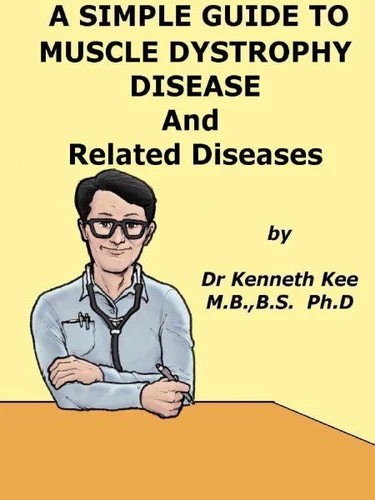
A Simple Guide to Muscle Dystrophy Disease and Related Conditions. A Simple Guide to Medical Conditions, #49
Par :Formats :
Disponible dans votre compte client Decitre ou Furet du Nord dès validation de votre commande. Le format ePub est :
- Compatible avec une lecture sur My Vivlio (smartphone, tablette, ordinateur)
- Compatible avec une lecture sur liseuses Vivlio
- Pour les liseuses autres que Vivlio, vous devez utiliser le logiciel Adobe Digital Edition. Non compatible avec la lecture sur les liseuses Kindle, Remarkable et Sony
 , qui est-ce ?
Notre partenaire de plateforme de lecture numérique où vous retrouverez l'ensemble de vos ebooks gratuitement
Pour en savoir plus sur nos ebooks, consultez notre aide en ligne ici
C'est si simple ! Lisez votre ebook avec l'app Vivlio sur votre tablette, mobile ou ordinateur :

- FormatePub
- ISBN978-1-301-20661-2
- EAN9781301206612
- Date de parution15/10/2013
- Protection num.pas de protection
- Infos supplémentairesepub
- ÉditeurBluewater
Résumé
Muscle Dystrophy DiseaseWhat is Muscle Dystrophy Disease?Muscular dystrophy (MD) disease is a group of more than 30 inherited diseases that cause muscle weakness and muscle loss. Some Muscular dystrophy disease can occur in infancy or childhoodOther Muscular dystrophy diseases do not appear until 40 years of age or later. There is a difference in the various muscular dystrophies diseases in the people they affect and the symptoms of the disease.
All forms of Muscular dystrophy will become worse as the person's muscles become weaker. Most people with Muscular dystrophy eventually lose the ability to walk. There is no cure for muscular dystrophy. What are the causes of muscular dystrophy?Muscular dystrophy (MD) is a genetic disease that gradually weakens the body's muscles. It is caused by incorrect or missing genetic information that prevents the body from making the proteins needed to build and maintain healthy muscles.
Duchenne muscular dystrophy is a sex-linked genetic disease where a boy born to a mother who is a carrier has a 50 per cent chance of having the disorder while his sisters will have a 50 per cent chance of becoming a carrier. A child who is diagnosed with MD gradually loses the ability to do things like walk, sit upright, breathe easily, and move the arms and hands. This increasing weakness can lead to other health problems.
There are several major forms of muscular dystrophy, which can affect the muscles to varying degrees. In some cases, MD starts causing muscle problems in infancy; in others, symptoms don't appear until adulthood. There is no cure for MD, but researchers are quickly learning more about how to prevent and treat it. Doctors are also working on improving muscle and joint function and slowing muscle deterioration so that those with MD can live as actively and independently as possible.
What are the symptoms of Muscular dystrophy?First SymptomsMany children with muscular dystrophy follow a normal pattern of development during their first few years of life. But in time common symptoms begin to appear. A child who has MD may start to1. stumble, 2. walk late and waddle, 3. have difficulty going up stairs, and4. toe walk (walk on the toes without the heels hitting the floor).5. A child may start to struggle to get up from a sitting position6.
have a hard time pushing things, like a wagon or a tricycle. Children with MD often develop enlarged calf muscles (called calf pseudo hypertrophy) as muscle tissue is destroyed and replaced by fat. How is Muscle Dystrophy diagnosed?Diagnosis1. family history, and ask about any problems particularly those affecting the muscles that the child might be having.2. tests to determine what type of MD is involved and to rule out other diseases that could cause the problem.3.
a blood test to measure levels of serum creatine kinase, an enzyme that's released into the bloodstream when muscle fibers are deteriorating. Elevated levels indicate that something is causing muscle damage.4. check the DNA for gene abnormalities or a muscle biopsy to look for patterns of deterioration5. abnormal levels of dystrophin, a protein that helps muscle cells keep their shape and length. What are the Types of Muscular Dystrophy?The different types of muscular dystrophy affect different sets of muscles and result in different degrees of muscle weakness.
TABLE OF CONTENTChapter 1Muscle Dystrophy DiseaseChapter 2FibromyalgiaChapter 3Myasthenia GravisChapter 4Multiple SclerosisEpilogue
All forms of Muscular dystrophy will become worse as the person's muscles become weaker. Most people with Muscular dystrophy eventually lose the ability to walk. There is no cure for muscular dystrophy. What are the causes of muscular dystrophy?Muscular dystrophy (MD) is a genetic disease that gradually weakens the body's muscles. It is caused by incorrect or missing genetic information that prevents the body from making the proteins needed to build and maintain healthy muscles.
Duchenne muscular dystrophy is a sex-linked genetic disease where a boy born to a mother who is a carrier has a 50 per cent chance of having the disorder while his sisters will have a 50 per cent chance of becoming a carrier. A child who is diagnosed with MD gradually loses the ability to do things like walk, sit upright, breathe easily, and move the arms and hands. This increasing weakness can lead to other health problems.
There are several major forms of muscular dystrophy, which can affect the muscles to varying degrees. In some cases, MD starts causing muscle problems in infancy; in others, symptoms don't appear until adulthood. There is no cure for MD, but researchers are quickly learning more about how to prevent and treat it. Doctors are also working on improving muscle and joint function and slowing muscle deterioration so that those with MD can live as actively and independently as possible.
What are the symptoms of Muscular dystrophy?First SymptomsMany children with muscular dystrophy follow a normal pattern of development during their first few years of life. But in time common symptoms begin to appear. A child who has MD may start to1. stumble, 2. walk late and waddle, 3. have difficulty going up stairs, and4. toe walk (walk on the toes without the heels hitting the floor).5. A child may start to struggle to get up from a sitting position6.
have a hard time pushing things, like a wagon or a tricycle. Children with MD often develop enlarged calf muscles (called calf pseudo hypertrophy) as muscle tissue is destroyed and replaced by fat. How is Muscle Dystrophy diagnosed?Diagnosis1. family history, and ask about any problems particularly those affecting the muscles that the child might be having.2. tests to determine what type of MD is involved and to rule out other diseases that could cause the problem.3.
a blood test to measure levels of serum creatine kinase, an enzyme that's released into the bloodstream when muscle fibers are deteriorating. Elevated levels indicate that something is causing muscle damage.4. check the DNA for gene abnormalities or a muscle biopsy to look for patterns of deterioration5. abnormal levels of dystrophin, a protein that helps muscle cells keep their shape and length. What are the Types of Muscular Dystrophy?The different types of muscular dystrophy affect different sets of muscles and result in different degrees of muscle weakness.
TABLE OF CONTENTChapter 1Muscle Dystrophy DiseaseChapter 2FibromyalgiaChapter 3Myasthenia GravisChapter 4Multiple SclerosisEpilogue
A propos de Kenneth Kee



4,49 €