SOLDES
Jusqu'à -70% sur une sélection d'articles*

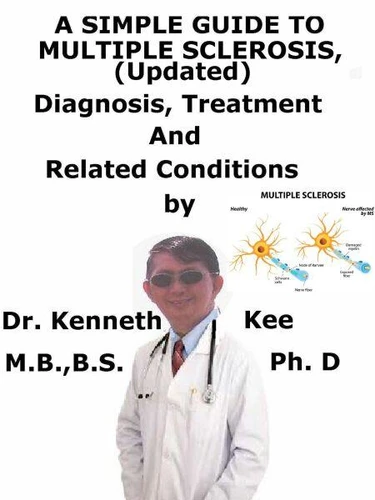
A Simple Guide to Multiple Sclerosis (Updated), Diagnosis, Treatment and Related Conditions
Par :Formats :
Disponible dans votre compte client Decitre ou Furet du Nord dès validation de votre commande. Le format ePub est :
- Compatible avec une lecture sur My Vivlio (smartphone, tablette, ordinateur)
- Compatible avec une lecture sur liseuses Vivlio
- Pour les liseuses autres que Vivlio, vous devez utiliser le logiciel Adobe Digital Edition. Non compatible avec la lecture sur les liseuses Kindle, Remarkable et Sony
 , qui est-ce ?
Notre partenaire de plateforme de lecture numérique où vous retrouverez l'ensemble de vos ebooks gratuitement
Pour en savoir plus sur nos ebooks, consultez notre aide en ligne ici
C'est si simple ! Lisez votre ebook avec l'app Vivlio sur votre tablette, mobile ou ordinateur :

- FormatePub
- ISBN978-1-005-59401-5
- EAN9781005594015
- Date de parution21/06/2021
- Protection num.pas de protection
- Infos supplémentairesepub
- ÉditeurC. C. Chamberlane
Résumé
This book describes Multiple Sclerosis (Updated), Diagnosis and Treatment and Related DiseasesMultiple Sclerosis is a progressive degenerative diseaseThat occurs in the nervous system of people of 20-30 agesThe cause is unknown but may be autoimmune due to infectionMultiple sclerosis results in the body nerve cell myelin destructionThere is diplopia and the impairment of visionThere is weakness of the muscles and poor coordinationThere is vertigo, hearing loss and paresthesiaDamage to the facial nerve can result in facial paresisDiagnosis is also based on the patient's physical developmentThere is evidence of peripheral nerve involvementCerebral spinal fluid may show mild mononuclear pleocytosisMRI search for changes within the brain peculiar to multiple sclerosisTreatment is usually not a cure but suppression of symptomsGlatiramer, Natalizumab and Fingolimod are the main medicationsSupportive measures are bed rest, proper diet and speech therapyThere is rarely need for any surgical therapy-An original poem by Kenneth KeeMultiple Sclerosis (MS) is a progressive degenerative disease of the central nervous system with recurrent episodes of neurological dysfunction disconnected in time and space and associated with evidence of demyelization of the central nervous system.
Multiple sclerosis (MS) is a disorder that induces the body's immune response to attack the central nervous system. It affects the patient in different areas of the nervous system at different points in time. Multiple sclerosis is classified with other autoimmune diseases, but it is also a neurological disorder since the central nervous system is the focus of the inflammatory immune response. With multiple sclerosis, the immune system assaults the nerve sheath called myelin, which is supposed to protect the nerve cells.
When a person's immune system mistakenly attacks itself, it can cause debilitating symptoms. Multiple Sclerosis is not curable but can be suppressed. Treatment normally focuses on:1. Speeding recovery from attacks, 2. Slowing the progression of the disease and3. Managing MS symptoms. Some people have such mild symptoms that no treatment is needed. Treatment of the symptoms of MS involves both pharmacologic and non-pharmacologic measures.a.
Fatigue: Off-label treatments are amantadine, methylphenidate and fluoxetineb. Depression: Selective serotonin reuptake inhibitors are favoredc. Spasticity: Baclofen is effective in most casesd. Pain: Tricyclic antidepressants are first-line drugs for primary paine. Sexual dysfunction: Oral phosphodiesterase type 5 inhibitors (e.g., sildenafil, tadalafil)f. Muscle relaxant such as baclofen to reduce muscle spasm and stiffnessg.
Optic neuritis: Intravenous methylprednisolone may speed recoveryMultiple Sclerosis often react well to medicine that suppress the immune system's response. These immunosuppressive treatments have able to help people with MS to live a relatively happy healthy life. Doctors have been trying to develop a vaccine for MS that does not weaken the immune system without much success. Production of the COVID-19 vaccine using mRNA have indicated a vaccine for MS using mRNA technology to treat MS.
This gives hope to people with MS for a symptom-free future. TABLE OF CONTENTIntroductionChapter 1 Multiple Sclerosis (Updated)Chapter 2 CausesChapter 3 SymptomsChapter 4 DiagnosisChapter 5 TreatmentChapter 6 PrognosisChapter 7 Updates in Multiple SclerosisChapter 8 Myasthenia GravisEpilogue
Multiple sclerosis (MS) is a disorder that induces the body's immune response to attack the central nervous system. It affects the patient in different areas of the nervous system at different points in time. Multiple sclerosis is classified with other autoimmune diseases, but it is also a neurological disorder since the central nervous system is the focus of the inflammatory immune response. With multiple sclerosis, the immune system assaults the nerve sheath called myelin, which is supposed to protect the nerve cells.
When a person's immune system mistakenly attacks itself, it can cause debilitating symptoms. Multiple Sclerosis is not curable but can be suppressed. Treatment normally focuses on:1. Speeding recovery from attacks, 2. Slowing the progression of the disease and3. Managing MS symptoms. Some people have such mild symptoms that no treatment is needed. Treatment of the symptoms of MS involves both pharmacologic and non-pharmacologic measures.a.
Fatigue: Off-label treatments are amantadine, methylphenidate and fluoxetineb. Depression: Selective serotonin reuptake inhibitors are favoredc. Spasticity: Baclofen is effective in most casesd. Pain: Tricyclic antidepressants are first-line drugs for primary paine. Sexual dysfunction: Oral phosphodiesterase type 5 inhibitors (e.g., sildenafil, tadalafil)f. Muscle relaxant such as baclofen to reduce muscle spasm and stiffnessg.
Optic neuritis: Intravenous methylprednisolone may speed recoveryMultiple Sclerosis often react well to medicine that suppress the immune system's response. These immunosuppressive treatments have able to help people with MS to live a relatively happy healthy life. Doctors have been trying to develop a vaccine for MS that does not weaken the immune system without much success. Production of the COVID-19 vaccine using mRNA have indicated a vaccine for MS using mRNA technology to treat MS.
This gives hope to people with MS for a symptom-free future. TABLE OF CONTENTIntroductionChapter 1 Multiple Sclerosis (Updated)Chapter 2 CausesChapter 3 SymptomsChapter 4 DiagnosisChapter 5 TreatmentChapter 6 PrognosisChapter 7 Updates in Multiple SclerosisChapter 8 Myasthenia GravisEpilogue
A propos de Kenneth Kee




4,49 €