SOLDES
Jusqu'à -70% sur une sélection d'articles*

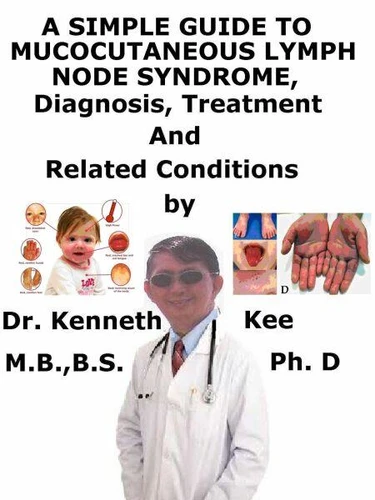
A Simple Guide to Mucocutaneous Lymph Node Syndrome (Kawasaki Disease), Diagnosis, Treatment and Related Conditions
Par :Formats :
Disponible dans votre compte client Decitre ou Furet du Nord dès validation de votre commande. Le format ePub est :
- Compatible avec une lecture sur My Vivlio (smartphone, tablette, ordinateur)
- Compatible avec une lecture sur liseuses Vivlio
- Pour les liseuses autres que Vivlio, vous devez utiliser le logiciel Adobe Digital Edition. Non compatible avec la lecture sur les liseuses Kindle, Remarkable et Sony
 , qui est-ce ?
Notre partenaire de plateforme de lecture numérique où vous retrouverez l'ensemble de vos ebooks gratuitement
Pour en savoir plus sur nos ebooks, consultez notre aide en ligne ici
C'est si simple ! Lisez votre ebook avec l'app Vivlio sur votre tablette, mobile ou ordinateur :

- FormatePub
- ISBN8215590225
- EAN9798215590225
- Date de parution25/02/2023
- Protection num.pas de protection
- Infos supplémentairesepub
- ÉditeurWMG Publishing
Résumé
This book describes Mucocutaneous Lymph Node Syndrome (Kawasaki Disease), Diagnosis and Treatment and Related DiseasesMucocutaneous lymph node syndrome is a childhood diseaseThe disease occur in children of all agesIt typically cause fever and lymph node swellingsMostly it causes the skin to start peeling. Patients present with first with fever then skin and eye drynessThere may be also swelling of feet and hand with rednessThere is also sore throat with sometimes tonsillar swellingThis is followed by red rash with skin peelingDiagnosis is by symptoms and elimination of other diseasesElectrocardiography may be done to check on heart myopathyComplications are vasculitis, coronary heart disease and arthritisThere may be also blood vessel aneurysm and myocarditisTreatment is usually with immunogammaglobulinAspirin is also used under proper doctor's supervisionCorticosteroids is useful to treat arthritis and myocarditisMost children make a full recovery after about 3 weeks-An original poem by Kenneth KeeMucocutaneous lymph node syndrome, also known as Kawasaki disease, is a rare condition that primarily affects young children and typically causes fever, swelling of the lymph nodes, and symptoms affecting the skin and mucous membranes.
Mucocutaneous lymph node syndrome is a more suitable name for this because of its symptoms affecting the skin and mucous membranes and lymph node enlargement than Kawasaki disease. It is characterized by inflammation of the blood vessels throughout the body, including the coronary arteries, and can lead to complications such as aneurysms or heart disease. Mucocutaneous lymph node syndrome happens mainly in children below 5 years.
It does not transmit from child to child (is not contagious). The disorder happens most often during the periods of late winter and early spring. Mucocutaneous lymph node syndrome can harm the coronary arteries which carry blood to the heart muscle. Most of the treated children can recover from the disease without long-term disorders. The precise cause is not known, but it is thought to be linked to a wind-borne or water-borne pathogen infection.
An autoimmune disease has been proposed as the cause. In recent years there have been studies that have revealed certain genetic markers (such as HLA-B51 and HLA-Bw22j2 serotypes, chemokine receptor gene-cluster CCR2-CCR5 haplotypes and FCGR3A polymorphism of the IgG receptor IIIa) demonstrate a predisposition to the disease. The siblings of patients are 10-20 times likely to develop the disease compared to normal people.
The triad of symptoms which are frequent are:Fever together with headache persisting for more than 5 daysSwelling of one or more lymph nodes in the neckBlotchy red rash over the entire body with typical skin peeling in the second week of illnessThe diagnosis is always clinical. Classical symptoms and signs are 5 days of high fever, lymph nodes enlargement, rash and peeling of the skin from the fingers and toes.
Echocardiography is the investigation of choice to assess for coronary artery aneurysms. The standard treatment during the disorder's acute stage is high-dose aspirin and immune globulin. Most children who receive these treatments improve rapidly within 24 hours. For a small percentage of patients, the fever persists. These children may necessitate a second round of intravenous immunoglobulin. There are new clinical trials with the use of infliximab, etanercept, and anakinra.
TABLE OF CONTENTIntroductionChapter 1 Mucocutaneous Lymph Node SyndromeChapter 2 CausesChapter 3 SymptomsChapter 4 DiagnosisChapter 5 TreatmentChapter 6 PrognosisChapte...
Mucocutaneous lymph node syndrome is a more suitable name for this because of its symptoms affecting the skin and mucous membranes and lymph node enlargement than Kawasaki disease. It is characterized by inflammation of the blood vessels throughout the body, including the coronary arteries, and can lead to complications such as aneurysms or heart disease. Mucocutaneous lymph node syndrome happens mainly in children below 5 years.
It does not transmit from child to child (is not contagious). The disorder happens most often during the periods of late winter and early spring. Mucocutaneous lymph node syndrome can harm the coronary arteries which carry blood to the heart muscle. Most of the treated children can recover from the disease without long-term disorders. The precise cause is not known, but it is thought to be linked to a wind-borne or water-borne pathogen infection.
An autoimmune disease has been proposed as the cause. In recent years there have been studies that have revealed certain genetic markers (such as HLA-B51 and HLA-Bw22j2 serotypes, chemokine receptor gene-cluster CCR2-CCR5 haplotypes and FCGR3A polymorphism of the IgG receptor IIIa) demonstrate a predisposition to the disease. The siblings of patients are 10-20 times likely to develop the disease compared to normal people.
The triad of symptoms which are frequent are:Fever together with headache persisting for more than 5 daysSwelling of one or more lymph nodes in the neckBlotchy red rash over the entire body with typical skin peeling in the second week of illnessThe diagnosis is always clinical. Classical symptoms and signs are 5 days of high fever, lymph nodes enlargement, rash and peeling of the skin from the fingers and toes.
Echocardiography is the investigation of choice to assess for coronary artery aneurysms. The standard treatment during the disorder's acute stage is high-dose aspirin and immune globulin. Most children who receive these treatments improve rapidly within 24 hours. For a small percentage of patients, the fever persists. These children may necessitate a second round of intravenous immunoglobulin. There are new clinical trials with the use of infliximab, etanercept, and anakinra.
TABLE OF CONTENTIntroductionChapter 1 Mucocutaneous Lymph Node SyndromeChapter 2 CausesChapter 3 SymptomsChapter 4 DiagnosisChapter 5 TreatmentChapter 6 PrognosisChapte...
A propos de Kenneth Kee


4,49 €