SOLDES
Jusqu'à -70% sur une sélection d'articles*

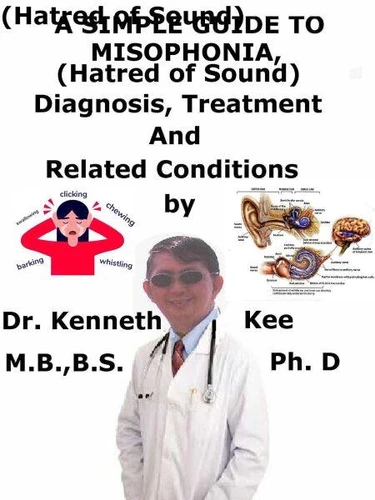
A Simple Guide to Misophonia, (Hatred of Sound) diagnosis, Treatment and Related Conditions
Par :Formats :
Disponible dans votre compte client Decitre ou Furet du Nord dès validation de votre commande. Le format ePub est :
- Compatible avec une lecture sur My Vivlio (smartphone, tablette, ordinateur)
- Compatible avec une lecture sur liseuses Vivlio
- Pour les liseuses autres que Vivlio, vous devez utiliser le logiciel Adobe Digital Edition. Non compatible avec la lecture sur les liseuses Kindle, Remarkable et Sony
 , qui est-ce ?
Notre partenaire de plateforme de lecture numérique où vous retrouverez l'ensemble de vos ebooks gratuitement
Pour en savoir plus sur nos ebooks, consultez notre aide en ligne ici
C'est si simple ! Lisez votre ebook avec l'app Vivlio sur votre tablette, mobile ou ordinateur :

- FormatePub
- ISBN978-1-005-65409-2
- EAN9781005654092
- Date de parution12/09/2021
- Protection num.pas de protection
- Infos supplémentairesepub
- ÉditeurC. C. Chamberlane
Résumé
This book describes Misophonia (Hatred of Sound), Diagnosis and Treatment and Related DiseasesMisophonia, also termed the "hatred or dislike of sound, " is featured by the sensitivity to specific sounds, followed by an unpleasant emotional and physical response. People with misophonia link the experience of the sound stimulus more closely to irritation, disgust, or even pain, rather than anxiety or fear.
The trigger sounds that activate this discomfort are normally highly specific, such as sounds released in the context of frequent human behavior (e.g., chewing, breathing, swallowing, clicking, whistling, and speaking). In some patients, the extreme sound sensitivity is linked with a specific person (e.g., "her brother chewing" or "his mother's voice"). In other persons, the triggering sounds may become more generalized (e.g., "women's voices"), or to environmental triggers (e.g., "fluorescent lighting").
For many people, the trigger sound of somebody eating or clicking a pen can be irritating, but patients suffering from misophonia feel disgust and even rage when exposed to certain noises. Also called selective sound sensitivity syndrome, misophonia, literally in Greek for "hatred of sound, " is a chronic disorder in which specific sounds activate an extreme and emotional reaction. Apart from hatred, the affected persons may exhibit anger and fear in reaction to certain sounds.
Young girls (near puberty) are found to be affected the most by this disorder. Persons who have some form of hearing loss and those with certain mental disorders may be at a higher risk for developing Misophonia. The precise cause of the disorder is not clear even though recent research indicates hyperactivity in the anterior insular cortex (of the brain) in affected personsThe precise cause of Misophonia is not known.
Recent research has made these observations:1. A higher autonomic (without conscious effort) reaction to sound triggers in the affected persons, when compared to those who are not affected.2. An overactive anterior insular cortex (part of the brain) in the affected persons, as a function of altered connectivity pattern of the frontal lobe of the brain. This region in the brain is responsible for emotional consciousness and processing external and internal stimuli.3.
Also, a study also found an increased myelination in the grey matter of a region, known as the ventromedial prefrontal cortex (vmPFC). The doctors believe that there is a difference in the control mechanism between the anterior insular cortex and the frontal lobeThere are a number of factors that may play a part. Brain chemistry:In a study, doctors discovered misophonia to be a brain-based disorder.
They indicate a disruption in the connectivity in components of the brain that process both sound stimulation and the fight-or-flight response. Mental conditions:Notably, sensory over-responsively (heightened sensitivity to sounds) is frequent among persons with OCD, anxiety, and Tourette's syndrome indicating possible overlap in neuropathology. Tinnitus:It is evaluated that 4% to 5% of people with tinnitus, a disorder in which people hear noises have some form of misophonia.
In order to assess Misophonia, 6 criteria has been suggested for the diagnosis of this disorderActual anticipation of a trigger soundLoss of self-controlLoss of control is excessiveAvoidance of possible sound triggersSignificant distressExcessive reaction not due to another disorderTreatment for the disorder requires adopting coping mechanisms and medicinesTABLE OF CONTENTIntroductionChapter 1 MisophoniaChapter 2 CausesChapter 3 SymptomsChapter 4 DiagnosisChapter 5 TreatmentChapter 6 Progno...
The trigger sounds that activate this discomfort are normally highly specific, such as sounds released in the context of frequent human behavior (e.g., chewing, breathing, swallowing, clicking, whistling, and speaking). In some patients, the extreme sound sensitivity is linked with a specific person (e.g., "her brother chewing" or "his mother's voice"). In other persons, the triggering sounds may become more generalized (e.g., "women's voices"), or to environmental triggers (e.g., "fluorescent lighting").
For many people, the trigger sound of somebody eating or clicking a pen can be irritating, but patients suffering from misophonia feel disgust and even rage when exposed to certain noises. Also called selective sound sensitivity syndrome, misophonia, literally in Greek for "hatred of sound, " is a chronic disorder in which specific sounds activate an extreme and emotional reaction. Apart from hatred, the affected persons may exhibit anger and fear in reaction to certain sounds.
Young girls (near puberty) are found to be affected the most by this disorder. Persons who have some form of hearing loss and those with certain mental disorders may be at a higher risk for developing Misophonia. The precise cause of the disorder is not clear even though recent research indicates hyperactivity in the anterior insular cortex (of the brain) in affected personsThe precise cause of Misophonia is not known.
Recent research has made these observations:1. A higher autonomic (without conscious effort) reaction to sound triggers in the affected persons, when compared to those who are not affected.2. An overactive anterior insular cortex (part of the brain) in the affected persons, as a function of altered connectivity pattern of the frontal lobe of the brain. This region in the brain is responsible for emotional consciousness and processing external and internal stimuli.3.
Also, a study also found an increased myelination in the grey matter of a region, known as the ventromedial prefrontal cortex (vmPFC). The doctors believe that there is a difference in the control mechanism between the anterior insular cortex and the frontal lobeThere are a number of factors that may play a part. Brain chemistry:In a study, doctors discovered misophonia to be a brain-based disorder.
They indicate a disruption in the connectivity in components of the brain that process both sound stimulation and the fight-or-flight response. Mental conditions:Notably, sensory over-responsively (heightened sensitivity to sounds) is frequent among persons with OCD, anxiety, and Tourette's syndrome indicating possible overlap in neuropathology. Tinnitus:It is evaluated that 4% to 5% of people with tinnitus, a disorder in which people hear noises have some form of misophonia.
In order to assess Misophonia, 6 criteria has been suggested for the diagnosis of this disorderActual anticipation of a trigger soundLoss of self-controlLoss of control is excessiveAvoidance of possible sound triggersSignificant distressExcessive reaction not due to another disorderTreatment for the disorder requires adopting coping mechanisms and medicinesTABLE OF CONTENTIntroductionChapter 1 MisophoniaChapter 2 CausesChapter 3 SymptomsChapter 4 DiagnosisChapter 5 TreatmentChapter 6 Progno...
A propos de Kenneth Kee
4,49 €