SOLDES
Jusqu'à -70% sur une sélection d'articles*

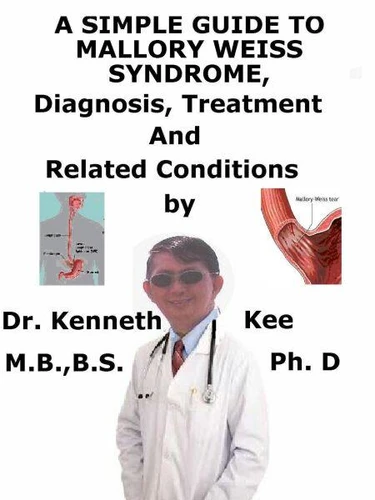
A Simple Guide to Mallory Weiss Syndrome, Diagnosis, Treatment and Related Conditions
Par :Formats :
Disponible dans votre compte client Decitre ou Furet du Nord dès validation de votre commande. Le format ePub est :
- Compatible avec une lecture sur My Vivlio (smartphone, tablette, ordinateur)
- Compatible avec une lecture sur liseuses Vivlio
- Pour les liseuses autres que Vivlio, vous devez utiliser le logiciel Adobe Digital Edition. Non compatible avec la lecture sur les liseuses Kindle, Remarkable et Sony
 , qui est-ce ?
Notre partenaire de plateforme de lecture numérique où vous retrouverez l'ensemble de vos ebooks gratuitement
Pour en savoir plus sur nos ebooks, consultez notre aide en ligne ici
C'est si simple ! Lisez votre ebook avec l'app Vivlio sur votre tablette, mobile ou ordinateur :

- FormatePub
- ISBN978-1-005-42310-0
- EAN9781005423100
- Date de parution01/04/2021
- Protection num.pas de protection
- Infos supplémentairesepub
- ÉditeurC. C. Chamberlane
Résumé
This book describes Mallory Weiss Syndrome, Diagnosis and Treatment and Related DiseasesMallory-Weiss syndrome (MWS) is one of the frequent causes of acute upper gastrointestinal (GI) bleeding, featured by the presence of longitudinal superficial mucosal lacerations (Mallory-Weiss tears). Serious and prolonged vomiting can cause tears in the lining of the esophagus. Doctors Mallory and Weiss in 1929 accurately depicted this disorder as lower esophageal lacerations happening to patients with repetitive forceful retching and vomiting after excessive alcohol intake.
The esophagus is the tube that joins the throat to the stomach. Mallory-Weiss syndrome (MWS) is a disorder marked by a tear in the mucous membrane, or inner lining, where the esophagus meets the stomach. Most tears recover within 7 to 10 days without treatment, but Mallory-Weiss tears can produce considerable bleeding. Depending on the severity of the tear, surgery may be essential to correct the injury.
These tears happen primarily at the gastroesophageal junction and may extend proximally to involve the lower or even mid esophagus and at times extend distally to involve the proximal portion of the stomach. The diagnosis of MWS is normally confirmed with endoscopy. The average esophageal MWS tear is about 2-4 cm in lengthMost patients have only one tear of the mucosa near the GE junction. The tear is just below the GE junction on the lesser curvature of the stomach.
The most frequent cause of MWS is severe or prolonged vomiting. While this type of vomiting can happen with stomach illness, it also often happens due to chronic alcohol abuse or bulimia. Heavy alcohol consumption is regarded as one of the most significant predisposing factors since about 50% to 70% of the patients diagnosed with Mallory-Weiss syndrome have a history of alcoholism. The severity of the upper GI bleeding with Mallory-Weiss syndrome is also documented to be higher with the concurrent presence of portal hypertension and esophageal varices.
The relationship between a hiatal hernia and Mallory-Weiss syndrome is still debatable. A hiatal hernia was present in a large number of cases with Mallory-Weiss syndrome while a case-control study found no difference in the incidence of a hiatal hernia between patients with Mallory-Weiss syndrome and the control group. Other risk factors are:1. Bulimia nervosa, 2. Hyperemesis gravidarum and3. Gastroesophageal reflux disease (GERD).
In a large number of patients (around 25% of cases), none of these risk factors were identified. The disorder is triggered by repeated acts of a sudden rise of the intra-abdominal pressure such as retching, vomiting, straining, coughing, cardiopulmonary resuscitation or blunt abdominal traumas. Iatrogenic Mallory-Weiss syndrome is normally infrequent. Mallory-Weiss syndrome does not always cause symptoms in mild cases.
This is more frequent in mild instances when tears of the esophagus produce only a small quantity of bleeding and resolve quickly without treatment. In 85% of cases, the presenting symptom is hematemesis. The quantity of blood is inconsistent varying from blood-streaked mucus to massive bright red bleeding. In case of serious bleeding, other symptoms such as melena, dizziness, or syncope can be present.
Upper GI endoscopy is the gold standard for specifically diagnosing Mallory Weiss tears, and treating simple active esophageal bleeding. Other treatments are:1. Multipolar electrocoagulation (MPEC), 2. Injection of a sclerosant agent, 3. Argon plasma coagulation (APC), or4. Endoscopic band ligation.5. Epinephrine local injectionSurgery is seldom required. TABLE OF CONTENTIntroduction...
The esophagus is the tube that joins the throat to the stomach. Mallory-Weiss syndrome (MWS) is a disorder marked by a tear in the mucous membrane, or inner lining, where the esophagus meets the stomach. Most tears recover within 7 to 10 days without treatment, but Mallory-Weiss tears can produce considerable bleeding. Depending on the severity of the tear, surgery may be essential to correct the injury.
These tears happen primarily at the gastroesophageal junction and may extend proximally to involve the lower or even mid esophagus and at times extend distally to involve the proximal portion of the stomach. The diagnosis of MWS is normally confirmed with endoscopy. The average esophageal MWS tear is about 2-4 cm in lengthMost patients have only one tear of the mucosa near the GE junction. The tear is just below the GE junction on the lesser curvature of the stomach.
The most frequent cause of MWS is severe or prolonged vomiting. While this type of vomiting can happen with stomach illness, it also often happens due to chronic alcohol abuse or bulimia. Heavy alcohol consumption is regarded as one of the most significant predisposing factors since about 50% to 70% of the patients diagnosed with Mallory-Weiss syndrome have a history of alcoholism. The severity of the upper GI bleeding with Mallory-Weiss syndrome is also documented to be higher with the concurrent presence of portal hypertension and esophageal varices.
The relationship between a hiatal hernia and Mallory-Weiss syndrome is still debatable. A hiatal hernia was present in a large number of cases with Mallory-Weiss syndrome while a case-control study found no difference in the incidence of a hiatal hernia between patients with Mallory-Weiss syndrome and the control group. Other risk factors are:1. Bulimia nervosa, 2. Hyperemesis gravidarum and3. Gastroesophageal reflux disease (GERD).
In a large number of patients (around 25% of cases), none of these risk factors were identified. The disorder is triggered by repeated acts of a sudden rise of the intra-abdominal pressure such as retching, vomiting, straining, coughing, cardiopulmonary resuscitation or blunt abdominal traumas. Iatrogenic Mallory-Weiss syndrome is normally infrequent. Mallory-Weiss syndrome does not always cause symptoms in mild cases.
This is more frequent in mild instances when tears of the esophagus produce only a small quantity of bleeding and resolve quickly without treatment. In 85% of cases, the presenting symptom is hematemesis. The quantity of blood is inconsistent varying from blood-streaked mucus to massive bright red bleeding. In case of serious bleeding, other symptoms such as melena, dizziness, or syncope can be present.
Upper GI endoscopy is the gold standard for specifically diagnosing Mallory Weiss tears, and treating simple active esophageal bleeding. Other treatments are:1. Multipolar electrocoagulation (MPEC), 2. Injection of a sclerosant agent, 3. Argon plasma coagulation (APC), or4. Endoscopic band ligation.5. Epinephrine local injectionSurgery is seldom required. TABLE OF CONTENTIntroduction...
A propos de Kenneth Kee
4,49 €