SOLDES
Jusqu'à -70% sur une sélection d'articles*

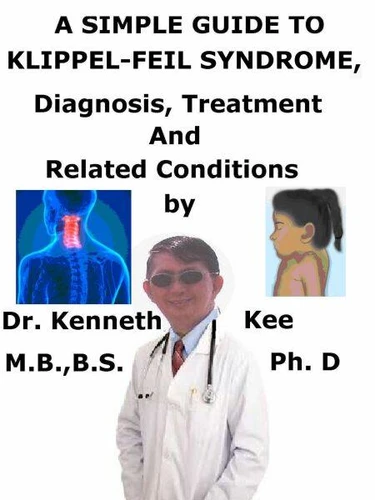
A Simple Guide to Klippel-Feil Syndrome, Diagnosis, Treatment and Related Conditions
Par :Formats :
Disponible dans votre compte client Decitre ou Furet du Nord dès validation de votre commande. Le format ePub est :
- Compatible avec une lecture sur My Vivlio (smartphone, tablette, ordinateur)
- Compatible avec une lecture sur liseuses Vivlio
- Pour les liseuses autres que Vivlio, vous devez utiliser le logiciel Adobe Digital Edition. Non compatible avec la lecture sur les liseuses Kindle, Remarkable et Sony
 , qui est-ce ?
Notre partenaire de plateforme de lecture numérique où vous retrouverez l'ensemble de vos ebooks gratuitement
Pour en savoir plus sur nos ebooks, consultez notre aide en ligne ici
C'est si simple ! Lisez votre ebook avec l'app Vivlio sur votre tablette, mobile ou ordinateur :

- FormatePub
- ISBN978-1-005-60314-4
- EAN9781005603144
- Date de parution26/04/2021
- Protection num.pas de protection
- Infos supplémentairesepub
- ÉditeurC. C. Chamberlane
Résumé
This book describes Klippel-Feil Syndrome, Diagnosis and Treatment and Related DiseasesKlippel-Feil syndrome (KFS) is a complicated congenital disorder presenting due to abnormal fusion of cervical vertebrae at C2 and C3, produced by a failure in the division or normal segmentation of the cervical spine vertebrae in early fetal development. This disorder leads to the typical appearance of:1. A short neck, 2.
Low hairline, 3. Facial asymmetry, and4. Limited neck mobility. The anomalies can cause:1. Chronic headaches, 2. A limited range of neck motion and3. Neck muscle pain. More importantly, it can also cause:1. Spinal stenosis, 2. Neurological deficit, 3. Cervical spinal deformity, 4. Instability. Patients can be polysyndromic in their manifestations. The precise cause of Klippel-Feil syndrome is not well known.
Several have hypothesized that the following may carry implications in the development of KFS:1. Vascular disruption, 2. Global fetal insult, 3. Primary neural tube complications, or4. Related genetic factors. It can co-exist with:1. Fetal alcohol syndrome, 2. Goldenhar syndrome, and3. Sprengel deformity. In some families, mutations in the GDF6, GDF 3, and MEOX1 genes can produce Klippel-Feil syndrome and may be inherited.
GDF6 is involved in proper bone production, while GDF3 is involved in bone development. MEOX1 gene produces the homeobox protein MOX1 that controls the separation of vertebrae. GDF6 and GDF3 anomalies are inherited in an autosomal dominant pattern, while MEOX1 mutations are autosomal recessiveThe causes of Klippel-Feil syndrome are:1. Genetic defect of the chromosome (change in 8, 5 and / or 12 chromosomes), the child receives in the womb of the mother.
This defect happens as early as the eighth week of pregnancy. Medicine differentiates 2 types of inheritance of the Klippel-Feil syndrome:a. Autosomal dominant (happens more often) andb. Autosomal recessive.2. Injury of the spine.3. Birth injury. Physical examination findings are:1. Shortened neck stature2. Low-lying hairline3. Facial asymmetry, and4. Limited neck mobility. Neurological symptoms may be:1.
Radiculopathy and2. Myelopathy. A comprehensive neurological examination such as cranial nerves, sensory, motor, and reflexes, and gait testing along with examining for signs of bowel or bladder incontinence is essential. The classic complete medical triad of the low hairline, short neck, and restricted neck motion is only evident in 50% of patients with Klippel-Feil syndrome. This inconsistency can be due to several factors, such as time dependency of the congenitally-fused cervical patterns assessment and bias linked with the medical evaluation of the clinical triad.
The manifestation may happen simultaneously with Sprengel deformity, Duane syndrome, renal agenesis, Wildervanck syndrome, and other vascular and cardiac abnormalities. About 50% of patients with Klippel-Feil will manifest with concurrent scoliosis.50% may have atlantoaxial instability. About 30% will manifest with renal disease and 30% with deafness. Radiographical evaluation of the cervical spine in patients with Klippel-Feil syndrome requires:1.
Plain radiographs (X-rays), 2. Computed tomography (CT), and3. Magnetic resonance imaging (MRI). The majority of the patients receive non-operative treatment unless an acute neurological deficit, a cervical instability, or a risk of chronic neurological disorders is present, where the treatment is for operative management. Indications for surgical treatment are:1. Instability of the cervical spine and2.
Neurological problems...
Low hairline, 3. Facial asymmetry, and4. Limited neck mobility. The anomalies can cause:1. Chronic headaches, 2. A limited range of neck motion and3. Neck muscle pain. More importantly, it can also cause:1. Spinal stenosis, 2. Neurological deficit, 3. Cervical spinal deformity, 4. Instability. Patients can be polysyndromic in their manifestations. The precise cause of Klippel-Feil syndrome is not well known.
Several have hypothesized that the following may carry implications in the development of KFS:1. Vascular disruption, 2. Global fetal insult, 3. Primary neural tube complications, or4. Related genetic factors. It can co-exist with:1. Fetal alcohol syndrome, 2. Goldenhar syndrome, and3. Sprengel deformity. In some families, mutations in the GDF6, GDF 3, and MEOX1 genes can produce Klippel-Feil syndrome and may be inherited.
GDF6 is involved in proper bone production, while GDF3 is involved in bone development. MEOX1 gene produces the homeobox protein MOX1 that controls the separation of vertebrae. GDF6 and GDF3 anomalies are inherited in an autosomal dominant pattern, while MEOX1 mutations are autosomal recessiveThe causes of Klippel-Feil syndrome are:1. Genetic defect of the chromosome (change in 8, 5 and / or 12 chromosomes), the child receives in the womb of the mother.
This defect happens as early as the eighth week of pregnancy. Medicine differentiates 2 types of inheritance of the Klippel-Feil syndrome:a. Autosomal dominant (happens more often) andb. Autosomal recessive.2. Injury of the spine.3. Birth injury. Physical examination findings are:1. Shortened neck stature2. Low-lying hairline3. Facial asymmetry, and4. Limited neck mobility. Neurological symptoms may be:1.
Radiculopathy and2. Myelopathy. A comprehensive neurological examination such as cranial nerves, sensory, motor, and reflexes, and gait testing along with examining for signs of bowel or bladder incontinence is essential. The classic complete medical triad of the low hairline, short neck, and restricted neck motion is only evident in 50% of patients with Klippel-Feil syndrome. This inconsistency can be due to several factors, such as time dependency of the congenitally-fused cervical patterns assessment and bias linked with the medical evaluation of the clinical triad.
The manifestation may happen simultaneously with Sprengel deformity, Duane syndrome, renal agenesis, Wildervanck syndrome, and other vascular and cardiac abnormalities. About 50% of patients with Klippel-Feil will manifest with concurrent scoliosis.50% may have atlantoaxial instability. About 30% will manifest with renal disease and 30% with deafness. Radiographical evaluation of the cervical spine in patients with Klippel-Feil syndrome requires:1.
Plain radiographs (X-rays), 2. Computed tomography (CT), and3. Magnetic resonance imaging (MRI). The majority of the patients receive non-operative treatment unless an acute neurological deficit, a cervical instability, or a risk of chronic neurological disorders is present, where the treatment is for operative management. Indications for surgical treatment are:1. Instability of the cervical spine and2.
Neurological problems...
A propos de Kenneth Kee


4,49 €