SOLDES
Jusqu'à -70% sur une sélection d'articles*

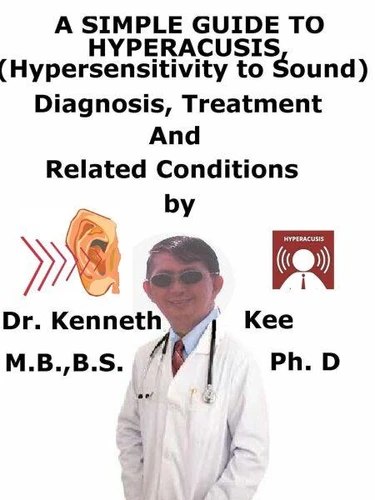
A Simple Guide to Hyperacusis, (Hypersensitivity to Sound) diagnosis, Treatment and Related Conditions
Par :Formats :
Disponible dans votre compte client Decitre ou Furet du Nord dès validation de votre commande. Le format ePub est :
- Compatible avec une lecture sur My Vivlio (smartphone, tablette, ordinateur)
- Compatible avec une lecture sur liseuses Vivlio
- Pour les liseuses autres que Vivlio, vous devez utiliser le logiciel Adobe Digital Edition. Non compatible avec la lecture sur les liseuses Kindle, Remarkable et Sony
 , qui est-ce ?
Notre partenaire de plateforme de lecture numérique où vous retrouverez l'ensemble de vos ebooks gratuitement
Pour en savoir plus sur nos ebooks, consultez notre aide en ligne ici
C'est si simple ! Lisez votre ebook avec l'app Vivlio sur votre tablette, mobile ou ordinateur :

- FormatePub
- ISBN978-0-463-30853-0
- EAN9780463308530
- Date de parution14/09/2021
- Protection num.pas de protection
- Infos supplémentairesepub
- ÉditeurBluewater
Résumé
This book describes Hyperacusis (Hypersensitivity to Sound), Diagnosis and Treatment and Related DiseasesHyperacusis is a hearing disorder that makes it difficult to manage everyday sounds. The patient might also called it sound or noise hypersensitivity. If the patient has it, certain sounds may appear unbearably loud even though people around the patient do not appear to notice them. Hyperacusis is a disorder of loudness perception, where sounds that are ordinarily considered normal become intolerable.
Patients may feel this sensation as painful, frightening, unpleasant, or excessively loud. Hyperacusis is rare. It affects 1 in 50, 000 people. People who have it also have another disorder called tinnitus which is buzzing or ringing in the ear. Hyperacusis often co-exists with tinnitus and can cause considerable distress, with patients regularly reporting reduction in their social, occupational, and recreational activities.
Avoiding sound sources in Hyperacusis and seeking medical attention are frequent behaviors. The terms phonophobia (fear of sound) and misophonia (hatred of sound) can be linked with intolerance to specific sounds and may have an emotional component with the former mostly linked with migraine. While a definitive cure is yet to be identified, research in this field is increasing, and there has been a 10-fold increase in the number of peer-reviewed studies on the disorder in the past 4 decades.
People are not typically born with hyperacusis. It normally results from certain diseases or health disorders. The most frequent causes are:1. An injury to the head (one caused by a knock on the head)2. Damage to one or both ears because of medications or toxins3. A viral infection that affects the inner ear or facial nerve (Bell's palsy)4. Temporomandibular joint (TMJ) disorder5. Lyme disease6. Tay-Sachs disease7.
Migraine headaches8. Using Valium regularly9. Certain kinds of epilepsy10. Chronic fatigue syndrome11. Meniere's disease12. Posttraumatic stress disorder (PTSD)13. Depression14. Autism15. Surgery on the jaw or face16. Williams syndromeThe most frequent cause of hyperacusis is high noise exposure without hearing protection. Exposure to a loud noise also can produce hyperacusis. Some sound such as a single loud gunshot can trigger the disorder.
But it also can result from being near loud noises over a long period. Phonophobia and misophonia are disorders linked with the limbic system in the brain and there is no abnormality in the peripheral or central auditory system. Phonophobia is a psychiatric disorder where there is a fear of a definite sound. Misophonia is a psychological disorder in which a specific sound activates emotional and physical reactions.
Hyperacusis is the sound sensitivity developing from within the auditory system and can be activated by any generic, low-intensity sound. The diagnosis of hyperacusis involves determining LDL using pure-tone audiometry and questionnaires to determine disease severity. Cognitive-behavioral therapy (CBT) is one of the most effective parts of hyperacusis therapy together with counseling and education.
Tinnitus retraining therapy (TRT) involves educating the patient about their disorder alongside gradual sound enrichment. Prolonged low-level noise exposure has been proven to have a reversing effect on the enhanced neural gain, which is believed to be the underlying mechanism of hyperacusis. TABLE OF CONTENTIntroductionChapter 1 HyperacusisChapter 2 CausesChapter 3 SymptomsChapter 4 DiagnosisChapter 5 TreatmentChapter 6 PrognosisChapter 7 MisophoniaChapter 8 PresbyacusisEpi...
Patients may feel this sensation as painful, frightening, unpleasant, or excessively loud. Hyperacusis is rare. It affects 1 in 50, 000 people. People who have it also have another disorder called tinnitus which is buzzing or ringing in the ear. Hyperacusis often co-exists with tinnitus and can cause considerable distress, with patients regularly reporting reduction in their social, occupational, and recreational activities.
Avoiding sound sources in Hyperacusis and seeking medical attention are frequent behaviors. The terms phonophobia (fear of sound) and misophonia (hatred of sound) can be linked with intolerance to specific sounds and may have an emotional component with the former mostly linked with migraine. While a definitive cure is yet to be identified, research in this field is increasing, and there has been a 10-fold increase in the number of peer-reviewed studies on the disorder in the past 4 decades.
People are not typically born with hyperacusis. It normally results from certain diseases or health disorders. The most frequent causes are:1. An injury to the head (one caused by a knock on the head)2. Damage to one or both ears because of medications or toxins3. A viral infection that affects the inner ear or facial nerve (Bell's palsy)4. Temporomandibular joint (TMJ) disorder5. Lyme disease6. Tay-Sachs disease7.
Migraine headaches8. Using Valium regularly9. Certain kinds of epilepsy10. Chronic fatigue syndrome11. Meniere's disease12. Posttraumatic stress disorder (PTSD)13. Depression14. Autism15. Surgery on the jaw or face16. Williams syndromeThe most frequent cause of hyperacusis is high noise exposure without hearing protection. Exposure to a loud noise also can produce hyperacusis. Some sound such as a single loud gunshot can trigger the disorder.
But it also can result from being near loud noises over a long period. Phonophobia and misophonia are disorders linked with the limbic system in the brain and there is no abnormality in the peripheral or central auditory system. Phonophobia is a psychiatric disorder where there is a fear of a definite sound. Misophonia is a psychological disorder in which a specific sound activates emotional and physical reactions.
Hyperacusis is the sound sensitivity developing from within the auditory system and can be activated by any generic, low-intensity sound. The diagnosis of hyperacusis involves determining LDL using pure-tone audiometry and questionnaires to determine disease severity. Cognitive-behavioral therapy (CBT) is one of the most effective parts of hyperacusis therapy together with counseling and education.
Tinnitus retraining therapy (TRT) involves educating the patient about their disorder alongside gradual sound enrichment. Prolonged low-level noise exposure has been proven to have a reversing effect on the enhanced neural gain, which is believed to be the underlying mechanism of hyperacusis. TABLE OF CONTENTIntroductionChapter 1 HyperacusisChapter 2 CausesChapter 3 SymptomsChapter 4 DiagnosisChapter 5 TreatmentChapter 6 PrognosisChapter 7 MisophoniaChapter 8 PresbyacusisEpi...
A propos de Kenneth Kee

4,49 €