SOLDES
Jusqu'à -70% sur une sélection d'articles*

A Simple Guide to Fungal Acne, (Pityrosporum folliculitis) Diagnosis, Treatment and Related Conditions
Par :Formats :
Disponible dans votre compte client Decitre ou Furet du Nord dès validation de votre commande. Le format ePub est :
- Compatible avec une lecture sur My Vivlio (smartphone, tablette, ordinateur)
- Compatible avec une lecture sur liseuses Vivlio
- Pour les liseuses autres que Vivlio, vous devez utiliser le logiciel Adobe Digital Edition. Non compatible avec la lecture sur les liseuses Kindle, Remarkable et Sony
 , qui est-ce ?
Notre partenaire de plateforme de lecture numérique où vous retrouverez l'ensemble de vos ebooks gratuitement
Pour en savoir plus sur nos ebooks, consultez notre aide en ligne ici
C'est si simple ! Lisez votre ebook avec l'app Vivlio sur votre tablette, mobile ou ordinateur :

- FormatePub
- ISBN8215731918
- EAN9798215731918
- Date de parution01/04/2023
- Protection num.pas de protection
- Infos supplémentairesepub
- ÉditeurWMG Publishing
Résumé
This book describes Fungal Acne, Diagnosis and Treatment and Related DiseasesFungal acne (termed medically as Pityrosporum folliculitis or Malassezia folliculitis) appears similar to hormonal acne or bacterial acne but is actually quite different. In fact, it is not even really acne at all. It is one of many types of folliculitis, a skin disorder that produces an infection in the hair follicle. The fungus (Malassezia) nourishes on moisture on the skin either from the sweat glands on the skin or any other moisture applied to the skin.
These fungi produce an infection of the hair follicles (folliculitis) with pustules that bears a resemblance to traditional acne with acne-like red bumps and occasional whiteheads. Contrary to the appearance of real acne in which the patient may see many forms of different acne lesions together (blackheads, some papules, some cysts), in fungal acne, there is a uniform appearance to the bumps and they are often itchy.
CauseMalassezia furfur is a unicellular organism (fungus) with a diameter of 2.0-6.5 micrometers that produces Pityrosporum folliculitis or fungal acne. Since fungi thrive in warm, humid places, fungal acne is more frequent in these types of climates and seasons and can be caused by sweating. Fungi (Yeast) like warm, humid environments such as the gym and tight clothes so a person working out at a gym wearing tight clothes is more prone to fungal acne.
Prolonged usage of topical antibiotics such as clindamycin or oral antibiotics such as doxycycline and minocycline can worsen the symptoms of fungal acne. By destroying off bacteria (both harmful and good), the antibiotics permit the fungi on the skin to proliferate. Oral or tropical corticosteroid is another possible cause of fungal acne by suppressing immunity. SymptomsFungal acne often appears on the arms, chest, and back while bacterial acne is most frequent on the face.
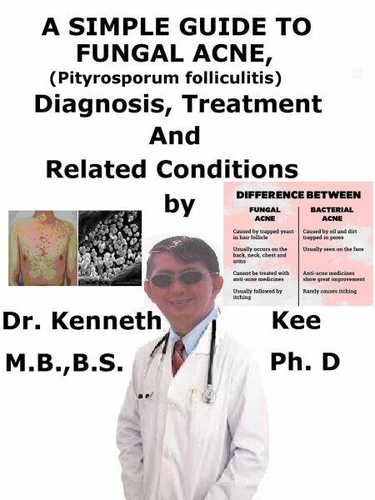
Fungal acne often produces itchiness while bacterial acne rarely does. Fungal acne often emerges in clusters of small whiteheads while bacterial acne is less clustered and more scattered. Pus-filled bumps produced by fungal acne are likely to be nearly all the same size while bacterial acne can produce pimples of differing sizesDiagnosisFungal acne is resistant to anti-acne treatment such as antibiotics.
A simple painless skin scraping or a skin biopsy can be obtained and examined under a microscope to search for any fungus likely to cause fungal acne. TreatmentFungal acne can be stubborn and difficult to treat if the patient does not use the right fungal acne products. Both topical and oral antifungals are successful agents in the treatment of Pityrosporum folliculitis. Oral antifungals are every effective in dramatic, instant resolution of the rashes and are the most successful treatment.
The best fungal acne treatment shampoos contain ketoconazole 2% (the anti-dandruff shampoo, Nizoral). To remove fungal acne quickly, there is also a need to unclog the skin pores of the hair follicle and fight both fungi and any harmful skin bacteria. To attack the fungal acne (and any other acne) the doctor may consider adding a nighttime acne treatment cream with salicylic acid (BHA) or benzoyl peroxide.
Other ways the patient can do to get rid of fungal acne are:Keeping the skin clean and dryShowering straight after exercisingWearing loose-fitting, breathable clothesUsing cotton surgical masks during Covid19TABLE OF CONTENTIntroductionChapter 1 Fungal AcneChapter 2 CausesChapter 3 SymptomsChapter 4 DiagnosisChapter 5 TreatmentChapter 6 PrognosisChapter 7 Acne VulgarisChapter 8 FolliculitisEpilogue
These fungi produce an infection of the hair follicles (folliculitis) with pustules that bears a resemblance to traditional acne with acne-like red bumps and occasional whiteheads. Contrary to the appearance of real acne in which the patient may see many forms of different acne lesions together (blackheads, some papules, some cysts), in fungal acne, there is a uniform appearance to the bumps and they are often itchy.
CauseMalassezia furfur is a unicellular organism (fungus) with a diameter of 2.0-6.5 micrometers that produces Pityrosporum folliculitis or fungal acne. Since fungi thrive in warm, humid places, fungal acne is more frequent in these types of climates and seasons and can be caused by sweating. Fungi (Yeast) like warm, humid environments such as the gym and tight clothes so a person working out at a gym wearing tight clothes is more prone to fungal acne.
Prolonged usage of topical antibiotics such as clindamycin or oral antibiotics such as doxycycline and minocycline can worsen the symptoms of fungal acne. By destroying off bacteria (both harmful and good), the antibiotics permit the fungi on the skin to proliferate. Oral or tropical corticosteroid is another possible cause of fungal acne by suppressing immunity. SymptomsFungal acne often appears on the arms, chest, and back while bacterial acne is most frequent on the face.
Fungal acne often produces itchiness while bacterial acne rarely does. Fungal acne often emerges in clusters of small whiteheads while bacterial acne is less clustered and more scattered. Pus-filled bumps produced by fungal acne are likely to be nearly all the same size while bacterial acne can produce pimples of differing sizesDiagnosisFungal acne is resistant to anti-acne treatment such as antibiotics.
A simple painless skin scraping or a skin biopsy can be obtained and examined under a microscope to search for any fungus likely to cause fungal acne. TreatmentFungal acne can be stubborn and difficult to treat if the patient does not use the right fungal acne products. Both topical and oral antifungals are successful agents in the treatment of Pityrosporum folliculitis. Oral antifungals are every effective in dramatic, instant resolution of the rashes and are the most successful treatment.
The best fungal acne treatment shampoos contain ketoconazole 2% (the anti-dandruff shampoo, Nizoral). To remove fungal acne quickly, there is also a need to unclog the skin pores of the hair follicle and fight both fungi and any harmful skin bacteria. To attack the fungal acne (and any other acne) the doctor may consider adding a nighttime acne treatment cream with salicylic acid (BHA) or benzoyl peroxide.
Other ways the patient can do to get rid of fungal acne are:Keeping the skin clean and dryShowering straight after exercisingWearing loose-fitting, breathable clothesUsing cotton surgical masks during Covid19TABLE OF CONTENTIntroductionChapter 1 Fungal AcneChapter 2 CausesChapter 3 SymptomsChapter 4 DiagnosisChapter 5 TreatmentChapter 6 PrognosisChapter 7 Acne VulgarisChapter 8 FolliculitisEpilogue
A propos de Kenneth Kee


4,49 €