SOLDES
Jusqu'à -70% sur une sélection d'articles*

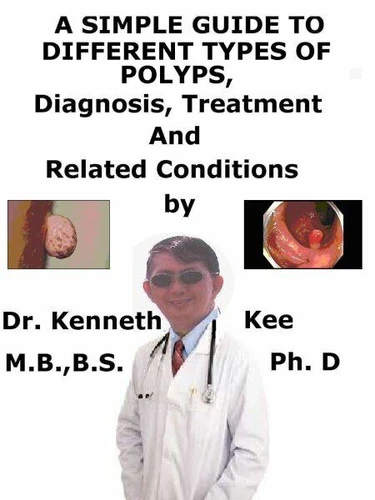
A Simple Guide to Different Types of Polyps, Diagnosis, Treatment and Related Conditions
Par :Formats :
Disponible dans votre compte client Decitre ou Furet du Nord dès validation de votre commande. Le format ePub est :
- Compatible avec une lecture sur My Vivlio (smartphone, tablette, ordinateur)
- Compatible avec une lecture sur liseuses Vivlio
- Pour les liseuses autres que Vivlio, vous devez utiliser le logiciel Adobe Digital Edition. Non compatible avec la lecture sur les liseuses Kindle, Remarkable et Sony
 , qui est-ce ?
Notre partenaire de plateforme de lecture numérique où vous retrouverez l'ensemble de vos ebooks gratuitement
Pour en savoir plus sur nos ebooks, consultez notre aide en ligne ici
C'est si simple ! Lisez votre ebook avec l'app Vivlio sur votre tablette, mobile ou ordinateur :

- FormatePub
- ISBN978-0-463-65011-0
- EAN9780463650110
- Date de parution03/05/2021
- Protection num.pas de protection
- Infos supplémentairesepub
- ÉditeurBluewater
Résumé
This book describes Different Types of Polyps, Diagnosis and Treatment and Related DiseasesA polyp is a benign vascular growth of tissue protruding from a mucous membrane or skin. There are 2 main types of polyps:1. Pendulated polyp:Most of the time the pendulated polyp is attached to the surface by a narrow elongated stalk.2. Sessile polyp:If there is no stalk present, it is said to be sessile. Polyps are abnormal tissue growths that most often appear as small, flat bumps or tiny mushroom-like stalks.
Most polyps are tiny (especially skin polyps) and smaller than half an inch wide. Polyps in the colon are the most frequent, but it is possible to develop polyps in places such as:1. Skin2. Nose3. Throat (Vocal Cord)4. Ear canal5. Cervix6. Uterus7. StomachMost polyps are benign, indicating they are not cancerous. Since they are due to abnormal cell growth, they can ultimately become malignant, or cancerous.
This requires taking a small sample of tissue and testing it for the presence of cancerous cells. Polyps are produced by abnormal growth of cells and often there is no obvious cause. Throat polyps are normally due to an injury from shouting loudly or injury from a breathing tube. Occasionally doctors cannot find out the cause of polyps. Some known causes are:1. Inflammation2. A foreign object3. A cyst4.
A tumor6. Mutation in the genes of colon cells7. Chronic stomach inflammation8. Excess estrogen9. InjuryPolyps develop through rapidly dividing cells, which is similar to how cancer cells multiply. This is why they can be converted into cancers, even though most polyps are benign. There are no known risk factors for ear canal polyps. Risks for colon polypsFor colon polyps, the risk factors are:1. Eating a high-fat, low-fiber diet2.
Being over 50 years of age3. Having a family history of colon polyps and cancer4. Using tobacco and alcohol5. Having an intestinal inflammation disorder like Crohn's disease6. Being obese7. Not getting enough exercise8. Having type 2 diabetes that isn't well-managed9. African-Americans are also at a higher risk of developing colon polyps. Risks for stomach polypsThe risk for stomach polyps rises with these:1.
Age- stomach polyps are more frequent in middle to old age2. Bacterial stomach infections3. Familial adenomatous polyposis (FAP), a rare genetic syndrome4. Regular use of proton pump inhibitors like Nexium, Prilosec, and ProtonixNasal polyps are more likely to develop in people with:1. Continuing sinus infections2. Allergies3. Asthma4. Cystic fibrosis5. Sensitivity to aspirinWomen over 40 years of age and women who have had children are more prone to develop polyps in the uterus.
Men and people who smoke have a higher risk for bladder polyps, nose and vocal cord polyps. Each type of polyp can produce distinctive symptoms based on their location.1. Ear canal polyps - loss of hearing and bloody discharge2. Nasal polyps-a cold that will not go away, headaches, nose pain or loss of smell3. Throat polyps-hoarse and breathy voice4. Bladder polyps-blood in urine or painful and frequent urination5.
Uterine polyps-irregular menstrual bleeding and infertility6. Cervical polyps-normally no symptoms but can involve unusual discharge7. Colorectal polyps-blood in stool, constipation or diarrhea8. Stomach polyps-pain, nausea, vomitingAs a precaution all polyps should be removed before they become cancerous. TABLE OF CONTENTIntroductionChapter 1 PolypsChapter 2 Skin Polyp (Updated)Chapter 3 Nose and Sinus Polyp (Updated)...
Most polyps are tiny (especially skin polyps) and smaller than half an inch wide. Polyps in the colon are the most frequent, but it is possible to develop polyps in places such as:1. Skin2. Nose3. Throat (Vocal Cord)4. Ear canal5. Cervix6. Uterus7. StomachMost polyps are benign, indicating they are not cancerous. Since they are due to abnormal cell growth, they can ultimately become malignant, or cancerous.
This requires taking a small sample of tissue and testing it for the presence of cancerous cells. Polyps are produced by abnormal growth of cells and often there is no obvious cause. Throat polyps are normally due to an injury from shouting loudly or injury from a breathing tube. Occasionally doctors cannot find out the cause of polyps. Some known causes are:1. Inflammation2. A foreign object3. A cyst4.
A tumor6. Mutation in the genes of colon cells7. Chronic stomach inflammation8. Excess estrogen9. InjuryPolyps develop through rapidly dividing cells, which is similar to how cancer cells multiply. This is why they can be converted into cancers, even though most polyps are benign. There are no known risk factors for ear canal polyps. Risks for colon polypsFor colon polyps, the risk factors are:1. Eating a high-fat, low-fiber diet2.
Being over 50 years of age3. Having a family history of colon polyps and cancer4. Using tobacco and alcohol5. Having an intestinal inflammation disorder like Crohn's disease6. Being obese7. Not getting enough exercise8. Having type 2 diabetes that isn't well-managed9. African-Americans are also at a higher risk of developing colon polyps. Risks for stomach polypsThe risk for stomach polyps rises with these:1.
Age- stomach polyps are more frequent in middle to old age2. Bacterial stomach infections3. Familial adenomatous polyposis (FAP), a rare genetic syndrome4. Regular use of proton pump inhibitors like Nexium, Prilosec, and ProtonixNasal polyps are more likely to develop in people with:1. Continuing sinus infections2. Allergies3. Asthma4. Cystic fibrosis5. Sensitivity to aspirinWomen over 40 years of age and women who have had children are more prone to develop polyps in the uterus.
Men and people who smoke have a higher risk for bladder polyps, nose and vocal cord polyps. Each type of polyp can produce distinctive symptoms based on their location.1. Ear canal polyps - loss of hearing and bloody discharge2. Nasal polyps-a cold that will not go away, headaches, nose pain or loss of smell3. Throat polyps-hoarse and breathy voice4. Bladder polyps-blood in urine or painful and frequent urination5.
Uterine polyps-irregular menstrual bleeding and infertility6. Cervical polyps-normally no symptoms but can involve unusual discharge7. Colorectal polyps-blood in stool, constipation or diarrhea8. Stomach polyps-pain, nausea, vomitingAs a precaution all polyps should be removed before they become cancerous. TABLE OF CONTENTIntroductionChapter 1 PolypsChapter 2 Skin Polyp (Updated)Chapter 3 Nose and Sinus Polyp (Updated)...
A propos de Kenneth Kee



4,49 €