SOLDES
Jusqu'à -70% sur une sélection d'articles*

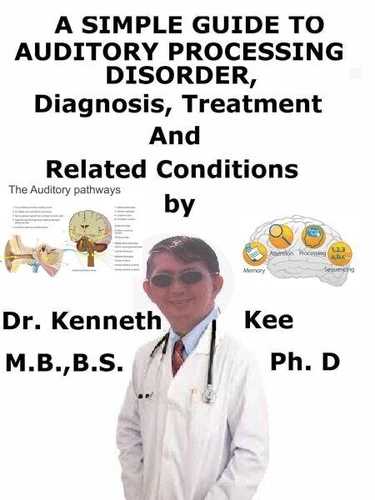
A Simple Guide to Auditory Processing Disorder, Diagnosis, Treatment and Related Conditions
Par :Formats :
Disponible dans votre compte client Decitre ou Furet du Nord dès validation de votre commande. Le format ePub est :
- Compatible avec une lecture sur My Vivlio (smartphone, tablette, ordinateur)
- Compatible avec une lecture sur liseuses Vivlio
- Pour les liseuses autres que Vivlio, vous devez utiliser le logiciel Adobe Digital Edition. Non compatible avec la lecture sur les liseuses Kindle, Remarkable et Sony
 , qui est-ce ?
Notre partenaire de plateforme de lecture numérique où vous retrouverez l'ensemble de vos ebooks gratuitement
Pour en savoir plus sur nos ebooks, consultez notre aide en ligne ici
C'est si simple ! Lisez votre ebook avec l'app Vivlio sur votre tablette, mobile ou ordinateur :

- FormatePub
- ISBN978-1-005-08484-4
- EAN9781005084844
- Date de parution20/09/2021
- Protection num.pas de protection
- Infos supplémentairesepub
- ÉditeurC. C. Chamberlane
Résumé
This book describes Auditory Processing Disorder, Diagnosis and Treatment and Related DiseasesAn auditory processing disorder (APD) is a disorder that affects the way the brain hears and processes language. Hearing is a complex process. Sound waves from the environment travel into the ears where they are converted to vibrations in the middle ear. When the sound vibrations reach the inner ear, different sensory cells produce an electrical signal that travels through the auditory nerve to the brain.
In the brain, this nerve signal is evaluated and processed to turn it into a sound that the person can identify. People with APD have a difficulty with this processing stage. Due to this, they have problem comprehending and reacting to sounds in their environment. A person with APD may have normal results on a basic hearing test; but their brain will not always process the sounds or spoken words properly.
This disorder may also be termed Central Auditory Processing Disorder or CAPD. At one time, people who had this disorder may have believed they had a hearing problem. The problem is within processing the sounds being heard. The ear hears the sounds but occasionally cannot process where the sounds begin or translate the sounds when the environment is noisy. People with auditory processing disorder (APD) have a difficult time hearing and processing small sound differences in words.
When someone says, "Please raise the hand, " and the person hear words more like "Please haze the plan."The person tells the children, "Look at the cows over there, " and they may hear these words instead, "Look at the clown on the chair."APD is not hearing loss or a learning disorder. It indicates the brain does not "hear" sounds in the normal way. It is not a disorder with the understanding of the meaning of words.
It is not a stand-alone disorder and there is no agreement about diagnostic criteria. Auditory Processing Disorder is not present in the Diagnostic Statistical Manual (DSM 5) of mental health disorders. Communication disorders and specific learning disorders on the other hand are clearly specified. People of all ages can develop APD. It often begins in childhood, but some people experience the disorder later.
Between 2% and 7% of children have it, and boys are more prone to have it than girls. Risk factors are:1. Delays or disorders with the development of the region of the brain that processes sounds2. Genetics3. Neurological changes linked to aging4. Neurological injury that happens due to disorders such as degenerative diseases, an infection, or a head injury5. Recurring ear infections6. Complications at birth - during or shortly after birth, such as lack of oxygen to the brain, low birth weight, and jaundiceTo test for APD the person may be asked to:1.
Listen to speech with background noise2. Spot small changes in sounds3. Fill in missing parts of wordsOther tests may be:1. Having electrodes on the head to measure how the brain reacts to sound2. Speech and language tests3. Memory, problem-solving and concentration testsThere is no cure for APD but there are treatments that can help.1. Helping the person to learn how to better process sounds2. Teaching the person skills to help compensate for the APD3.
Helping the person to make changes to the learning or working environment to better manage the disorder. TABLE OF CONTENTIntroductionChapter 1 Auditory Processing DisorderChapter 2 CausesChapter 3 SymptomsChapter 4 DiagnosisChapter 5 TreatmentChapter 6 PrognosisChapter 7 DyslexiaChapter 8 Attention-Deficit Hyperactivity disorderEpilogue
In the brain, this nerve signal is evaluated and processed to turn it into a sound that the person can identify. People with APD have a difficulty with this processing stage. Due to this, they have problem comprehending and reacting to sounds in their environment. A person with APD may have normal results on a basic hearing test; but their brain will not always process the sounds or spoken words properly.
This disorder may also be termed Central Auditory Processing Disorder or CAPD. At one time, people who had this disorder may have believed they had a hearing problem. The problem is within processing the sounds being heard. The ear hears the sounds but occasionally cannot process where the sounds begin or translate the sounds when the environment is noisy. People with auditory processing disorder (APD) have a difficult time hearing and processing small sound differences in words.
When someone says, "Please raise the hand, " and the person hear words more like "Please haze the plan."The person tells the children, "Look at the cows over there, " and they may hear these words instead, "Look at the clown on the chair."APD is not hearing loss or a learning disorder. It indicates the brain does not "hear" sounds in the normal way. It is not a disorder with the understanding of the meaning of words.
It is not a stand-alone disorder and there is no agreement about diagnostic criteria. Auditory Processing Disorder is not present in the Diagnostic Statistical Manual (DSM 5) of mental health disorders. Communication disorders and specific learning disorders on the other hand are clearly specified. People of all ages can develop APD. It often begins in childhood, but some people experience the disorder later.
Between 2% and 7% of children have it, and boys are more prone to have it than girls. Risk factors are:1. Delays or disorders with the development of the region of the brain that processes sounds2. Genetics3. Neurological changes linked to aging4. Neurological injury that happens due to disorders such as degenerative diseases, an infection, or a head injury5. Recurring ear infections6. Complications at birth - during or shortly after birth, such as lack of oxygen to the brain, low birth weight, and jaundiceTo test for APD the person may be asked to:1.
Listen to speech with background noise2. Spot small changes in sounds3. Fill in missing parts of wordsOther tests may be:1. Having electrodes on the head to measure how the brain reacts to sound2. Speech and language tests3. Memory, problem-solving and concentration testsThere is no cure for APD but there are treatments that can help.1. Helping the person to learn how to better process sounds2. Teaching the person skills to help compensate for the APD3.
Helping the person to make changes to the learning or working environment to better manage the disorder. TABLE OF CONTENTIntroductionChapter 1 Auditory Processing DisorderChapter 2 CausesChapter 3 SymptomsChapter 4 DiagnosisChapter 5 TreatmentChapter 6 PrognosisChapter 7 DyslexiaChapter 8 Attention-Deficit Hyperactivity disorderEpilogue
A propos de Kenneth Kee




4,49 €