SOLDES
Jusqu'à -70% sur une sélection d'articles*

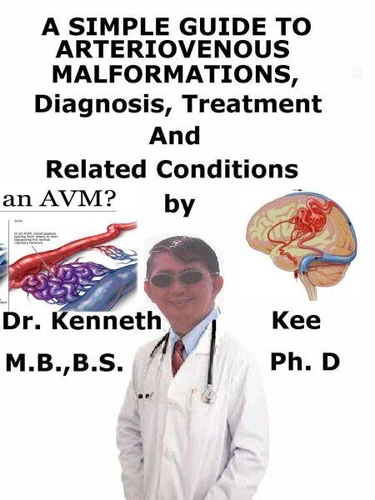
A Simple Guide to Arteriovenous Malformations, Diagnosis, Treatment and Related Conditions
Par :Formats :
Disponible dans votre compte client Decitre ou Furet du Nord dès validation de votre commande. Le format ePub est :
- Compatible avec une lecture sur My Vivlio (smartphone, tablette, ordinateur)
- Compatible avec une lecture sur liseuses Vivlio
- Pour les liseuses autres que Vivlio, vous devez utiliser le logiciel Adobe Digital Edition. Non compatible avec la lecture sur les liseuses Kindle, Remarkable et Sony
 , qui est-ce ?
Notre partenaire de plateforme de lecture numérique où vous retrouverez l'ensemble de vos ebooks gratuitement
Pour en savoir plus sur nos ebooks, consultez notre aide en ligne ici
C'est si simple ! Lisez votre ebook avec l'app Vivlio sur votre tablette, mobile ou ordinateur :

- FormatePub
- ISBN8215733554
- EAN9798215733554
- Date de parution07/04/2023
- Protection num.pas de protection
- Infos supplémentairesepub
- ÉditeurWMG Publishing
Résumé
This book describes Arteriovenous Malformations, Diagnosis and Treatment and Related DiseasesI was watching an episode of Transplant, a Canadian TV series in which there was a female patient who suffered from back pain and became addicted to morphine derivative medicines. She suddenly started bleeding in the skull and developed seizures. The usual blood tests and CT and MRI imaging could not detect the cause.
Magnetic resonance angiography (MRA) and Super-selective angiography was able to detect AVMs on the back of the spine which caused her back pain and in the brain causing her to bleed in the brain and had seizures. With a proper diagnosis, the medical team in the hospital was thus able to treat her. Arteriovenous malformations (AVMs) are formed when a group of blood vessels in the body develops incorrectly.
In these malformations, arteries and veins are abnormally twisted and form direct connections, bypassing normal tissues such as capillaries. This normally happens during development before birth or shortly after. Most patients with AVMs do not have early signs and symptoms. Instead, the disorder is detected when doctors are treating another unrelated health disorder. Occasionally the rupture of one blood vessel in an AVM will capture medical attention.
Occasionally AVMs are only discovered after death during an autopsy. No one knows the reason that AVMs form. Some doctors think that the cause of developing AVMs could be genetic. AVMs can form anywhere in the body. Those that develop in the brain or close to the spinal cord, termed neurological AVMs, are most prone to have long-term effects. The biggest problem linked to AVMs is that they will cause uncontrolled bleeding or hemorrhage.
Fewer than 4 % of AVMs will hemorrhage but those that do can produce severe, even fatal, effects. Death as a direct effect of an AVM happens in about 1 % of people with AVMs. Occasionally AVMs can decrease the quantity of oxygen reaching the brain and spinal cord (sometimes termed a steal effect as if the blood was being stolen from where it should flow). AVMs can occasionally apply pressure on neighboring tissues.
The steal effect can also happen elsewhere in the body such as the hands or feet but may not be as obvious. Frequent symptoms of brain AVMs are:Bleeding in the skull, most often a sub-arachnoid hemorrhageSeizuresHeadachesFocal neurological deficits, such as weakness, numbness, tingling to one part or side of the bodyFrequent symptoms for AVMs evident in the organs, chest, or abdomen are:Abdominal painBack painChest painIrregular sounds in the affected blood vesselsThe final diagnosis of AVM is normally made based on imaging tests that demonstrate areas of blood flow.
MRI is essential for the initial diagnosis of AVMMagnetic resonance angiogram (MRA) produces images of the blood vesselsThe treatment of an AVM is directed on treating the symptoms and improving the quality of life of the patient. There are no medicines that have been shown to cure an AVM. Medicines are given to relieve pain and stop seizures. There are three invasive treatment methods:Conventional surgery is done to totally remove a small or moderate AVMRadiosurgery treats small unruptured AVMEmbolization and sclerotherapy are the most frequent treatments to treat AVMsMaterials such as medical glue, metal coils or even plugs are placed into the center of the AVM through a catheter to block blood flow and kill the AVMTABLE OF CONTENTIntroductionChapter 1 Arteriovenous MalformationsChapter 2 CausesChapter 3 SymptomsChapter 4 DiagnosisChapter 5 TreatmentChapter 6 PrognosisChapter 7 Osler-Weber-Rendu Syndro...
Magnetic resonance angiography (MRA) and Super-selective angiography was able to detect AVMs on the back of the spine which caused her back pain and in the brain causing her to bleed in the brain and had seizures. With a proper diagnosis, the medical team in the hospital was thus able to treat her. Arteriovenous malformations (AVMs) are formed when a group of blood vessels in the body develops incorrectly.
In these malformations, arteries and veins are abnormally twisted and form direct connections, bypassing normal tissues such as capillaries. This normally happens during development before birth or shortly after. Most patients with AVMs do not have early signs and symptoms. Instead, the disorder is detected when doctors are treating another unrelated health disorder. Occasionally the rupture of one blood vessel in an AVM will capture medical attention.
Occasionally AVMs are only discovered after death during an autopsy. No one knows the reason that AVMs form. Some doctors think that the cause of developing AVMs could be genetic. AVMs can form anywhere in the body. Those that develop in the brain or close to the spinal cord, termed neurological AVMs, are most prone to have long-term effects. The biggest problem linked to AVMs is that they will cause uncontrolled bleeding or hemorrhage.
Fewer than 4 % of AVMs will hemorrhage but those that do can produce severe, even fatal, effects. Death as a direct effect of an AVM happens in about 1 % of people with AVMs. Occasionally AVMs can decrease the quantity of oxygen reaching the brain and spinal cord (sometimes termed a steal effect as if the blood was being stolen from where it should flow). AVMs can occasionally apply pressure on neighboring tissues.
The steal effect can also happen elsewhere in the body such as the hands or feet but may not be as obvious. Frequent symptoms of brain AVMs are:Bleeding in the skull, most often a sub-arachnoid hemorrhageSeizuresHeadachesFocal neurological deficits, such as weakness, numbness, tingling to one part or side of the bodyFrequent symptoms for AVMs evident in the organs, chest, or abdomen are:Abdominal painBack painChest painIrregular sounds in the affected blood vesselsThe final diagnosis of AVM is normally made based on imaging tests that demonstrate areas of blood flow.
MRI is essential for the initial diagnosis of AVMMagnetic resonance angiogram (MRA) produces images of the blood vesselsThe treatment of an AVM is directed on treating the symptoms and improving the quality of life of the patient. There are no medicines that have been shown to cure an AVM. Medicines are given to relieve pain and stop seizures. There are three invasive treatment methods:Conventional surgery is done to totally remove a small or moderate AVMRadiosurgery treats small unruptured AVMEmbolization and sclerotherapy are the most frequent treatments to treat AVMsMaterials such as medical glue, metal coils or even plugs are placed into the center of the AVM through a catheter to block blood flow and kill the AVMTABLE OF CONTENTIntroductionChapter 1 Arteriovenous MalformationsChapter 2 CausesChapter 3 SymptomsChapter 4 DiagnosisChapter 5 TreatmentChapter 6 PrognosisChapter 7 Osler-Weber-Rendu Syndro...
A propos de Kenneth Kee

4,49 €