SOLDES
Jusqu'à -70% sur une sélection d'articles*

A Simple Guide to Aortic Dissection, Diagnosis, Treatment and Related Conditions
Par :Formats :
Disponible dans votre compte client Decitre ou Furet du Nord dès validation de votre commande. Le format ePub est :
- Compatible avec une lecture sur My Vivlio (smartphone, tablette, ordinateur)
- Compatible avec une lecture sur liseuses Vivlio
- Pour les liseuses autres que Vivlio, vous devez utiliser le logiciel Adobe Digital Edition. Non compatible avec la lecture sur les liseuses Kindle, Remarkable et Sony
 , qui est-ce ?
Notre partenaire de plateforme de lecture numérique où vous retrouverez l'ensemble de vos ebooks gratuitement
Pour en savoir plus sur nos ebooks, consultez notre aide en ligne ici
C'est si simple ! Lisez votre ebook avec l'app Vivlio sur votre tablette, mobile ou ordinateur :

- FormatePub
- ISBN978-1-005-59515-9
- EAN9781005595159
- Date de parution31/12/2021
- Protection num.pas de protection
- Infos supplémentairesepub
- ÉditeurC. C. Chamberlane
Résumé
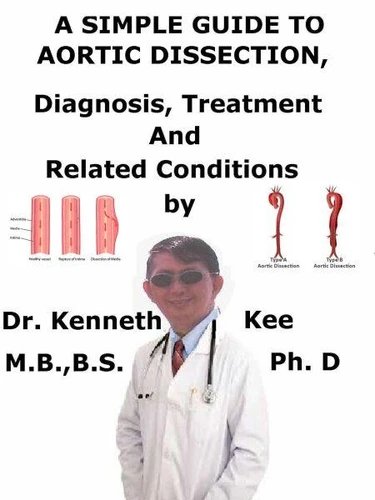
This book describes Aortic Dissection, Diagnosis and Treatment and Related DiseasesAortic dissection is a serious disorder in which there is a tear in the wall of the major artery carrying blood out of the heart (aorta). When the tear expands along the wall of the aorta, blood can stream in between the layers of the blood vessel wall (dissection). Blood dashes through the tear, inducing the inner and middle layers of the aorta to split (dissect).
This can cause aortic rupture or reduced blood flow (ischemia) to organs. If the blood goes through the outside aortic wall, aortic dissection is often fatal. When an aortic dissection is diagnosed early and treated quickly, the chance of survival significantly improves. Aortic dissection most often happens due to a tear or damage to the inner wall of the aorta. This very often happens in the chest (thoracic) part of the artery, but it may also happen in the abdominal aorta.
When a tear happens, it produces 2 channels:One in which blood persists to travelAnother where blood remains stillIf the channel with non-traveling blood becomes larger, it can push on other branches of the aorta. This can narrow the other branches and decrease blood flow through them. An aortic dissection may also produce abnormal widening or ballooning of the aorta (aneurysm). Aortic dissections are classified into two groups, depending on which part of the aorta is involved:Type AThis frequent and dangerous type produces a tear in the part of the aorta where it exits the heart.
The tear may also happen in the upper aorta (ascending aorta), which may extend into the abdomen. Type BThis type causes a tear in the lower aorta only (descending aorta), which may also extend into the abdomen. Risk factorsUncontrolled high blood pressure (hypertension)Hardening of the arteries (atherosclerosis)Weakened and bulging artery (aortic aneurysm)An aortic valve defect (bicuspid aortic valve)Narrowing of the aorta at birth (aortic coarctation)Blunt trauma to the chest, such as hitting the steering wheel of a car during an accidentHeart surgery or proceduresSwelling of the blood vessels due to disorders such as arteritis and syphilisInflammation of the arteries (giant cell arteritis) may increase the risk of aortic dissection.
Certain genetic diseases raise the risk of having an aortic dissection, such as:Turner syndrome: High blood pressure, heart problemsMarfan syndrome: This is a disorder in which connective tissue supporting various structures in the body, is weak. Other connective tissue disorders:Ehlers-Danlos syndrome, connective tissue disorders that produce loose joints and fragile blood vessels and Loeys-Dietz syndrome, which produces twisted arteries, particularly in the neck.
Other possible risk factorsSex: Men are more likely than women. Age: Aortic dissection is more likely in ages 60 and older. Cocaine use: This drug raises blood pressure. Pregnancy: Often aortic dissections occur during pregnancy. High-intensity weightlifting: This raises blood pressureIn most cases, the symptoms start suddenly, and involve severe chest painEchocardiography is the imaging method for detecting aortic dissectionAn aortic dissection is a medical emergency requiring immediate treatment.
Dissections in the part of the aorta leaving the heart (ascending) are treated with surgery. Dissections in other parts of the aorta (descending) may be treated with surgery or medicines. TABLE OF CONTENTIntroductionChapter 1 Aortic DissectionChapter 2 CausesChapter 3 SymptomsChapter 4 DiagnosisChapter 5 TreatmentChapter 6 PrognosisChapter 7 Thoracic Aortic AneurysmChapter 8 Abdomin...
This can cause aortic rupture or reduced blood flow (ischemia) to organs. If the blood goes through the outside aortic wall, aortic dissection is often fatal. When an aortic dissection is diagnosed early and treated quickly, the chance of survival significantly improves. Aortic dissection most often happens due to a tear or damage to the inner wall of the aorta. This very often happens in the chest (thoracic) part of the artery, but it may also happen in the abdominal aorta.
When a tear happens, it produces 2 channels:One in which blood persists to travelAnother where blood remains stillIf the channel with non-traveling blood becomes larger, it can push on other branches of the aorta. This can narrow the other branches and decrease blood flow through them. An aortic dissection may also produce abnormal widening or ballooning of the aorta (aneurysm). Aortic dissections are classified into two groups, depending on which part of the aorta is involved:Type AThis frequent and dangerous type produces a tear in the part of the aorta where it exits the heart.
The tear may also happen in the upper aorta (ascending aorta), which may extend into the abdomen. Type BThis type causes a tear in the lower aorta only (descending aorta), which may also extend into the abdomen. Risk factorsUncontrolled high blood pressure (hypertension)Hardening of the arteries (atherosclerosis)Weakened and bulging artery (aortic aneurysm)An aortic valve defect (bicuspid aortic valve)Narrowing of the aorta at birth (aortic coarctation)Blunt trauma to the chest, such as hitting the steering wheel of a car during an accidentHeart surgery or proceduresSwelling of the blood vessels due to disorders such as arteritis and syphilisInflammation of the arteries (giant cell arteritis) may increase the risk of aortic dissection.
Certain genetic diseases raise the risk of having an aortic dissection, such as:Turner syndrome: High blood pressure, heart problemsMarfan syndrome: This is a disorder in which connective tissue supporting various structures in the body, is weak. Other connective tissue disorders:Ehlers-Danlos syndrome, connective tissue disorders that produce loose joints and fragile blood vessels and Loeys-Dietz syndrome, which produces twisted arteries, particularly in the neck.
Other possible risk factorsSex: Men are more likely than women. Age: Aortic dissection is more likely in ages 60 and older. Cocaine use: This drug raises blood pressure. Pregnancy: Often aortic dissections occur during pregnancy. High-intensity weightlifting: This raises blood pressureIn most cases, the symptoms start suddenly, and involve severe chest painEchocardiography is the imaging method for detecting aortic dissectionAn aortic dissection is a medical emergency requiring immediate treatment.
Dissections in the part of the aorta leaving the heart (ascending) are treated with surgery. Dissections in other parts of the aorta (descending) may be treated with surgery or medicines. TABLE OF CONTENTIntroductionChapter 1 Aortic DissectionChapter 2 CausesChapter 3 SymptomsChapter 4 DiagnosisChapter 5 TreatmentChapter 6 PrognosisChapter 7 Thoracic Aortic AneurysmChapter 8 Abdomin...
A propos de Kenneth Kee
4,49 €